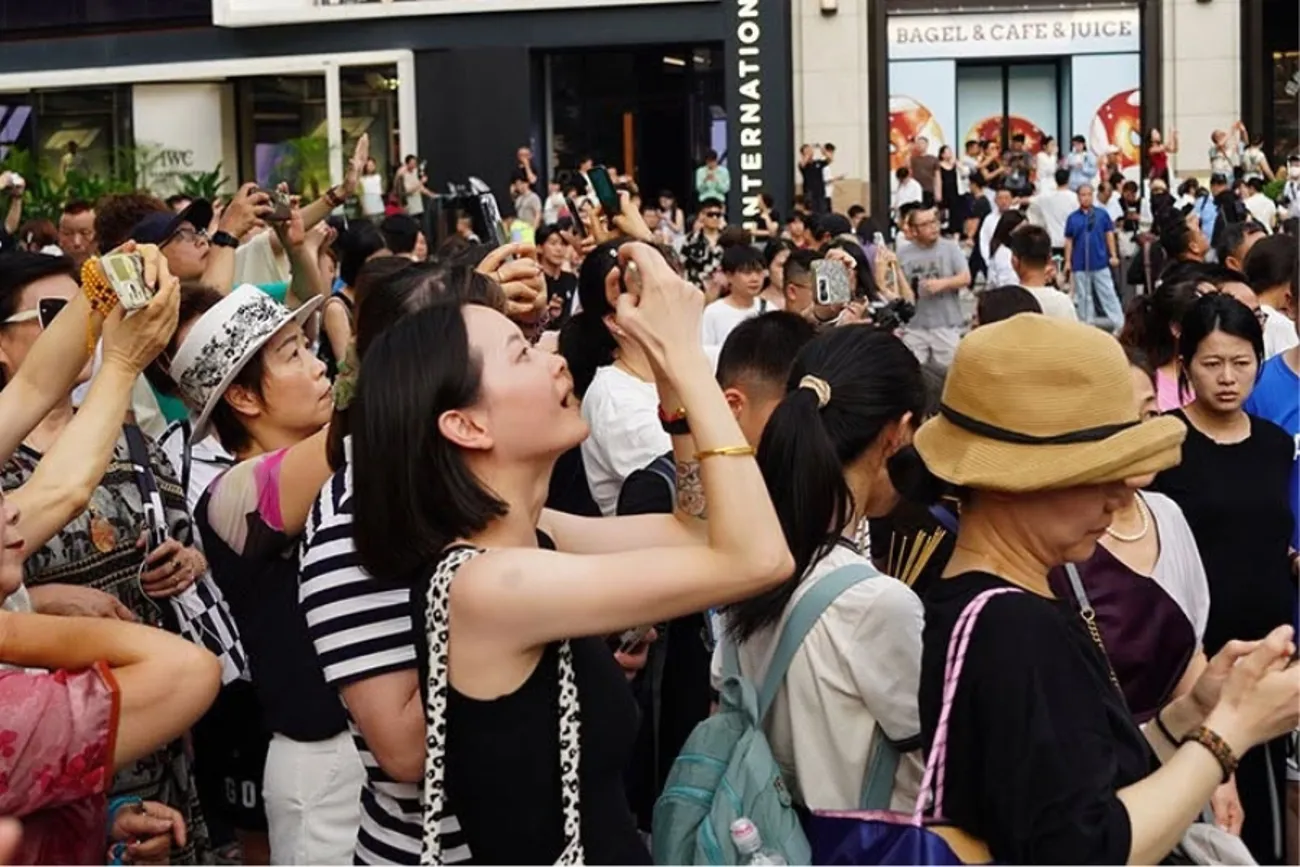
In China’s hyper-competitive attention economy, brands have spent years paying influencers to talk, creators to post and livestreamers to sell.
Now, apparently, there is another job description to add to the list: getting paid simply to turn up.
The practice is known in Chinese as chōngchǎng — literally, filling or padding a venue. It is not entirely new. Temporary workers have long been recruited to populate property launches, conferences, opening ceremonies and promotional events.
What feels different today is how the practice appears to be migrating into the polished world of brand experiences, where footfall itself has become a performance metric.
The controversy erupted around Rolex’s “Oyster Story” exhibition in Shanghai, a landmark showcase celebrating the centenary of its Oyster watch.
Rolex confirms the exhibition ran from 10 to 28 June 2026 at Shanghai’s West Bund Dome, featuring historic and contemporary watches, technical innovations and immersive installations. Admission was free.
Shortly after it opened, however, Chinese media began reporting allegations from temporary workers that third-party recruiters had offered cash for people to visit, stay briefly and help create the appearance of a busy venue.
Recruitment notices cited by Sina Finance reportedly called for chōngchǎng workers, with individual notices referring to numbers ranging from hundreds into the thousands.
Some participants also alleged that payments initially promised at RMB75 were subsequently reduced to RMB55. The scale of actual recruitment has not been independently established.
China consumer writer Yaling Jiang subsequently described joining a Shanghai WeChat group advertising odd jobs. One listing she observed offered RMB50 for spending as little as 10 minutes visiting what was described as a “renowned luxury watch exhibition”.
Crucially, Rolex has not confirmed that it commissioned the alleged recruitment. The latest public response I found, reported on 22 June, said the company had passed details of the allegations to the relevant team for further verification and investigation.
Because the bigger story is not whether one luxury brand deliberately paid people to look interested.
It is that an ecosystem already exists in which attention can apparently be bought by the head. Once attention becomes a KPI, somebody will find a way to manufacture it.
For marketers, this should sound uncomfortably familiar.
Digital marketing spent years wrestling with fake followers, click farms, bot traffic, inflated video views and engagement pods. The industry learnt, painfully, that a big number on a dashboard does not necessarily represent a real human relationship.
Chōngchǎng could become the offline version of the same problem. A crowded room looks successful. A queue signals desirability. A packed exhibition photographs well.
Visitors create motion, energy and social proof. Their presence can make an event appear culturally hotter than it really is. That perception may then influence genuine visitors, creators and social-media users.
Ten minutes of rented human presence can potentially generate hours of perceived brand heat. The economic backdrop makes the phenomenon even more revealing.
China’s mainland personal luxury market contracted an estimated 3% to 5% in 2025, according to Bain & Company. Watches were among the hardest-hit categories, declining an estimated 14% to 17%, as consumers became more selective and increasingly demanded a clearer balance between quality, exclusivity and value.
Bain also noted the continuing appeal of experience-led consumption.
At the same time, China’s flexible workforce has expanded dramatically. A 2026 report covered by Yicai estimated that more than 300 million people were engaged in flexible employment, spanning delivery, domestic services, livestreaming and other non-traditional forms of work.
Against that backdrop, micro-gigs built around physical attendance are not difficult to imagine.
For the worker, RMB50 for ten minutes may look like easy money.
For an event agency, temporary visitors may be cheaper than confronting an experience that is failing to attract genuine demand.
For a marketing team under pressure to report footfall, reach and “engagement”, the temptation to focus on the number rather than the meaning behind it can become very real.
This is where marketers should pay attention. Brand exhibitions matter precisely because conventional advertising is finding it harder to command attention.
Brands are increasingly creating immersive spaces, installations and cultural experiences designed to move consumers from simply seeing a brand to actually feeling something about it.
But experiential marketing only works when the experience is authentic.
The moment marketers confuse attendance with affection, footfall with fandom, and a body in a room with a relationship to the brand, the metric becomes meaningless.
For luxury brands, the danger is even greater.
Luxury depends on desirability. The perception that people must be paid to appear interested attacks the very cultural magnetism the brand experience is supposed to demonstrate.
Perhaps, then, China is giving us an early glimpse of the next frontier of the gig economy.
It is no longer only delivering food, driving passengers or livestreaming products. It may now be delivering attention itself.
The uncomfortable question for marketers everywhere is no longer whether people can be paid to attend a brand exhibition.
Clearly, they can.
The real question is this: If people have to be paid to look interested, what exactly is your KPI measuring?
Perhaps the next great metric in experiential marketing should not be how many people came through the door. It should be how many would have come if nobody was paid to be there.
Share Post:

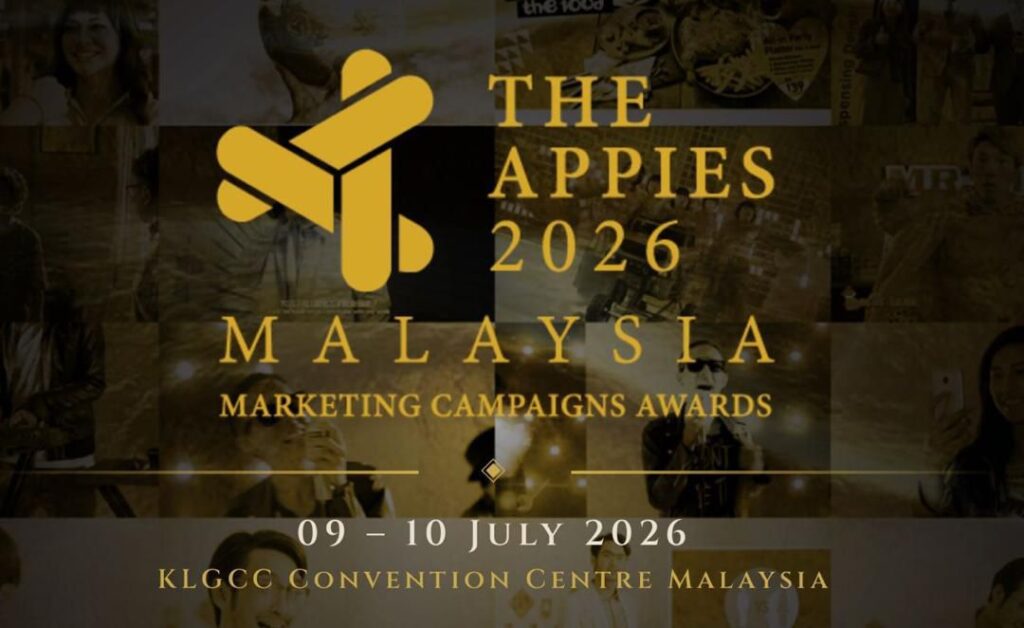
The APPIES is where Malaysia’s boldest campaigns, brightest ideas, and most impactful storytellers take the stage.
More than an awards show, it is the industry’s ultimate platform for creative, media, digital and marketing excellence, where live presentations meet live judging.
This is your chance to showcase work that moved audiences, shaped conversations, and delivered real results.
From breakthrough brand campaigns to innovative digital experiences, the APPIES celebrates the work that defines the future of marketing.
Step into the spotlight alongside the industry’s leading agencies, brands, creatives, strategists and changemakers.
Whether you are aiming for Gold, Silver, Bronze or the prestigious Best of the Best recognition, this is your moment to make history.
Your campaign deserves to be seen.
Your ideas deserve the stage.
Your work deserves the legacy.
KEY DATES
Haven’t subscribed to our Telegram channel yet? Don’t miss out on the hottest updates in marketing & advertising!