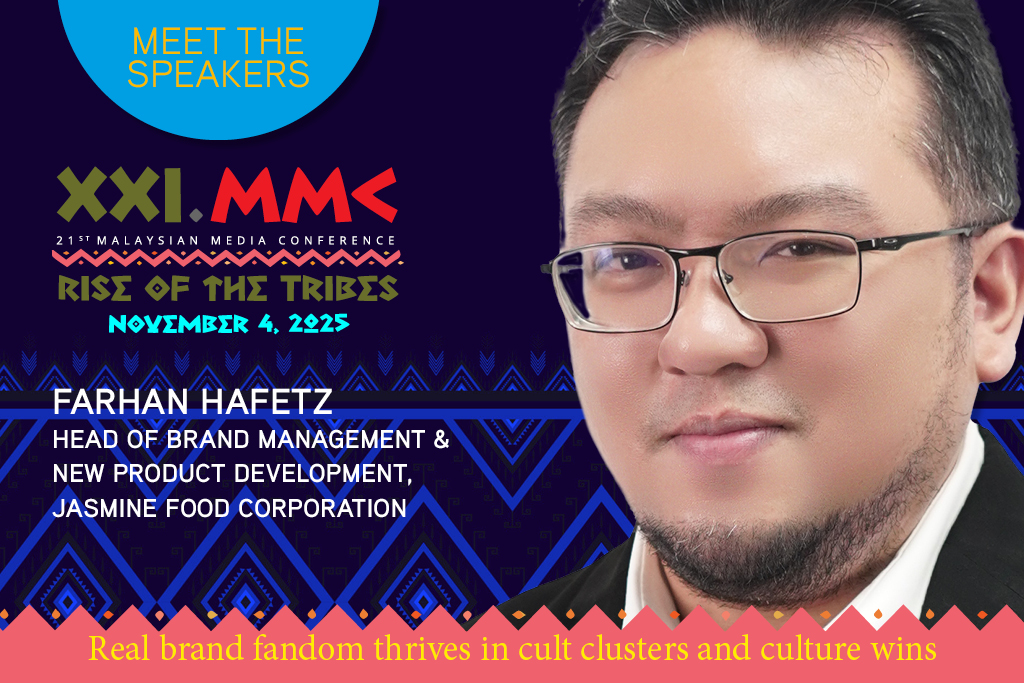
Even staple products like rice and sugar can carry deep emotional resonance — and few marketers have demonstrated this better than Farhan Hafetz. With over 16 years in FMCG, Farhan has built a reputation for marrying cultural authenticity with modern innovation. At Jasmine Food Corporation, his leadership as the Head of Brand Management and New Product Development has refreshed products, embraced sustainability, and sponsored traditions that unite communities.
As he prepares to take the stage at the 21st Malaysian Media Conference on November 4, Farhan will be diving into Rise of the Faithful — a theme that explores how values, trust, and belief systems shape consumer choices in ways that go far beyond discounts or fleeting trends. We caught up with Farhan for an early look at the insights he’ll be bringing to MMC2025.
When faith guides buying decisions, what’s the line between authentic respect and opportunism?
Authentic respect for faith goes beyond surface-level gestures. It’s not about simply adding Jawi script to packaging or featuring mosques and modest models in ads. True resonance comes when brands deeply understand how cultural traditions are shaped by faith and use that understanding to build genuine relevance.
Conversely, when brands appear opportunistic or exploitative — for instance, using faith-related names or keywords to purposely mislead consumers — they risk more than lost credibility; they open themselves up to backlash and even boycotts.
Consistency is key — consumers expect to be spoken to with the same respect and authenticity year-round, not only during festive seasons. Community involvement further strengthens faith-driven loyalty, as people gravitate toward brands that actively give back.
However, timing matters. If such efforts come immediately after a controversy, they may be perceived as damage control, amplifying negative sentiment instead of easing it.
What’s the most powerful example you’ve seen of values-led brand loyalty?
One of the most powerful examples of values-led brand loyalty in Malaysia that I’ve seen comes from a homegrown dairy brand. Beyond championing freshness from farm to table, they’ve built deep trust by supporting local farmers and empowering home-based entrepreneurs — tapping into national pride and reinforcing the importance of choosing local.
Their humble, down-to-earth image makes them feel real and relatable, setting them apart from corporate-led competitors and strengthening long-term loyalty. One distinctive strategy was selling through home-based agents at neighborhood Ramadan bazaars, where dairy products are especially valued for their longer satiety — blending cultural relevance with community empowerment.
Although they faced a brief backlash, they emerged largely unscathed — proving that trust builds resilience.
Do brands underestimate how much trust is currency in faith-driven communities?
I don’t think brands necessarily underestimate trust as a currency — but some may lack genuine understanding of how to cultivate it within these communities. Too often, they follow trends or agency playbooks blindly, without a deeper grasp of the cultural nuances or long-term impact of their actions. Short campaign bursts may capture attention in the moment, but without consistency and continuity, they fall short of building lasting loyalty.
Food carries deep cultural weight. How do you balance heritage with modern branding?
Food carries deep cultural weight, rooted in memory, tradition, and identity. Striking the balance between heritage and modern branding means honoring authenticity — the recipes, rituals, and symbolism — while adapting them for today’s world.
This could take shape in refreshed packaging, contemporary storytelling, or modernised formats, but never at the expense of the ingredients that makes the food culturally significant. The strongest brands succeed by weaving tradition with relevance, allowing consumers to feel both pride in their roots and excitement for how those roots evolve with modern life.
A great example is a fast-rising Kopitiam that’s less than five years old, which has won hearts by honoring heritage through authentic recipes and nostalgic ambiance, while elevating the experience with modern service and convenience. Its swift attainment of Halal certification serves as a powerful trust signal, strengthening credibility and making it directly accessible to faith-driven communities.
What’s the biggest mistake a brand can make when marketing to the Faithful?
The biggest mistake is being superficial — treating faith as a marketing gimmick instead of living it with sincerity and consistency. In faith-driven communities, you can’t ‘fake it till you make it’ — because insincerity will always be exposed. Communities can see through token gestures like festive-only campaigns or religious imagery without substance.
If trust was a media channel, how would you measure it?
If trust was a media channel, it wouldn’t be measured by reach or frequency, but by depth and consistency. Key indicators could include repeat purchases, brand advocacy, community acceptance, and resilience during crises. Measurement can come from brand sentiment surveys, social listening, and Net Promoter Scores (NPS) within targeted audiences.
An often-overlooked but invaluable method is manually scanning community-driven Facebook Groups, where genuine, unfiltered conversations reveal deeper sentiment than tools alone can capture. Unlike paid media, trust is compounded — the more you invest in it, the greater the return over time.
What are the notable behaviour trends for this category we need to look out for when choosing media channels?
For faith-driven categories, trust and authenticity matter more than reach. Community spaces like Facebook Groups and WhatsApp often shape purchase decisions more than ads, while short, raw, and relatable content on TikTok or Reels outperforms polished productions. One of Malaysia’s most prominent influencers thrives on intentionally imperfect content — from kitchen mishaps to playful mispronunciations — turning relatability into influence.
Festive periods bring spikes in attention, but with feeds crowded by influencer-driven content, brands risk getting lost without year-round consistency. Halal certification, credible endorsements, and purpose-driven efforts such as charity drives or community support serve as powerful trust signals — but only when perceived to be done with sincerity.
On November 4th, the 21st Malaysian Marketing Conference brings together media strategists, brand leaders, storytellers, and cultural observers to share case studies, fresh data, and lived experiences from the frontlines of tribe-driven marketing. Learn more: https://marketingmagazine.com.my/mmc/2025/
Share Post:

Haven’t subscribed to our Telegram channel yet? Don’t miss out on the hottest updates in marketing & advertising!