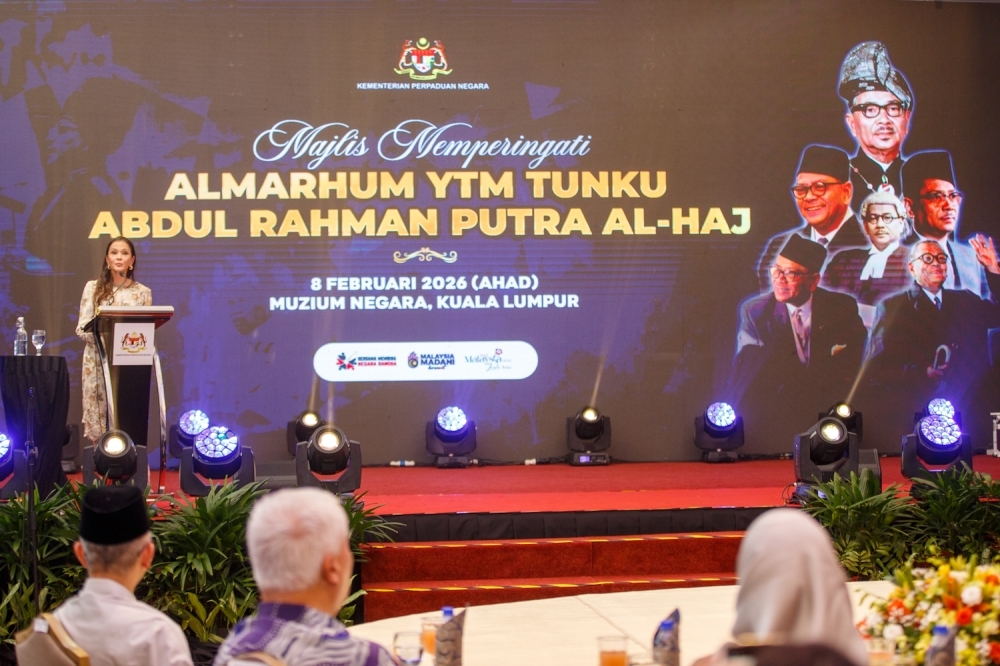
On what would have been his 123rd birthday, tributes to Malaysia’s founding father, Tunku Abdul Rahman Putra Al-Haj, were filled with familiar references to Merdeka, leadership and unity.
But for those in the communications, branding and storytelling industries, the commemorative reflections by his granddaughter Datin Sri Sharifah Menyalara Hussein — better known in industry circles as Lara Hussein — offered something equally important: a reminder that Malaysia’s first Prime Minister was also one of the country’s earliest cultural storytellers.
In marketing terms, Tunku was not merely a political architect.
He was a nation brand-builder.
A Legacy Continued in the Creative Industry
Lara Hussein, who serves as Chairman of Yayasan Tunku Abdul Rahman and is also the CEO and founding partner of M&C Saatchi Malaysia, brings a particularly relevant lens to these reflections.
Having led the agency since its inception in 2003 — transforming it from a startup operation into one of Malaysia’s most recognised creative agencies — she represents a continuation of the storytelling tradition her grandfather embodied, albeit through the modern language of brands, campaigns and cultural strategy.
Speaking at the commemorative ceremony in Kuala Lumpur, she described her grandfather not only as the man who led Malaysia to independence, but also as a prolific writer, cultural advocate and creative thinker whose work extended into journalism, film, architecture and heritage preservation.
These dimensions of his life rarely headline national history lessons, yet they reveal how deeply he understood the role of narrative in shaping identity.
The Writer Who Understood Influence
Tunku reportedly wrote nearly 700 articles, continuing his weekly columns well into his later years.
Writing, he once said, was his way of “defending himself” after leaving leadership — but it also became a powerful tool for shaping public memory and civic consciousness.
Long before the era of thought-leadership LinkedIn posts or CEO blogs, Tunku instinctively recognised that influence does not end when authority does.
It evolves through storytelling.

Building Culture Through Content
Even more telling is his involvement in creative production.
Tunku wrote film scripts that later became classic Malay cinema titles such as Sumpahan Mahsuri and Raja Bersiong, the latter recognised as the first Malay feature film shot in colour.
These projects were not casual artistic pursuits; they reflected a deliberate effort to build shared cultural narratives rooted in Malaysian folklore, identity and heritage.
In today’s language, this would be described as cultural content strategy.
Nation Branding in Brick and Stone
His influence also extended into physical brand symbolism — architecture.
From the design vision behind the National Museum to the conceptual direction of the National Mosque, Tunku understood that national identity is communicated not only through speeches and policy, but through visual storytelling embedded in public spaces.
By insisting that these landmarks reflect Malaysian cultural heritage rather than imported aesthetics, he ensured that the young nation’s “visual brand assets” carried meaning that citizens could recognise as their own.
The Enduring Power of Values
Sharifah Menyalara’s reflections also highlight another dimension of Tunku’s legacy that marketers should not overlook — values-driven leadership.
Her own career in the creative industry, building an agency rooted in ideas that shape culture, reflects the same principle: enduring influence comes not from isolated campaigns, but from consistent storytelling that resonates across generations.
As Malaysia continues navigating a complex, fragmented media landscape, the story of Tunku Abdul Rahman reminds communicators that storytelling at scale is not merely about reach.
It is about shaping meaning.
Nations, like brands, are built through narratives repeated across generations — in articles, films, architecture, and the collective memory of the people who inherit them.
More than six decades after Merdeka, the laughter his granddaughter remembers is personal.
But the narrative he helped craft — of unity, cultural pride and shared destiny — remains one of Malaysia’s most enduring masterclasses in brand building.