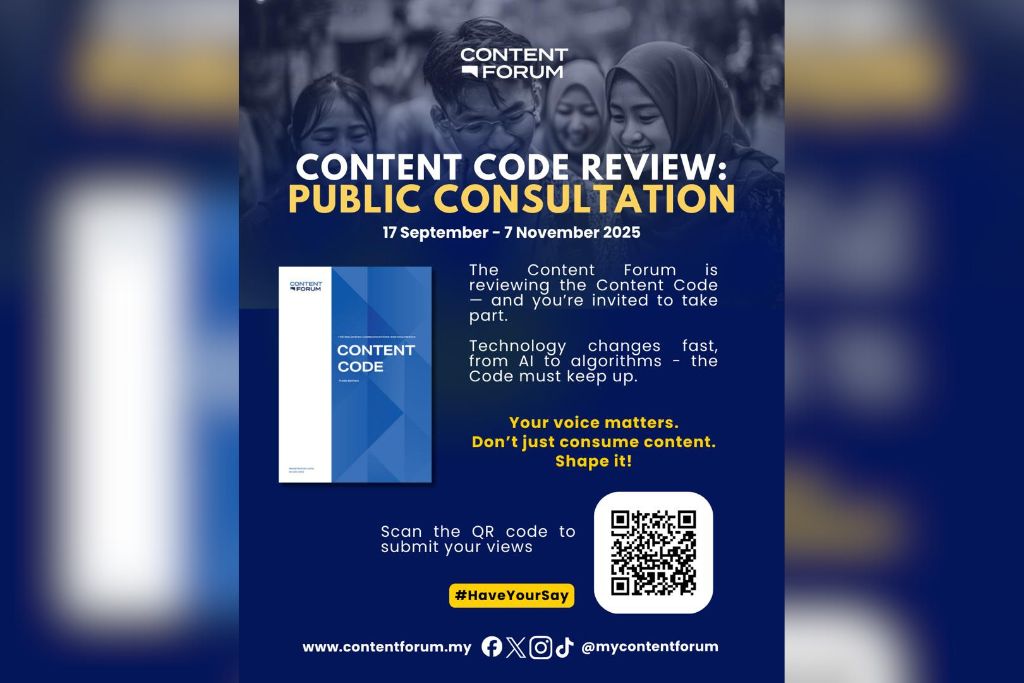
How should Malaysia draw the line on online harms, AI-generated content, child safety, and influencer responsibility? The Communications and Multimedia Content Forum of Malaysia (Content Forum) are inviting the public and industry players to help answer these questions as it launches a nationwide consultation on proposed revisions to the Malaysian Communications and Multimedia Content Code (Content Code), Malaysia’s key reference point for responsible and ethical content practices across broadcasting, online, and digital platforms.
Running from 17 September to 7 November 2025, the consultation invites Malaysians from all walks of life to share their views on the evolving standards of ethical and responsible content in the digital age. The consultation seeks to deepen collaboration with Malaysians and local organisations to ensure the Code stays relevant, resilient, and representative of the nation’s diverse content ecosystem.
The review also comes at a critical moment, following recent amendments to the Communications and Multimedia Act and the rapid rise of new content trends and technologies that are reshaping how Malaysians consume, share, and create.
“The industry has a responsibility to ensure content standards evolve in line with the needs of the people, especially as technology advances at such a rapid pace. This review shows our readiness to listen and adapt, while supporting the government’s ongoing efforts to strengthen Malaysia’s digital ecosystem and safeguard users,” said Datuk Rafiq Razali, Chairman of the Content Forum.
“The Public Consultation is a key step in shaping a Content Code that complements those efforts,” he added. “Together, we are co-creating an effective framework that protects consumers, empowers creators, and safeguards the values we hold as Malaysians. The Content Code is a living document, and by drawing on diverse perspectives, we can ensure it continues to evolve with integrity and inclusivity,” he added.

For this round of consultation, the Content Forum has identified eight (8) key focus areas for public feedback. These include:
Legal Alignment and Clarity — The Code is brought in step with recent movement in Malaysian law, especially amendments to the Communications and Multimedia Act 1998; cutting ambiguity and confirming compliance as a recognised legal defence.
Artificial Intelligence (AI) and Emerging Technologies — AI content can no longer hide in plain sight; clear labelling is now required, with strict limits on misuse, scams, and AI-generated child sexual abuse materials.
Advertising and Consumer Protection — No more blurred lines in ads: the Code strengthens consumer protection with stricter rules on transparency, testimonials, guarantees, AI-generated promotions, and stronger rules for children’s advertising.
Online Platform Responsibilities — Platforms face clearer duties, from swift takedowns of harmful content to stronger user privacy safeguards and oversight of AI-generated material, raising accountability while keeping rules practical.
Protection of Children — Children sit at the heart of the new Code, with stronger safeguards (including against Child Sexual Abuse Material (CSAM), tougher consent rules, privacy protections, and safety-by-design standards holding both creators and platforms accountable.
Inclusivity, Vulnerable Communities, and Human Rights — Discrimination has no place in content — new standards strengthen prohibition against harmful stereotypes and protect vulnerable communities, while embedding human rights due diligence across the industry.
Media Ethics and Content Governance — Reinforcing journalistic integrity, consent-based reporting, and balanced representation to strengthen public discourse and trust.
Code Structure, Enforcement, and Accessibility — The Code itself gets an upgrade — clearer language, stronger complaints mechanisms, and more focus on media literacy make it easier for everyone to use and trust.
“When the Content Code was first introduced in 2004, the digital world looked nothing like it does today. Now we’re dealing with generative AI, deepfakes, algorithm-driven content, misinformation, and the increasing need for safety of children online. These urgent issues demand fresh approaches — and that’s exactly what this review sets out to achieve,” said Mediha Mahmood, CEO of the Content Forum. “We want the revised Code to be practical and inclusive, and we invite media professionals, creators, parents, educators, and civil society to share their views and make their voices count.”
The Content Forum will also engage stakeholders directly through townhalls, roundtables, and dialogues during the consultation period. Interested organisations are invited to reach out to the Content Forum to arrange sessions tailored to their communities or sectors.

This latest initiative reflects Malaysia’s commitment to content self-regulation that balances freedom of expression with responsibility, inclusivity, and consumer protection. The Content Forum aims to ensure that the revised Content Code sets a forward-looking benchmark for ethical content governance, guiding a digital landscape that is fair, safe, and inclusive for all Malaysians.
To learn more about the Content Code Review 2025 and share your feedback, visit www.contentforum.my.