For much of the past half-century, global culture flowed in one direction. West to East. Hollywood to the world. Silicon Valley to everywhere. Paris, London and New York set the tone; the rest localised it.
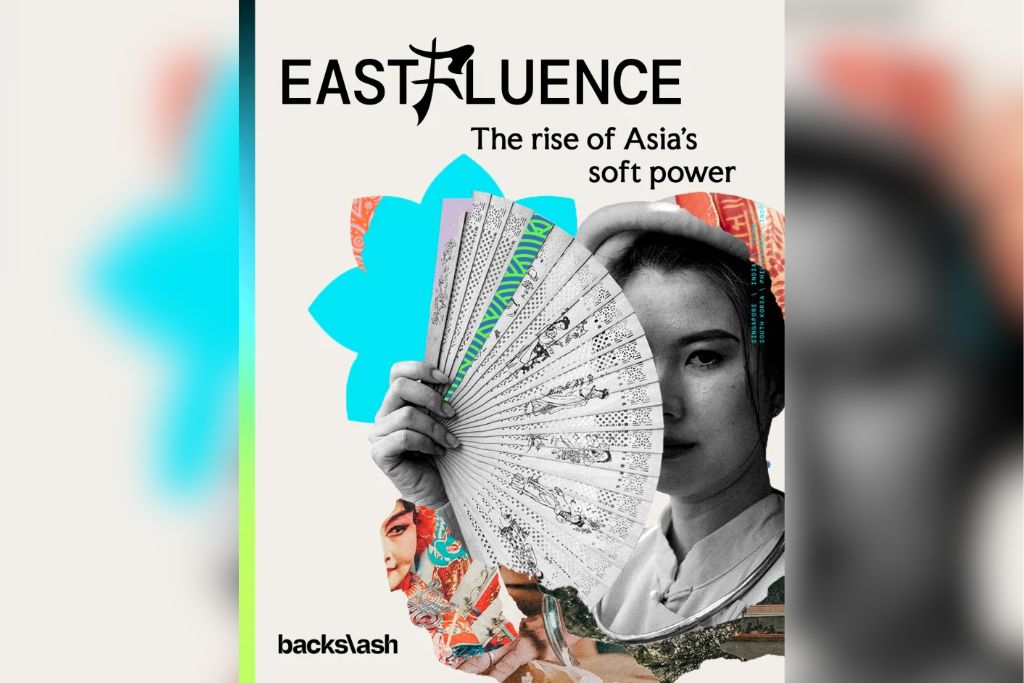
TBWA\Backslash’s Eastfluence report suggests that era is quietly, decisively ending.
What we are witnessing is not a passing swing of the cultural pendulum, but a structural reset. Influence is no longer exported primarily from the West. It is being generated, refined and normalised across Asia — and then adopted globally. Not as novelty, but as authority.
By 2040, Asia is projected to contribute 42% of global GDP and account for more than half of the world’s youth aged 18–24. That statistic alone should command marketers’ attention.
But Eastfluence goes further. It argues that Asia’s real power is not merely economic or demographic. It is philosophical.
From speed to substance
Across markets, younger consumers are losing patience with hype. The influencer economy — once fuelled by velocity, virality and relentless novelty — is starting to feel thin. In its place, something slower and more demanding is emerging.
TBWA\Backslash observes a growing rejection of “quick wins” in favour of long-term commitment: learning a craft, mastering a discipline, even staying with an employer longer than a news cycle. The cultural mood is shifting from acceleration to accumulation — of skill, meaning and depth.
This is where Asia feels unusually at home.
In many Asian cultures, mastery has never been rushed.
Chefs train for decades before earning their own kitchen. Craftspeople pass techniques down generations. Musicians practise not for applause, but for precision. What the West once dismissed as old-fashioned is now aspirational.
Creators who teach are increasingly valued more than creators who merely sell. Artisans are outshining hype merchants. Discipline is becoming desirable again — not because it looks good on camera, but because it delivers something real.
Proof points, not platitudes
This shift is already visible in market performance.
A Chinese ice cream and tea chain, Mixue, has quietly overtaken McDonald’s to become the world’s largest fast-food chain by store count.
BYD has surpassed Tesla in global EV sales, not by shouting louder, but by building patiently, iteratively and at scale.
Korean skincare brand COSRX now generates 90% of its revenue overseas, driven largely by Gen Z consumers who value efficacy over celebrity.
Even in the US, Din Tai Fung — a brand built on obsessive consistency rather than spectacle — delivers the highest per-location revenue of any restaurant chain, at US$27.4 million per store.
These brands are not chasing trends. They are practising restraint, focus and repeatable excellence — behaviours long embedded in Asian systems of thinking.
India’s quiet vindication
Nowhere is this recalibration clearer than in India.
What the West now labels “slow fashion” has existed there for centuries. Inter-generational craft, handwork and intentional limitation were never strategies; they were simply ways of life.
In 2024, the Asia-Pacific handicrafts market dominated the global industry with a 34.81% revenue share, with India at its core.
Designers such as Anita Dongre show how mastery built over decades can scale commercially without losing its soul. This is not nostalgia. It is a business model grounded in continuity.
Even India’s spiritual practices — fasting, silence, mindfulness — now appear on global wellness agendas as solutions to burnout.
As Eastfluence reminds us, the world isn’t discovering something new. It is catching up to what India never abandoned.
The end of borrowed relevance
For marketers, this shift carries uncomfortable implications.
For decades, Asian brands were trained to “globalise” by borrowing Western tropes: Western storytelling structures, Western definitions of cool, Western models of aspiration. Eastfluence suggests that instinct may now be outdated — even counterproductive.
Cultural leadership today is not about loudness. It is about coherence. Brands that understand patience, depth and long-term value creation are increasingly the ones setting standards, not following them.
This does not mean Asian brands should retreat inward. It means they should stop asking for permission.
The new cultural flow is not East replacing West, but East redefining the terms of relevance. What once felt niche now feels foundational. What once felt slow now feels sustainable.
A Malaysian moment
For Malaysian marketers, this recalibration lands close to home.
We have long sat at the crossroads of East and West — fluent in global formats, but often hesitant to assert our own cultural logic. Eastfluence is a reminder that the instincts we sometimes dilute — patience, hybridity, restraint, cultural layering — are precisely what the market now values.
The question for brands here is no longer how quickly we can imitate global trends, but how confidently we can design ideas that last. Not louder campaigns, but deeper ones. Not faster launches, but stronger systems.
The power shift is not coming. It is already here.
Share Post:

Haven’t subscribed to our Telegram channel yet? Don’t miss out on the hottest updates in marketing & advertising!