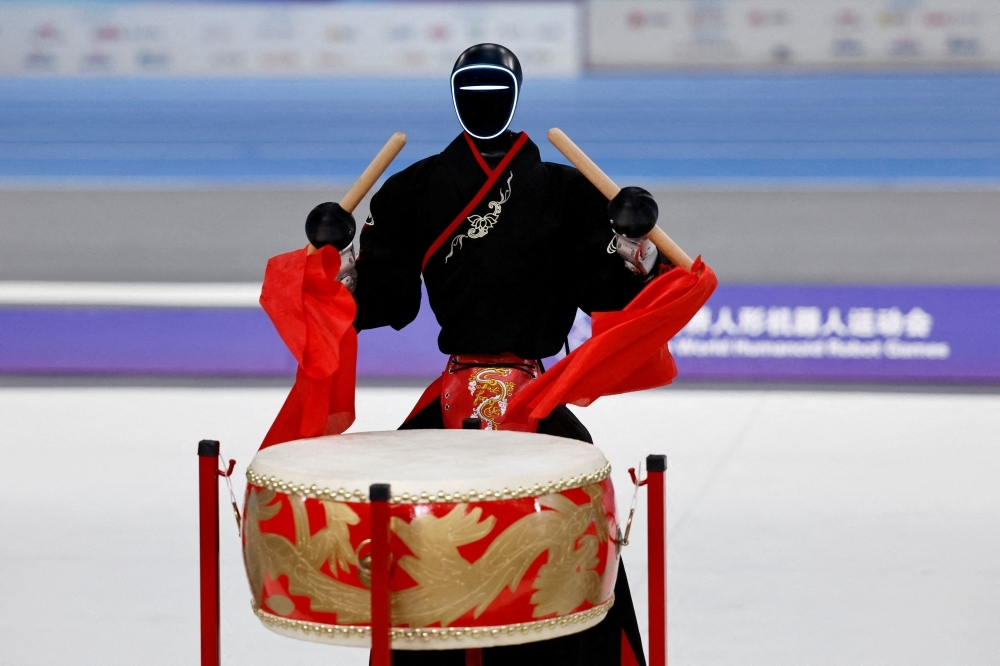
Fireworks, lanterns and televised variety shows have long defined the Lunar New Year spectacle in China.
This year, however, another performer is stepping confidently into the spotlight: the humanoid robot.
What might once have been a novelty sideshow is rapidly becoming a national demonstration of technological ambition — and, increasingly, a marketing platform for the next wave of AI-driven industry.
From Cultural Celebration to Technology Showcase
In the weeks leading up to the Spring Festival, several robotics companies staged high-visibility performances designed not merely to entertain audiences but to impress investors, policymakers and global competitors.
Shanghai-based Agibot’s livestreamed robot gala — featuring dancing humanoids, comedic sketches, acrobatics and lip-sync performances — drew more than a million viewers online, signalling the growing mainstream fascination with embodied artificial intelligence.
The timing is deliberate.
China’s annual CCTV Spring Festival Gala is among the most watched television events in the world, offering robotics firms a rare combination of mass exposure and institutional legitimacy.
Last year, humanoid robots from Unitree performed alongside human dancers, a moment that transformed what could have been a technical demonstration into a cultural milestone.
This year, four robotics startups — Unitree, Galbot, Noetix and MagicLab — are expected to participate, marking the strongest humanoid robotics lineup the gala has hosted.
Selling the Future Through Entertainment
Behind the choreography lies a calculated strategy.
Robotics companies increasingly understand that technological capability alone does not build markets; public imagination does.
By positioning humanoid robots in familiar cultural settings — singing festive songs, participating in comedy sketches, or interacting with performers — manufacturers are accelerating social acceptance of machines that will eventually move into factories, classrooms, retail environments and homes.
For marketers, the phenomenon offers a preview of how emerging technologies will be introduced to consumers in the future.
Rather than launching through technical whitepapers or trade expos, robotics firms are debuting their products through entertainment-led storytelling, blending spectacle with subtle product education.
Viewers are not simply watching robots perform; they are being conditioned to see them as companions, assistants and co-workers.

Investor Signalling on a National Stage
The commercial implications are significant.
Several of the companies involved are preparing for capital market listings or major funding rounds, and highly visible demonstrations at national cultural events function as powerful signalling tools to investors.
The message is clear: humanoid robotics is no longer confined to laboratories; it is moving into the mainstream economy.
Global competition is intensifying as well.
International players, including Tesla with its Optimus robot programme, are racing toward commercialisation, but Chinese firms are gaining momentum through rapid iteration, aggressive demonstration strategies and strong domestic visibility.
When millions of viewers watch robots perform during one of the country’s most symbolic cultural celebrations, the technology moves from abstract future promise to present-day reality.
When Culture Becomes Market Strategy
Perhaps the most striking aspect of this shift is how seamlessly robotics is being woven into cultural narratives.
Lunar New Year celebrations traditionally symbolise renewal, prosperity and forward-looking optimism — themes that align naturally with technological advancement.
By integrating humanoid robots into these rituals, China is effectively turning its biggest cultural stage into a showcase for its next industrial frontier.
For the marketing community, the lesson is unmistakable: the future of technology adoption will be driven as much by cultural storytelling as by engineering breakthroughs.
In China’s case, the path to the robotics economy may well be paved not only with algorithms and hardware — but with music, dance and a perfectly timed gala performance.