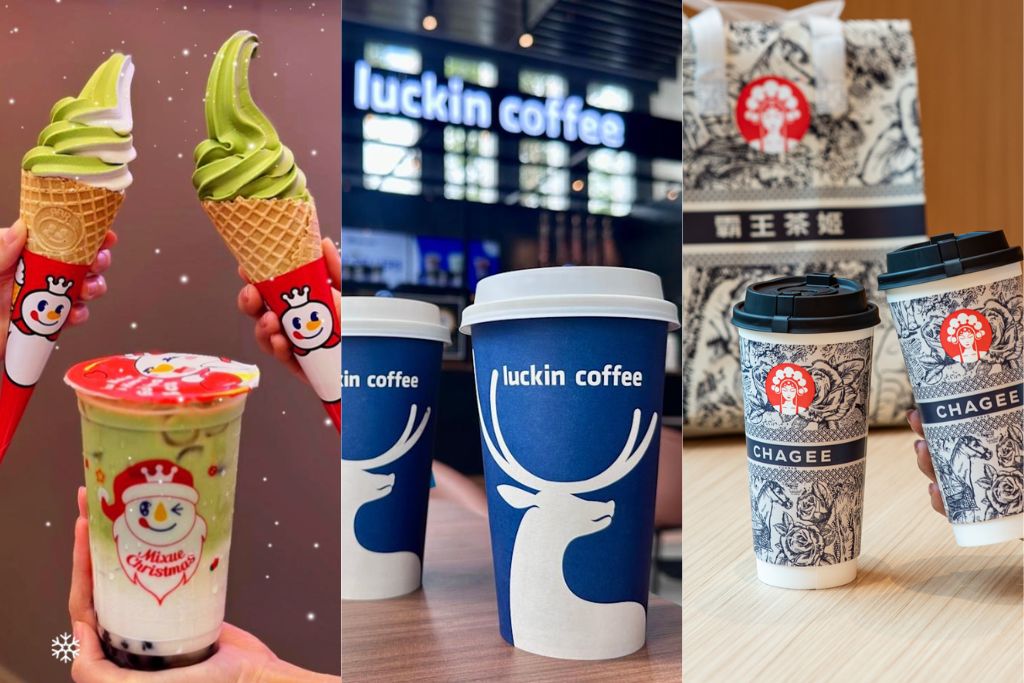
Walk into almost any Malaysian mall today and you will see it.
A long queue outside a tea shop selling drinks for RM6.
A new ice cream chain offering cones cheaper than bottled water.
Another coffee brand opening three outlets within months of arriving.
To consumers, it feels like a windfall.
To many Malaysian F&B operators, it feels like the beginning of a war.
The recent debate sparked by Mokky’s Pizza co-founder Umar Abdul Aziz about Chinese brands such as Mixue, Luckin, Wallace and Chagee entering Malaysia with aggressive pricing has struck a chord across the industry.
His concern is that these brands are deploying a familiar playbook: slash prices, open aggressively, dominate the market, then profit later.
Marketers should resist the temptation to reduce this story to a simple narrative of predatory pricing.
What we are really seeing is a different operating philosophy — one that China’s consumer brands have refined at extraordinary scale.
And that philosophy is brutally simple: growth first, margin later.
The Scale Strategy
China’s consumer sector has spent the past decade perfecting expansion at speed.
Brands like Luckin Coffee grew to thousands of outlets not by chasing profits per store, but by chasing presence.
The logic is clear: if your store is everywhere, you become the default.
Price plays an important role here, but it is only part of the equation.
Scale brings advantages that smaller brands struggle to match: bulk purchasing power, tightly controlled supply chains, centralised production, and increasingly, data-driven store operations.
What looks like irrational pricing is often simply operational efficiency combined with aggressive market entry.
From a marketing perspective, the real objective is habit formation.
If consumers begin their day with your RM6 drink, they are unlikely to change that routine easily.
Cheap becomes sticky.
Why Malaysia Is Attractive
Malaysia happens to be fertile ground for this strategy.
Consumers here are famously price-sensitive.
Promotional culture runs deep, and value-for-money remains a powerful driver of foot traffic.
The country also has a well-developed franchise ecosystem that allows new brands to expand quickly through local partners.
Perhaps most importantly, many local F&B businesses are under-capitalised, making prolonged price wars difficult to sustain.
Put these factors together and Malaysia looks less like a battleground and more like an open invitation.
The Wrong Battlefield
But there is another uncomfortable truth in this debate.
Many local F&B brands are fighting on the wrong battlefield.
If the only way a brand can compete is by lowering prices, then the player with the deepest pockets will almost always win.
Price wars rarely build loyalty.
They build habits of shopping for discounts.
The brands that survive long-term are not necessarily the cheapest.
They are the ones customers feel something for.
In other words, they build brand gravity.
The Advantages Local Brands Forget
Foreign chains may scale faster, but local brands possess advantages that spreadsheets cannot easily replicate.
First, cultural authenticity: Malaysian food culture is rich with stories, traditions and regional identity. Brands rooted in this heritage have emotional depth that imported formats often struggle to match.
Second, community connection: The neighbourhood café, kopitiam or dessert shop often thrives because it belongs to its customers’ lives, not just their wallets.
Third, experience: Many fast-scaling chains optimise for speed and convenience. Local brands can compete by offering atmosphere, hospitality and personality — qualities that transform transactions into rituals.
And finally, operational discipline: Lean menus, better supplier partnerships and smart automation can strengthen margins without destroying brand value.
In short, efficiency is not the exclusive domain of international players.
A Market Doing What Markets Do
New competitors arriving with sharper tools is not unusual.
It is how industries evolve.
Ride-hailing disrupted taxis. E-commerce disrupted retail. Streaming disrupted television.
Each time, the companies that survived were not the cheapest.
They were the ones that adapted fastest.
The arrival of aggressively priced foreign F&B chains should therefore be seen less as a threat and more as a wake-up call.
Because cheap coffee may attract the queue.
But brand strength is what keeps it there.
Share Post:

Haven’t subscribed to our Telegram channel yet? Don’t miss out on the hottest updates in marketing & advertising!