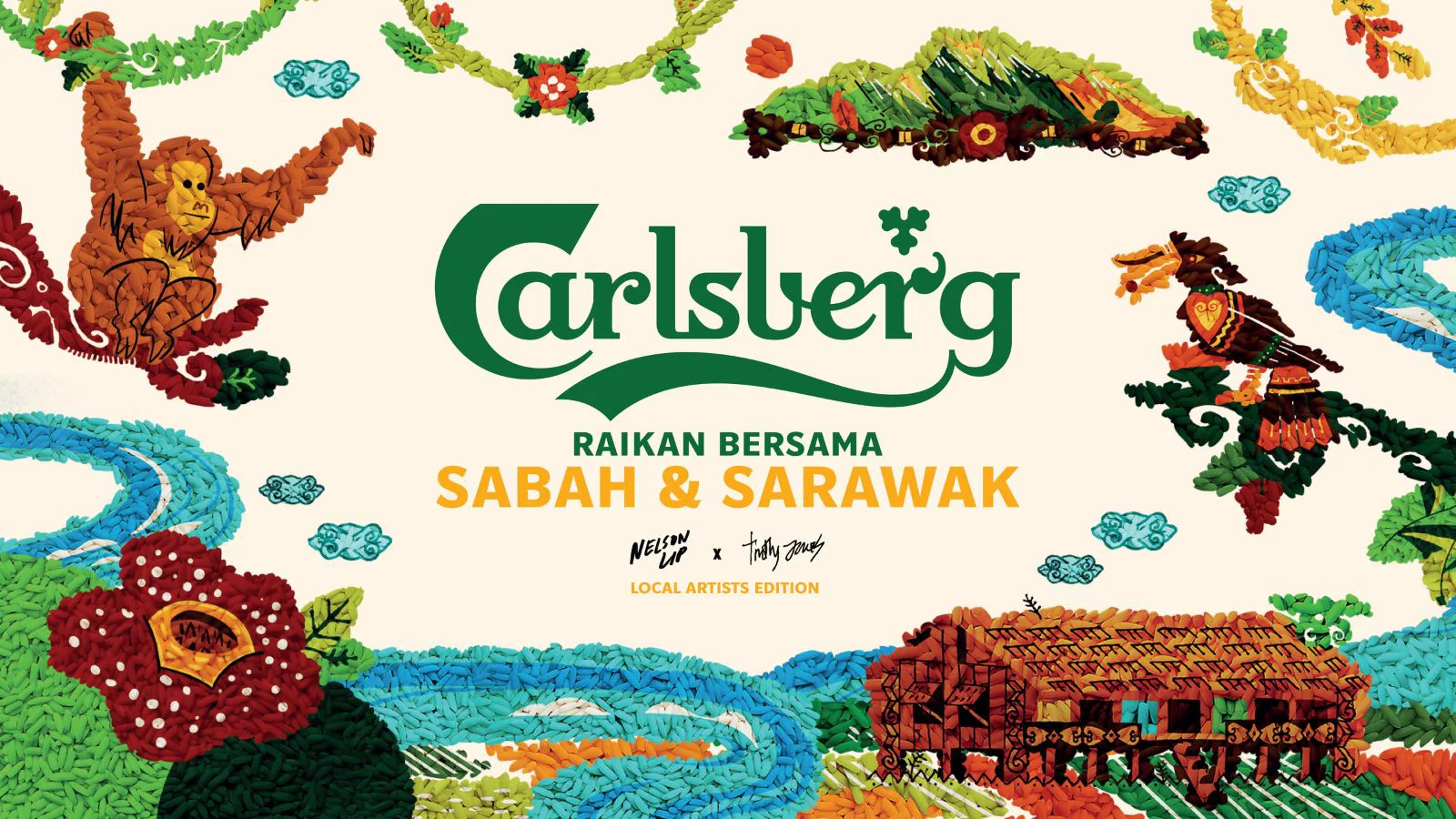
Festive advertising often follows a familiar script. A burst of colour. Smiling faces in traditional dress. Sweeping drone shots. A soundtrack swelling with cultural pride. The intention is usually good, but the result can sometimes feel like a postcard — beautiful, polished and oddly distant.
This year, however, Carlsberg Malaysia appears to have chosen a different path for Gawai and Kaamatan. Instead of speaking about East Malaysia, it has chosen something far harder to do: step aside and let East Malaysians speak for themselves.
Its latest Harvest Festival campaign, developed with Havas Malaysia, arrives not as a loud festive declaration but as a trilogy of films carrying a quieter confidence. Titled This Is Who We Are, The Sounds of Our Land and The Dances of Our Land, the work feels less like advertising and more like an invitation to pay attention.
Rather than leaning heavily into the familiar shorthand of harvest celebrations, the films explore something more intimate — identity as something lived, evolving and deeply personal.
The campaign builds on last year’s Rhythm of Harvest, but this time the storytelling feels more grounded in lived experience. Instead of turning culture into spectacle, the films ask a gentler question: Who gets to tell the story of East Malaysia?
The answer, refreshingly, is East Malaysians themselves.
At the heart of the campaign lies a simple but important insight uncovered by Havas Malaysia: while Sabahans and Sarawakians carry immense pride in their heritage, many feel outside portrayals often flatten their identities into stereotypes. That tension matters.
For years, East Malaysia has sometimes been reduced to costume, dance and scenic landscapes — visually rich, yes, but occasionally stripped of nuance. Culture becomes something displayed rather than lived.
Carlsberg’s response was to adopt a “by locals, for locals” philosophy. It sounds simple on paper, but in practice, it means surrendering control. It means allowing stories to emerge from within communities instead of filtering them through a West Malaysian lens.
More Than a Festival Story
The first film, This Is Who We Are, captures this beautifully. There is a contemplative quality to it. Home, the film suggests, is not necessarily a place but something people carry — in memory, instinct and everyday rituals. For East Malaysians living elsewhere, identity is not switched on during Gawai or Kaamatan and packed away afterwards. It travels with them.
The second film, The Sounds of Our Land, follows musician and songwriter Melina William, who reflects on how traditional Bornean sounds possess an almost emotional GPS, capable of transporting people back home instantly. Anyone who has heard an old song and suddenly found themselves somewhere else emotionally will recognise the feeling.
Meanwhile, The Dances of Our Land shifts the conversation from preservation to reinvention. Choreographer Arthur Darren reflects on how traditional movement evolves when blended with contemporary expression.
There is an important truth hidden here: culture survives not because it remains untouched, but because younger generations keep reshaping it without abandoning its spirit.
Perhaps the campaign’s greatest strength lies in what it chooses not to over-explain.
Directed by indigenous Sarawakian filmmaker Sarah Lois Dorai, the trilogy rewards close viewing. Cultural references are quietly embedded into the storytelling rather than loudly announced. A replica of the Kenyah-Badeng sunhat references cultural reclamation efforts after an original artefact was returned from the UK. A rooster subtly nods to Iban Gawai traditions. Young Sabahans appear in contemporary fashion, reflecting a generation reconnecting with heritage in their own way.
These details matter because they trust audiences to lean in.
When Brands Learn to Listen
Behind the scenes, authenticity appears to have been treated less as a buzzword and more as a production principle. Around 80% of the crew reportedly came from Sabah and Sarawak, reinforcing the idea that representation should happen behind the camera as much as in front of it.
Of course, Carlsberg remains a beer brand operating within Malaysia’s tightly regulated advertising environment. Product-led storytelling has limits. Yet rather than treating those limits as obstacles, the brand seems to have reframed them as creative opportunities.
If you cannot sell the product directly, perhaps you contribute something more meaningful: belonging.
The trilogy signals an interesting evolution for Carlsberg’s Harvest Festival platform — from festive participation to cultural facilitation. Not merely appearing during celebrations, but creating space for communities to narrate themselves.
In a crowded landscape where brands are constantly trying to insert themselves into culture, there is something quietly powerful about one choosing, for once, to listen.
Perhaps that is the real story here. Not that Carlsberg made three beautiful films. But that it understood the difference between representation and recognition.
Share Post:

The APPIES is where Malaysia’s boldest campaigns, brightest ideas, and most impactful storytellers take the stage.
More than an awards show, it is the industry’s ultimate platform for creative, media, digital and marketing excellence, where live presentations meet live judging.
This is your chance to showcase work that moved audiences, shaped conversations, and delivered real results.
From breakthrough brand campaigns to innovative digital experiences, the APPIES celebrates the work that defines the future of marketing.
Step into the spotlight alongside the industry’s leading agencies, brands, creatives, strategists and changemakers.
Whether you are aiming for Gold, Silver, Bronze or the prestigious Best of the Best recognition, this is your moment to make history.
Your campaign deserves to be seen.
Your ideas deserve the stage.
Your work deserves the legacy.
KEY DATES
Haven’t subscribed to our Telegram channel yet? Don’t miss out on the hottest updates in marketing & advertising!