Every Chinese New Year, Apple releases a film that quietly recalibrates what festive brand storytelling can be.
Not louder. Not grander. Just more human.
This year’s Glad I Met You is no exception and perhaps one of its most emotionally assured works yet.
Directed by Bai Xue and created with TBWA\Media Arts Lab, the twelve-minute film resists the usual Chinese New Year tropes of spectacle and symbolism.
Instead, it leans into something rarer in brand films today: emotional patience.
A Story Built on a Small Meeting
At its core, Glad I Met You follows Lin Wei, a young man moving through life with a quiet emotional distance, and Little White, a lost dog who enters his world by accident rather than design.
There is no dramatic inciting incident. No forced moral turn.
What unfolds instead is a sequence of small, observant moments—shared walks, awkward pauses, fleeting warmth—that slowly reshape Lin Wei’s inner world.
The dog becomes neither mascot nor metaphor, but a gentle emotional disruptor.
Through Little White, Lin Wei begins to notice the world again.
It’s a story about how connection often arrives sideways.
Emotion Over Explanation
One of the film’s most affecting scenes shows Little White running toward Lin Wei in slow motion.
The technique is understated, but deliberate.
Time stretches just long enough for the emotion to land—without dialogue, without instruction.
This is where the film shows remarkable restraint.
It trusts the audience to feel, not decode.
In an age of over-signposted storytelling, that confidence is quietly powerful.
The Tactile Magic of Imperfection
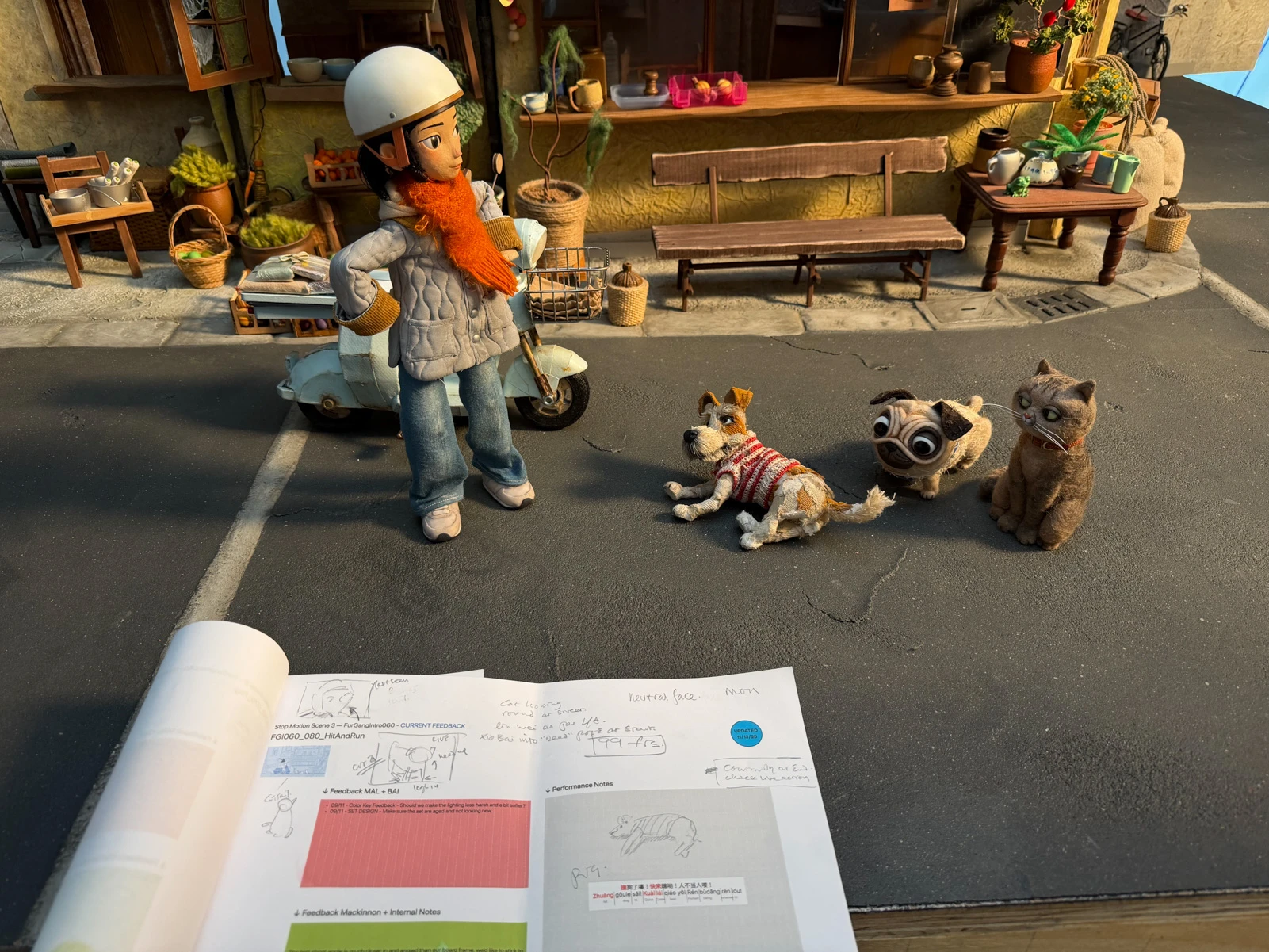
Visually, Glad I Met You blends live action with handcrafted stop-motion animation, all captured on the iPhone 17 Pro.
But the technology never demands centre stage.
Instead, it disappears into the storytelling.
The stop-motion sequences, in particular, carry a tactile warmth that digital perfection often erases.
Each character is physically built, animated millimetre by millimetre, with tiny hand-painted expressions swapped frame by frame.
You don’t just see the craft—you feel the time inside it.
As BUCK, the creative studio behind the stop-motion work, explains: everything on screen exists in the real world.
That knowledge adds emotional gravity.
These aren’t effects; they’re acts of care.
Why Animals Matter Right Now
There’s something quietly contemporary about centring an animal as the emotional axis of the story.
In cities that move too fast, in lives crowded with screens and obligations, animals often become our most honest companions—uncomplicated, grounding, present.
Glad I Met You recognises this without romanticising it.
Little White doesn’t fix Lin Wei’s life. The dog simply creates space—for noticing, for softness, for change.
And that feels deeply relevant to the moment we’re living in.

The Product That Knows When to Step Back
As with Apple’s strongest narrative work, the product presence here is almost invisible.
The film is shot on iPhone, but never about the iPhone. There are no technical call-outs, no visual chest-thumping.
Instead, the technology earns credibility by enabling intimacy. By not getting in the way.
For marketers, this is the quiet lesson: confidence today often looks like restraint.
When a brand trusts its story—and its audience—the work travels further.
A Film That Feels Like a Memory
By the time Glad I Met You ends, it feels less like a campaign and more like a personal recollection.
The kind that lingers not because it dazzled, but because it noticed something true.
In a festive season crowded with noise, Apple chose stillness.
And in doing so, reminded us that sometimes the most meaningful words a brand can offer are the simplest ones of all:
I’m glad I met you.