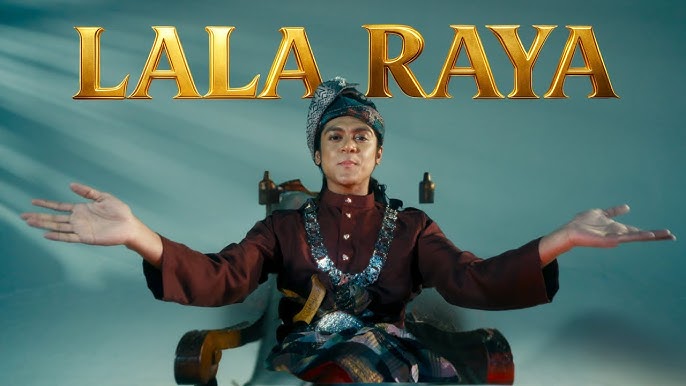
Malaysian influencer Muhammad Affizy Mohd Khairy, better known as Agy, has found himself at the centre of a digital storm after his Raya single LaLa Raya triggered widespread backlash across social platforms.
According to social listening firm Dataxet Malaysia, 95% of online sentiment surrounding the release was negative, with just 4% positive and 1% neutral.
The criticism was swift and unforgiving.
Netizens took aim at everything from the song’s production quality and “takde vibe Raya langsung” reactions, to its early Ramadan release timing.
A cover that crossed a line
It was the cover artwork — closely resembling Leonardo da Vinci’s The Last Supper — that inflamed the controversy.
Many viewed the visual reference as culturally insensitive and inappropriate during the fasting month, particularly in a multi-faith country where religious imagery carries deep emotional weight.
Critics questioned why local Raya symbolism was sidelined in favour of a composition associated with Christian iconography.
Calls for mass dislikes, reporting and boycotts quickly circulated. Within hours, the official music video was taken down, although the lyric version and streaming tracks remained accessible.
The song briefly reached number 12 on Malaysia’s trending music videos chart before disappearing from YouTube.
It has since reappeared with revised artwork.
Over the weekend, Agy addressed the issue at a media conference, issuing a public apology.
He stated he had no intention of insulting or provoking any racial or religious community and acknowledged his responsibility as both a Muslim and a Malaysian citizen.
Satire lost in translation?
Interestingly, the backlash narrative does not fully align with the music video’s intended concept.
In the reuploaded visual, Agy is portrayed surrounded by influencers obsessively documenting themselves — constantly posing, adjusting outfits and chasing attention.
The lyrics question the real meaning of celebrating Raya, while the mise-en-scène mimics a controlled, grid-like environment reminiscent of social media feeds.
Music video director Mohd Hisham Saleh later clarified in social posts that the creative intent was satirical.
The video, he explained, was meant to ask: when celebration becomes content, what remains of the original feeling?
Scenes poking fun at FYP culture, OOTD rituals and the monetisation of likes were designed as commentary on performative festivity.
In short, LaLa Raya may have aimed to critique modern Raya culture — but the provocation overshadowed the premise.
Festive marketing is emotional territory
For marketers, the episode underscores a familiar but increasingly volatile truth: festive content in Malaysia is emotionally charged terrain.
Raya campaigns are typically built on nostalgia, warmth and family.
Any deviation — particularly involving religious symbolism — is likely to be scrutinised through a moral and cultural lens rather than a purely creative one.
What might be read as irony in one context can be interpreted as disrespect in another.
Agy is no stranger to polarising responses.
In 2024, he faced criticism for a campaign with local bag brand Sometime, where some questioned gender expression and casting choices.
The brand stood by him, highlighting his creativity and work ethic.
This time, however, the stakes were different.
When festive identity intersects with faith, humour becomes harder to decode and irony easier to misinterpret.
Intent vs perception
The broader lesson for brands and creators is not that satire has no place in seasonal storytelling.
Rather, it demands sharper contextual framing and cultural calibration.
In a multi-faith society, symbolic references carry layered meanings — and audiences are quick to respond when those layers feel mishandled.
Social listening data moves fast. Screenshots move faster.
As the dust settles, LaLa Raya stands as a case study in the risks of blending commentary, commerce and religious imagery.
In Malaysia’s hyperconnected ecosystem, intent may matter — but perception ultimately decides the outcome.
Share Post:


The APPIES is where Malaysia’s boldest campaigns, brightest ideas, and most impactful storytellers take the stage.
More than an awards show, it is the industry’s ultimate platform for creative, media, digital and marketing excellence, where live presentations meet live judging.
This is your chance to showcase work that moved audiences, shaped conversations, and delivered real results.
From breakthrough brand campaigns to innovative digital experiences, the APPIES celebrates the work that defines the future of marketing.
Step into the spotlight alongside the industry’s leading agencies, brands, creatives, strategists and changemakers.
Whether you are aiming for Gold, Silver, Bronze or the prestigious Best of the Best recognition, this is your moment to make history.
Your campaign deserves to be seen.
Your ideas deserve the stage.
Your work deserves the legacy.
KEY DATES
Haven’t subscribed to our Telegram channel yet? Don’t miss out on the hottest updates in marketing & advertising!