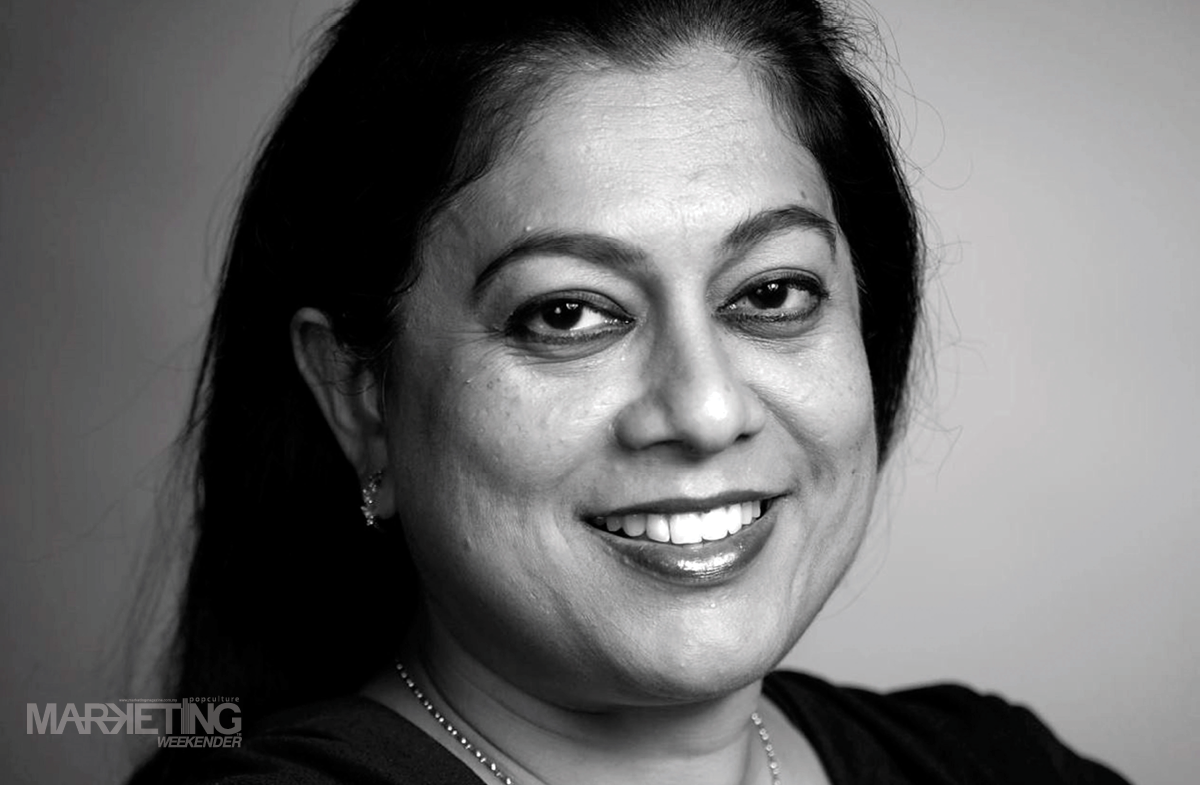
As artificial intelligence becomes embedded across marketing, customer experience and business operations, adopting the technology is no longer enough to set an organisation apart.
The more important question is whether business leaders have the strategy, judgment and governance required to use AI without weakening brand identity, creativity or consumer trust.
Ahead of the Brand Leadership in the Age of AI workshop, Sutapa Bhattacharya discusses the mistakes organisations make when implementing AI, the capabilities that will create sustainable competitive advantage and why human oversight must remain central to brand leadership.
AI Adoption Is No Longer a Differentiator
According to Sutapa, true brand leadership is not determined by the number of AI platforms an organisation uses. Instead, it is reflected in the judgment, values and human oversight surrounding those technologies.
“AI adoption itself is no longer a differentiator. Recent industry data shows that 71% of organisations now regularly use generative AI, and it powers roughly 15% of all marketing activity. Simply having AI has therefore become table stakes rather than an indication of leadership,” said Sutapa.
She believes organisations must first establish what their brands represent before deciding how AI should be used.
“Leaders need strategic clarity before technology. They must decide what the brand stands for and where AI should amplify that story, rather than allowing the tool to dictate the message,” said Sutapa.
Governance is equally important. Instead of producing large volumes of disconnected AI-generated content, strong organisations build repeatable systems around the technology.
“The strongest performers establish clear briefing processes, brand-voice rules, human review and measurable business outcomes around their use of AI. The operating discipline surrounding the technology, rather than the sophistication of the model itself, is what separates the winners from the rest,” said Sutapa.
However, as adoption increases, consumer confidence cannot be taken for granted.
“Consumer comfort with brands using AI has reportedly fallen from around 57% to 46% within a single year in one major multi-market study. Leaders must therefore actively manage transparency and trust, rather than focusing only on efficiency,” said Sutapa.
She points to Heinz’s “AI Ketchup” campaign as an example of a brand using emerging technology without abandoning its established identity. Although the campaign used DALL·E-generated imagery, Heinz’s iconic bottle shape and visual codes remained instantly recognisable.
“The technology created the content, but the brand’s 150-year equity guided the leadership team in deciding which images to keep. AI was used to reinforce the identity of the brand, not replace it,” said Sutapa.
Why AI Adoption Does Not Always Produce Business Growth
Although many organisations have invested in AI, not all have translated those investments into measurable growth.
Sutapa believes the gap between adoption and impact is usually caused by weak strategy and governance rather than technological limitations.
“One of the biggest mistakes is buying platforms and focusing on tools before defining the brand or business outcome they are meant to serve. This produces fragmented pilots instead of a repeatable system that the wider team can use,” said Sutapa.
AI can increase the speed and volume of production, but more content does not automatically produce stronger results.
“AI marketing works only when it operates within a governed workflow involving structured source material, brand-voice rules, human review and a clear business outcome. Without that layer, AI multiplies content, not results,” said Sutapa.
She also cautions organisations against assuming that automated production will automatically improve campaign performance.
“Platforms are beginning to down-rank generic AI-generated paid social creative, while some AI video tools are producing weaker returns because production overhead remains high even when generation is automated. Unrefined AI output alone does not move performance,” said Sutapa.
Another mistake is pursuing personalisation without recognising how consumers may feel about the use of their information or the growing presence of automation in brand interactions.
“Pushing AI-driven personalisation and content without addressing declining consumer comfort can erode brand equity and trust, even as operational efficiency rises,” said Sutapa.
Organisations must also invest in building internal capabilities instead of viewing AI solely as a cost-cutting mechanism.
“Companies that adopted early and developed internal skills are now seeing approximately double the year-on-year productivity gains of late adopters. A narrow cost-reduction mandate, without an intention to build capability, prevents organisations from capturing the wider value of AI,” said Sutapa.
Competitive Advantage Will Come From What Surrounds the Technology
As more businesses gain access to the same models and automation platforms, the tools themselves will become increasingly commoditised.
Sutapa says sustainable differentiation will come from the assets, knowledge and operating systems organisations build around AI.
“Proprietary data and customer insight will remain powerful sources of advantage. Enterprise-scale personalisation and audience research consistently produce some of the strongest AI-driven returns because they are built on information that belongs uniquely to the brand,” said Sutapa.
Distinctive brand assets will also become more valuable as generative tools make it easier to produce large volumes of similar-looking content.
“Codified brand rules that keep every AI output recognisably yours — including tone, visual identity and values — become the actual business advantage and moat, because the generative layer is shared by everyone,” said Sutapa.
She argues that organisations should concentrate on building an AI operating system rather than chasing individual outputs.
“Brands need clear systems for briefing, generating, reviewing, approving, localising and measuring AI work. That creates an organisational capability that competitors cannot simply copy by purchasing the same software,” said Sutapa.
The ability to experiment quickly must also be accompanied by the ability to validate results responsibly.
“Median payback on AI marketing investment has fallen sharply across the industry. The advantage will increasingly belong to teams that can test and validate faster, not merely produce faster,” said Sutapa.
Dividing the Work Between AI and Human Creativity
The relationship between automation and creativity is often presented as a competition. Sutapa, however, believes it should be understood as a deliberate division of labour.
“AI should handle scale, including drafting, content variations, audience segmentation and predictive analytics. At the same time, people must remain responsible for meaning, emotional ideas, brand purpose and the final judgment on what should be released,” said Sutapa.
While AI’s share of marketing investment is increasing, spending allocated to human creative talent is declining in some organisations. Sutapa believes leaders must manage this shift carefully.
“The human layer is precisely what protects authenticity. Organisations should not allow investment in human creativity to fall by default simply because AI can produce more material at greater speed,” said Sutapa.
Human review should also be treated as a formal part of the production process rather than a final check performed after the work has already been created.
“The strongest-performing AI campaigns embed human review and brand-voice checks directly into the workflow. That is how organisations achieve efficiency without allowing their work to become generic,” said Sutapa.
Consumer trust should ultimately serve as the clearest signal of whether the balance is working.
“Falling consumer comfort with brand AI is a warning that efficiency gains without visible human and ethical stewardship may erode the emotional connection brands depend on and, eventually, weaken brand equity,” said Sutapa.
Breaking Down Organisational Silos
AI influences brand strategy, customer experience, product innovation and technology simultaneously. Yet many organisations continue to manage these functions separately.
“The reality is that AI affects how a brand is perceived, how customers are served, what gets built next and how it is delivered. Managing these areas in silos creates serious strategic and operational risks,” said Sutapa.
One of those risks is an inconsistent brand voice across customer touchpoints.
“If marketing, product and customer service deploy AI independently, the brand can become fragmented. Each function may report efficiency gains, while customers experience inconsistent messaging and begin to question whether they can trust the brand,” said Sutapa.
Separate investments can also result in duplicated or incompatible systems.
“Without a shared view, technology and innovation teams may build AI capabilities that customer experience and brand teams never adopt. This creates wasted investment and directs resources towards the wrong priorities,” said Sutapa.
A connected approach also enables organisations to respond more effectively when public expectations change.
“Because consumer comfort with brand AI is declining even as usage increases, organisations need a joined-up view across strategy, customer experience, innovation and technology. That is the only way to identify and correct the trust gap before it damages the most valuable asset a brand owns: its equity,” said Sutapa.
Enterprise case studies, she adds, suggest that organisations treating AI as a cross-functional capability experience stronger productivity growth than those approaching it through isolated departmental pilots.
Moving From AI Deployment to AI Leadership
Through the Brand Leadership in the Age of AI workshop, Sutapa wants participants to change how they think about the technology.
“I want participants to move from treating AI as a collection of tools to be deployed towards treating it as an organisational capability that must be governed and led,” said Sutapa.
Participants will examine where AI is currently producing meaningful returns, including personalisation, audience insights and predictive analytics, as well as areas where performance may remain weaker, such as generic AI video and paid social creative.
“They should leave with a clear-eyed view of where the real return on investment lies, so they can invest based on evidence rather than hype,” said Sutapa.
The workshop will also introduce a practical governance framework that participants can adapt within their organisations.
“Every AI workflow should include clear brand-voice rules, a human-review step and a defined business outcome. This is the same discipline that separates high-performing campaigns from the rest,” said Sutapa.
More importantly, she hopes participants will return to their organisations with a mandate to bring different functions together.
“Brand, customer experience, innovation and technology leaders need to be in the same room. AI decisions cannot continue to be made in isolation,” said Sutapa.
Trust and accountability will remain central to the conversation.
“Efficiency gains mean very little if they dilute consumer affinity. Organisations need a plan that keeps transparency, human judgment and accountability visible to their customers,” said Sutapa.
Rather than rushing to adopt every new platform, Sutapa recommends beginning with a focused and measurable initiative.
“Start small and structured. Pilot one governed AI workflow connected to a genuine brand or customer-experience outcome, measure it honestly and use that proof point to build the internal case for wider, better-led adoption,” said Sutapa.
As AI becomes increasingly accessible, the organisations that lead will not necessarily be those that use the most advanced tools. They will be the ones capable of combining technological speed with brand clarity, organisational discipline, human creativity and consumer trust.
Join the Workshop
Brand Leadership in the Age of AI By Sutapa Bhattacharya
12 August 2026 at Roof Garden, KLGCC Convention Centre
HRD Corp Claimable Training Programme. Register now and learn how to lead AI without compromising creativity, trust or brand identity.
Contact Ruby – +603-7726 2588
Share Post:

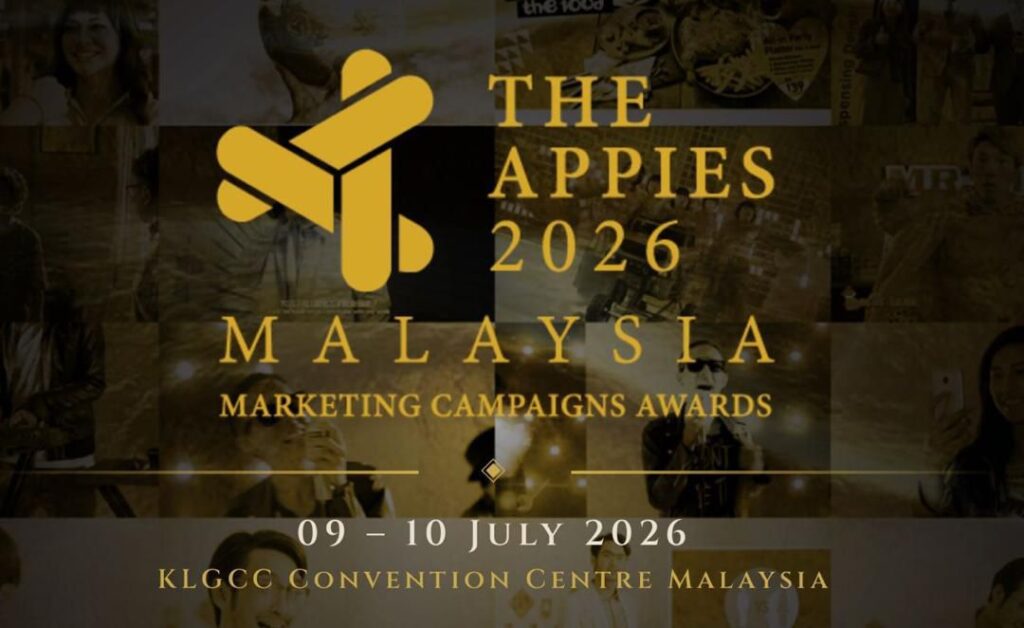
The APPIES is where Malaysia’s boldest campaigns, brightest ideas, and most impactful storytellers take the stage.
More than an awards show, it is the industry’s ultimate platform for creative, media, digital and marketing excellence, where live presentations meet live judging.
This is your chance to showcase work that moved audiences, shaped conversations, and delivered real results.
From breakthrough brand campaigns to innovative digital experiences, the APPIES celebrates the work that defines the future of marketing.
Step into the spotlight alongside the industry’s leading agencies, brands, creatives, strategists and changemakers.
Whether you are aiming for Gold, Silver, Bronze or the prestigious Best of the Best recognition, this is your moment to make history.
Your campaign deserves to be seen.
Your ideas deserve the stage.
Your work deserves the legacy.
KEY DATES
Haven’t subscribed to our Telegram channel yet? Don’t miss out on the hottest updates in marketing & advertising!