Part 1: The AI Agency Conversation Series – What kind of agency should AI create?
Artificial intelligence is becoming the industry’s new normal. The agencies that will define the next decade are not the ones buying the latest AI tools. They are the ones bold enough to redesign how they think, work and create around them.
There is a moment that now plays out in almost every agency pitch.
Somewhere between the credentials slide and the campaign idea, artificial intelligence makes its entrance. AI-powered strategy. AI-driven creativity. AI-enhanced customer journeys. AI-assisted production.
Only two years ago, those phrases sounded revolutionary. Today, they barely raise an eyebrow.
Every agency has access to ChatGPT. Claude. Gemini. Midjourney. An ever-expanding ecosystem of AI platforms promises faster thinking, sharper insights and limitless creativity.
The technology that once differentiated agencies is rapidly becoming available to everyone. That changes the conversation entirely.
The question is no longer whether agencies use AI. The question is whether AI has changed the agency. Those are two very different things.
Adding artificial intelligence to yesterday’s operating model does not create tomorrow’s organisation. It simply accelerates yesterday’s processes. Briefs move faster. Copy is drafted quicker. Images appear in seconds instead of hours.
Useful? Absolutely. Transformational? Not necessarily. The agencies that will lead the next decade understand a simple but profound truth.
AI is not another digital tool to be layered onto existing ways of working. It is an opportunity to rethink how an agency itself is designed.
That is a far more difficult challenge than learning a new platform. It also happens to be the real competitive advantage.
The First AI Era Is Already Ending
The advertising industry has spent the past two years captivated by capability. Which AI platform writes the best copy? Which model creates the strongest visuals? Which workflow saves the most time?
Those questions were inevitable. Every new technology triggers the same fascination. We become absorbed by what the technology can do before asking what it should change.
Today, that first phase is coming to an end.
Artificial intelligence is becoming infrastructure rather than innovation. Like cloud computing or high-speed internet before it, access is no longer exclusive. Every agency, regardless of size, can experiment with the same tools.
Technology itself is rapidly being commoditised.
Dr Shakthi DC, Founder and CEO of iWISERS, believes this is where many organisations risk misunderstanding what AI transformation really means.
Too many agencies, she argues, have changed their vocabulary rather than their operating system. The distinction is critical. Replacing manual tasks with automation is useful.
Redesigning how decisions are made, how knowledge flows across teams and how expertise is shared is transformational. One improves efficiency.
The other changes the business. That shift represents the beginning of what I believe is advertising’s second AI era. The first AI era was about tools.
The second AI era will be about organisations. That may ultimately become the defining business story of our industry.
Clients Have Quietly Raised the Bar
While agencies continue discussing AI platforms, clients have already moved on. They assume agencies have access to the technology. What they want to know is something else entirely. Has it made you better?
Eugene Lee, VP and CMO of CHAGEE Asia Pacific, believes agencies sometimes mistake mentioning AI for demonstrating value.
“AI needs to be practical and not just used as a buzzword,” he says.
“Agencies need to display practical use of AI in the most simple way to the client.”
It is a deceptively powerful observation.
Clients are no longer impressed by presentations explaining artificial intelligence. They are impressed when agencies use AI to improve the conversation itself.
Generate campaign routes during the meeting. Visualise concepts while ideas are still being debated. Explore multiple strategic scenarios before the discussion ends.
Technology becomes valuable not because it looks sophisticated, but because it helps clients make better decisions. Faster.
With greater confidence. That subtle difference changes what agencies compete on.
For decades, agencies differentiated themselves through creative reputation, planning models or media capability.
Today, the differentiator is becoming organisational capability. Not what AI you own. But how intelligently your organisation uses it.
The Agencies Pulling Ahead Think Differently
Few agencies illustrate that shift more clearly than Havas Malaysia.
For Havas Malaysia CEO Nizwani Shahar, the biggest organisational change over the past year has not been introducing another AI platform.
It has been rethinking how work moves through the agency itself. That may sound like a small distinction. It isn’t. Most organisations treat AI as another productivity tool. Havas is treating it as an operating layer.
Instead of asking how AI can create faster copy or quicker visuals, the agency is systematically examining every stage of its workflow.
Where are people spending time on repetitive work? Which manual processes add little value?
How can automation remove operational friction so people devote more energy to thinking, creating and advising clients?
“AI is not just about generating faster images or copy,” says Nizwani.
“We are using it to fundamentally redesign how work moves through every stage of our process.”
That philosophy changes the role of technology.
Instead of replacing human capability, AI amplifies it. Strategists spend less time gathering information and more time interpreting what matters.
Creatives spend less time producing endless executional variations and more time refining ideas. Client leaders spend less time managing process and more time solving business problems.
The impact is already measurable. Turnaround times are shortening. First drafts arrive faster. Workflow visibility has improved. Rework is declining.
Yet perhaps the biggest gain is one that rarely appears on productivity dashboards. People regain time to think. And in an industry where thinking is the product, that may prove to be AI’s greatest contribution.
Share Post:

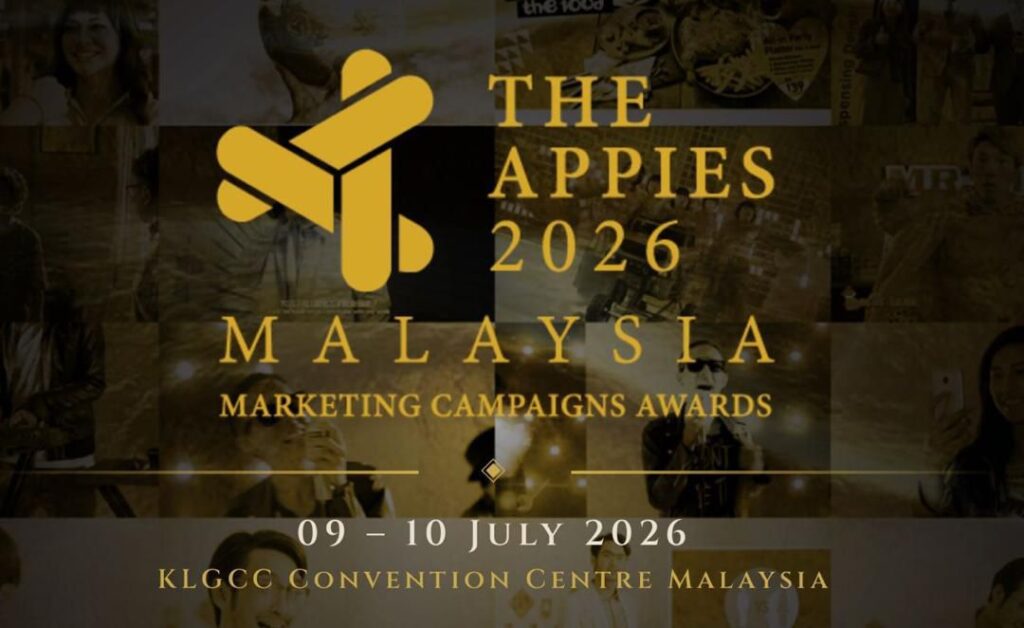
The APPIES is where Malaysia’s boldest campaigns, brightest ideas, and most impactful storytellers take the stage.
More than an awards show, it is the industry’s ultimate platform for creative, media, digital and marketing excellence, where live presentations meet live judging.
This is your chance to showcase work that moved audiences, shaped conversations, and delivered real results.
From breakthrough brand campaigns to innovative digital experiences, the APPIES celebrates the work that defines the future of marketing.
Step into the spotlight alongside the industry’s leading agencies, brands, creatives, strategists and changemakers.
Whether you are aiming for Gold, Silver, Bronze or the prestigious Best of the Best recognition, this is your moment to make history.
Your campaign deserves to be seen.
Your ideas deserve the stage.
Your work deserves the legacy.
KEY DATES
Haven’t subscribed to our Telegram channel yet? Don’t miss out on the hottest updates in marketing & advertising!