There is something quietly revealing about Dyson Singapore’s latest agency appointment.
The premium technology brand, long admired for turning engineering into aspiration, has appointed independent creative consultancy ballsy as its social agency-of-record (AOR) following a competitive pitch.
The one-year retainer, which began with key opinion leader (KOL) work and expands into monthly social content from end-May, signals something bigger happening inside marketing today. Brands are no longer simply looking for agencies that can produce content.
They are looking for partners who understand culture, algorithms and attention.
In short, agencies that understand how social media actually works.
For ballsy, the appointment marks its first retainer client in Singapore after years of project-based work. Yet the story is less about a brand embracing social media and more about a brand seeking deeper expertise in a channel that has become increasingly central to business growth.
The appointment suggests that Dyson was attracted by the agency’s experience in social platforms, cultural relevance and a creative philosophy that favours bold thinking over formulaic execution.
The brief itself appears to have been nuanced. Rather than pursuing disruption for its own sake, the challenge seemed to involve balancing luxury credentials with a willingness to stretch beyond conventional comfort zones.
Luxury’s Social Identity Crisis
Luxury brands face a growing dilemma on social media.
Prestige brands have traditionally built their reputations on exclusivity, polish and careful image management. Social platforms, meanwhile, reward immediacy, participation and personality.
The result is a tension between aspiration and authenticity that many premium brands continue to navigate.
At the same time, luxury itself appears to be undergoing a transformation online. Brands such as Hermes and Burberry have demonstrated that premium positioning and social relevance are no longer mutually exclusive. They have shown that luxury brands can attract attention organically without sacrificing their cachet.
The new social playbook for premium brands no longer revolves around perfectly lit product shots or heavily polished campaign edits. Increasingly, success comes from behaving more like creators than advertisers, participating in culture rather than broadcasting at it.
Dyson’s early work with ballsy offers an indication of this direction.
The first social-first campaign under the new remit features local influencer Munah Bagharib tackling a universal Singapore problem: humidity-induced frizzy hair.
The short film opens with Bagharib visibly struggling before a quick transformation powered by Dyson’s haircare products, including the Dyson Airstrait and Dyson Omega hydrating hair oil, ending with the line, “Now you’re ready for Singapore.”
Simple, local and instantly relatable.
In today’s social environment, relevance often proves more effective than grandeur.
Not David vs Goliath
It would be easy to frame the appointment as another independent-agency-versus-network-agency story.
The reality appears more complex.
The increasing importance of social expertise means that agency size is becoming less significant than specialist capability. Large and small agencies alike can excel or struggle in the social space. What matters is understanding how platforms, audiences and culture intersect.
Part of ballsy’s apparent advantage lies in the composition of its team. The agency combines deep platform expertise with experience drawn from music and entertainment, creating a blend of social fluency and cultural instinct that is increasingly valuable to brands operating across markets.
That combination may help explain why the agency is finding itself considered for regional and global social assignments.
Perhaps more significantly, the appointment reflects a broader trend in which brands are reassessing the role of independent agencies.
Independents often operate with a heightened sense of accountability. Their survival depends directly on client success, creating a commercial urgency that can shape both strategy and execution.
The perspective of agency founders is often different from that of traditional creative leadership roles. Commercial outcomes, product movement and business impact become impossible to ignore when the success of the agency itself is tied directly to client performance.
In an industry frequently criticised for prioritising awards over effectiveness, that shift in mindset may resonate with marketers searching for measurable outcomes.
The Algorithm Isn’t the Enemy
One of the clearest lessons emerging from successful social marketing today is that performance begins with immersion.
Understanding social media increasingly requires living inside it.
The most effective practitioners tend to stay close to platform changes, behavioural shifts and emerging trends. They actively shape their own feeds, expose themselves to a broad range of interests and continuously observe how algorithms connect people with content.
Algorithms themselves are not the obstacle. They are simply reflections of audience interests and behaviours.
That means successful social strategy is becoming less about campaign planning in isolation and more about cultural participation. Internet culture cannot be fully understood from dashboards, reports or PowerPoint presentations alone.
At the same time, even agencies known for bold creative work recognise that every brand moves at its own pace. Transformation rarely happens overnight. Most brands evolve through incremental steps rather than dramatic leaps.
Taken together, Dyson’s appointment of ballsy offers a glimpse into where modern agency relationships may be heading.
Brands increasingly appear to want partners capable of combining creativity with cultural intelligence, strategic thinking with platform expertise, and bold ideas with commercial accountability.
Because in 2026, social media is no longer simply another channel.
For many brands, it has become the storefront, the conversation, the customer experience and increasingly, the brand itself.
Share Post:

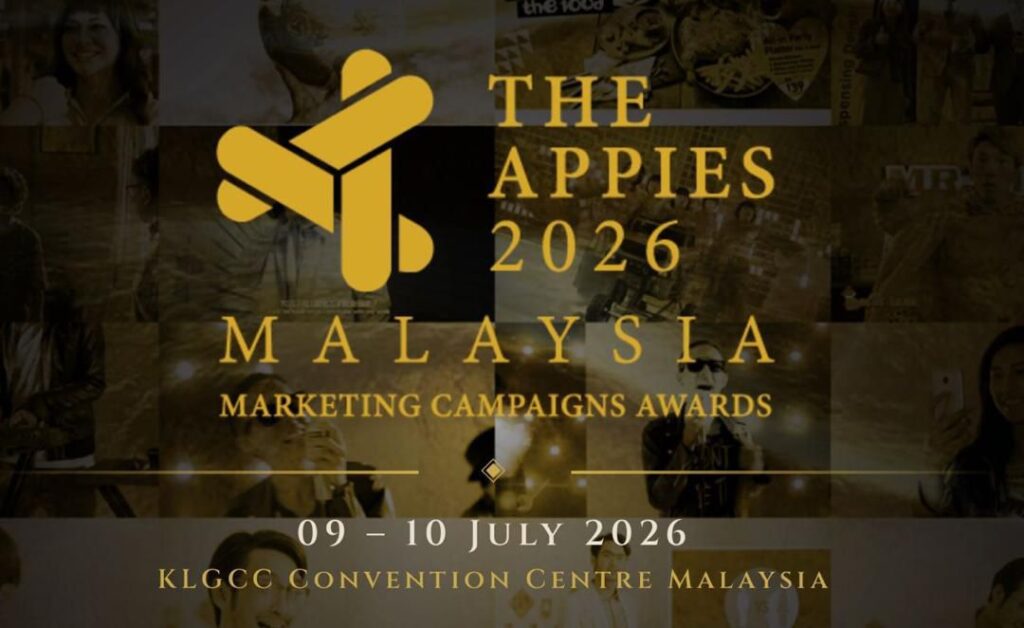
The APPIES is where Malaysia’s boldest campaigns, brightest ideas, and most impactful storytellers take the stage.
More than an awards show, it is the industry’s ultimate platform for creative, media, digital and marketing excellence, where live presentations meet live judging.
This is your chance to showcase work that moved audiences, shaped conversations, and delivered real results.
From breakthrough brand campaigns to innovative digital experiences, the APPIES celebrates the work that defines the future of marketing.
Step into the spotlight alongside the industry’s leading agencies, brands, creatives, strategists and changemakers.
Whether you are aiming for Gold, Silver, Bronze or the prestigious Best of the Best recognition, this is your moment to make history.
Your campaign deserves to be seen.
Your ideas deserve the stage.
Your work deserves the legacy.
KEY DATES
Haven’t subscribed to our Telegram channel yet? Don’t miss out on the hottest updates in marketing & advertising!