Twenty-four years is a long time for a football nation to wait. In Brazil, it is practically a national itch.
So when Brahma launched its latest World Cup campaign under the banner “Tá Liberado Acreditar” (“Let Yourself Believe”), it was not selling beer as much as it was attempting to restore a national mood.
And in a football-mad country increasingly unsure about its once-invincible Seleção, that may be a far more powerful proposition.
Created by Africa Creative for Ambev, the campaign arrives at a delicate moment for Brazilian football. The numbers are sobering. According to research cited in the campaign, only 28% of Brazilians believe the national team can lift a sixth World Cup trophy in 2026.
For a country that once treated football dominance almost like birthright, that statistic lands like a punch to the chest.
Selling Hope in a Cynical Era
The film does something many modern sports campaigns struggle to do. It resists irony.
Instead of self-aware humour, algorithmic punchlines or celebrity overload, Brahma leans into something more emotionally dangerous: sincerity.
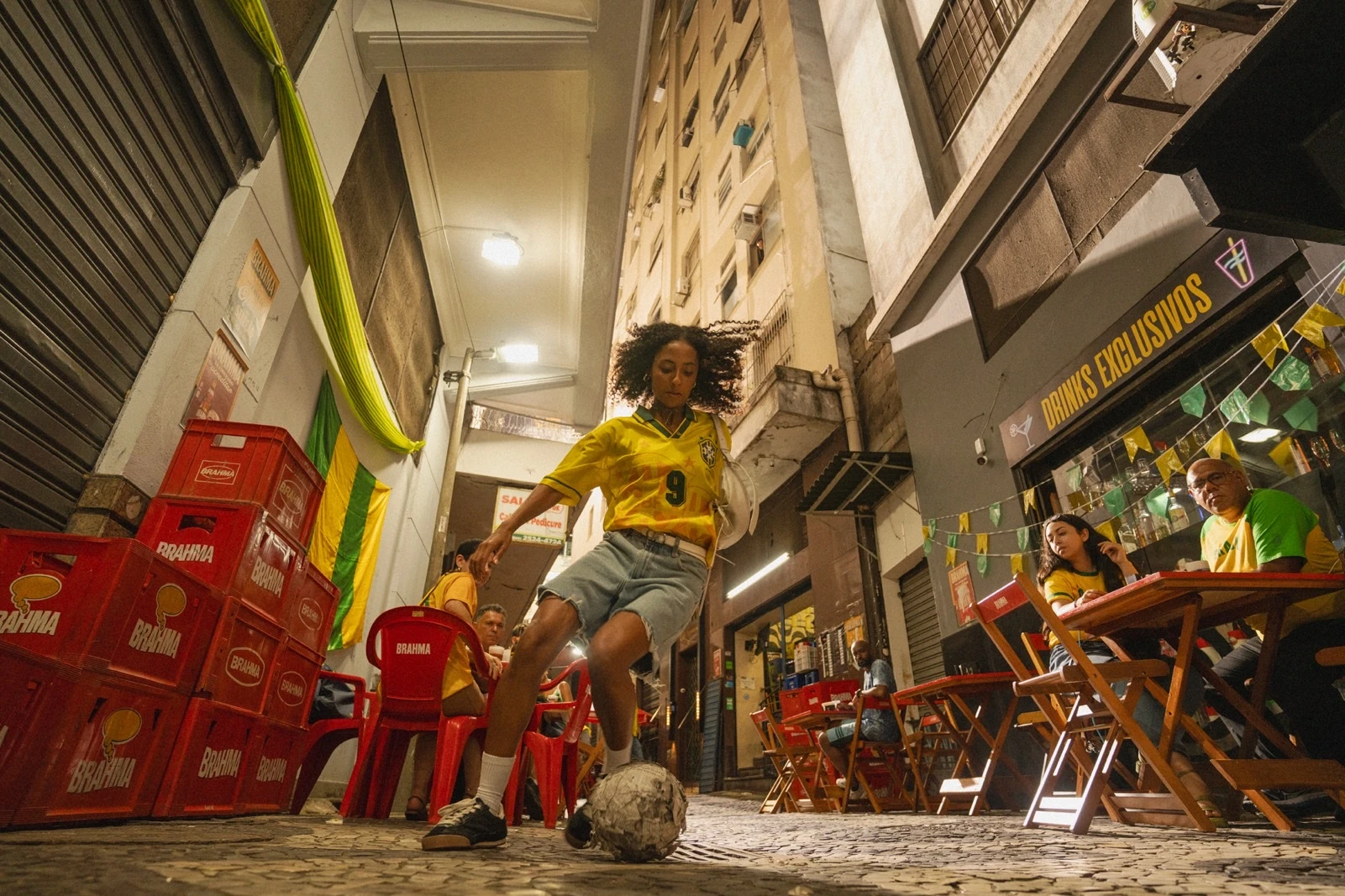
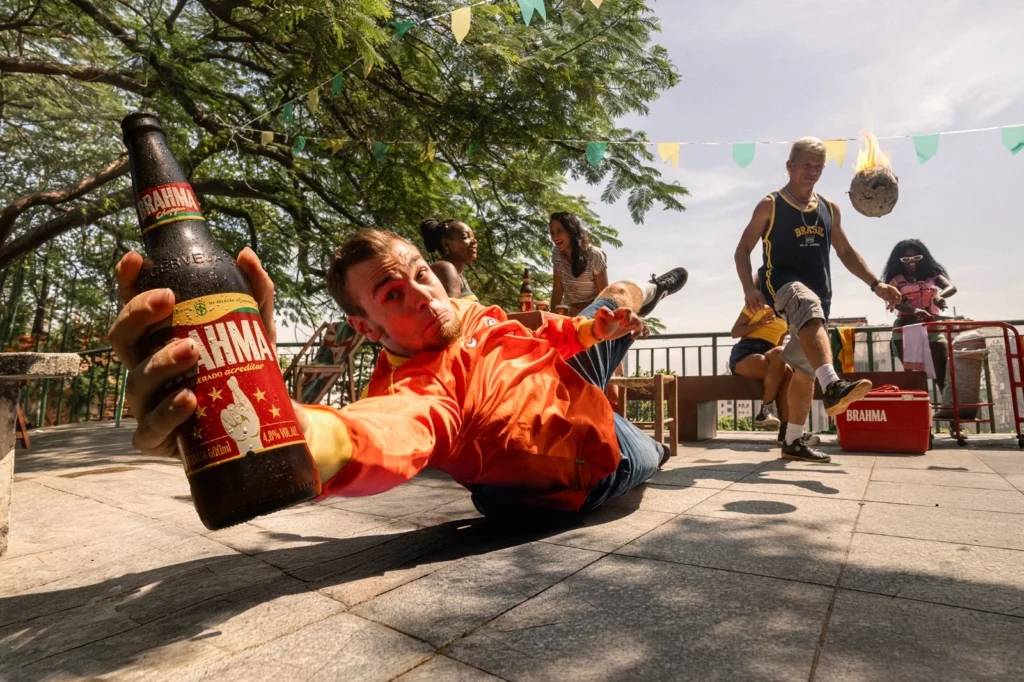
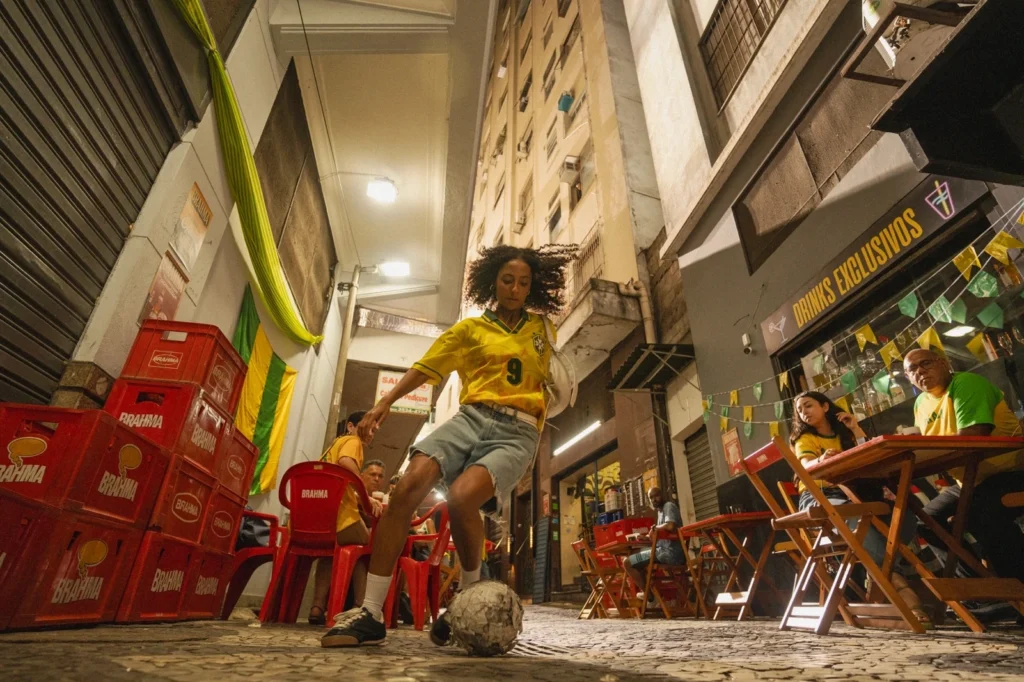
The story follows an ordinary Brazilian sceptic slowly rediscovering belief in the national team. Around him swirl echoes of old football magic. Historic dribbles. Impossible plays. Fleeting moments of brilliance recreated with a gritty street-football aesthetic that feels less like advertising and more like collective memory.
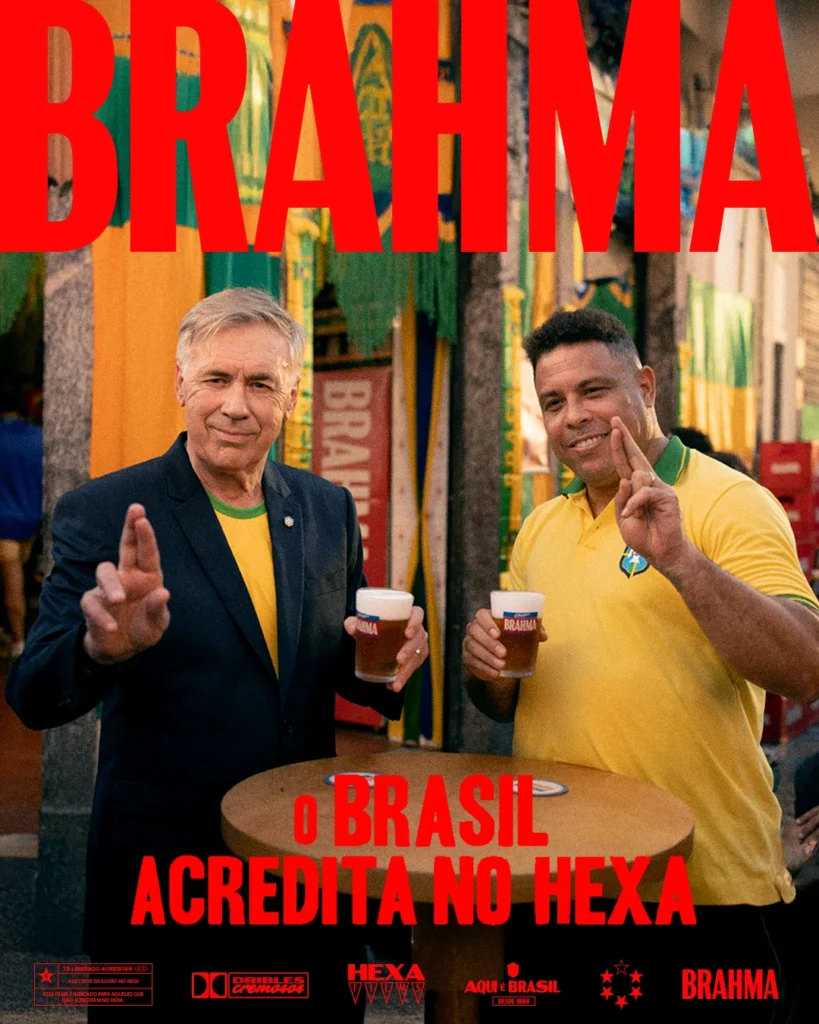
There are appearances from football royalty including Ronaldo Nazário and Brazil coach Carlo Ancelotti, but the real star is nostalgia itself.
Not nostalgia as retro decoration. Nostalgia as emotional infrastructure.
The campaign taps directly into the emotional residue of the late 1990s and early 2000s, when Brazil’s yellow jersey represented swagger, improvisation and footballing joy. Back then, Brazil did not merely play football. It exported confidence.
Today, after coaching instability, tournament disappointments and years of underwhelming performances, that certainty has eroded. Brahma’s campaign understands that modern Brazilian fans are not looking for hype. They are looking for permission to hope again without feeling foolish.
That is a very different brief.
The Return of “Brazilcore”
Visually, the campaign embraces what marketers are now calling “Brazilcore” — a vibrant collision of football culture, street aesthetics, sun-faded nostalgia and the iconic yellow jersey.
But unlike many trend-chasing campaigns, this one feels culturally earned.
The grainy visuals, street football energy and Rio backdrop are less interested in polished perfection than emotional texture. It understands something global marketers often miss: football memories are rarely remembered in HD. They survive like folklore. Sweaty, noisy and slightly supernatural.
The timing is also significant.
As the 2026 World Cup approaches, brands worldwide are preparing for the usual avalanche of data-driven football marketing. More dashboards. More predictive analytics. More personalised fan targeting.
Brahma has gone in the opposite direction. It has chosen belief over optimisation. Emotion over efficiency. Memory over metrics. And ironically, that may make the campaign more effective.
Why This Matters Beyond Brazil
There is also a wider lesson here for brands globally, including in Malaysia.
Consumers today are exhausted by permanent uncertainty. Economies feel fragile. Politics feels volatile. AI is reshaping industries faster than people can emotionally process. Audiences increasingly gravitate towards brands that can offer emotional grounding rather than just functional utility.
Perhaps that is why campaigns like this matter now.
In an industry increasingly obsessed with precision, prediction and performance dashboards, Brahma reminds us that brands still have permission to feel human. To be vulnerable. To believe before the evidence arrives.
There is something quietly fearless about that.
Fittingly, “Fearless” is also the theme of this year’s Malaysian Marketing Conference 2026 on May 21 at KLGCC, where marketers will debate AI, automation and the future of creativity.
Yet Brahma’s campaign offers a gentler reminder: consumers may remember the data, but they follow the feeling. Brahma’s campaign recognises that football, especially in Brazil, is not merely entertainment.
It is collective identity therapy. The beer becomes secondary. The emotional reassurance becomes the product. That is a subtle but important shift.
A Brand That Understands Football Is Religion
Brahma has long embedded itself within Brazilian football culture. The campaign notes the brand’s century-long association with the national team and the sport itself. But longevity alone does not guarantee relevance.
What makes this campaign work is its understanding that football fandom is rarely rational. Fans continue believing despite evidence. Despite heartbreak. Despite humiliation.
Especially despite humiliation. The campaign’s emotional intelligence lies in acknowledging the scepticism first instead of pretending it does not exist.
It tells Brazilians: “Yes, things have gone wrong. Yes, the team feels vulnerable. But belief is still allowed.” That line may ultimately resonate beyond football. Because in 2026, belief itself increasingly feels like a rebellious act.