For years, consumers have quietly suspected it. The cereal box looked the same, but felt lighter. The toothpaste tube ran out faster. The coffee jar somehow produced fewer cups.
Now, in a ruling that could send tremors through supermarket aisles across Europe, a German court has effectively told brands: consumers are not imagining things.
Milka chocolate just became the poster child of that frustration.
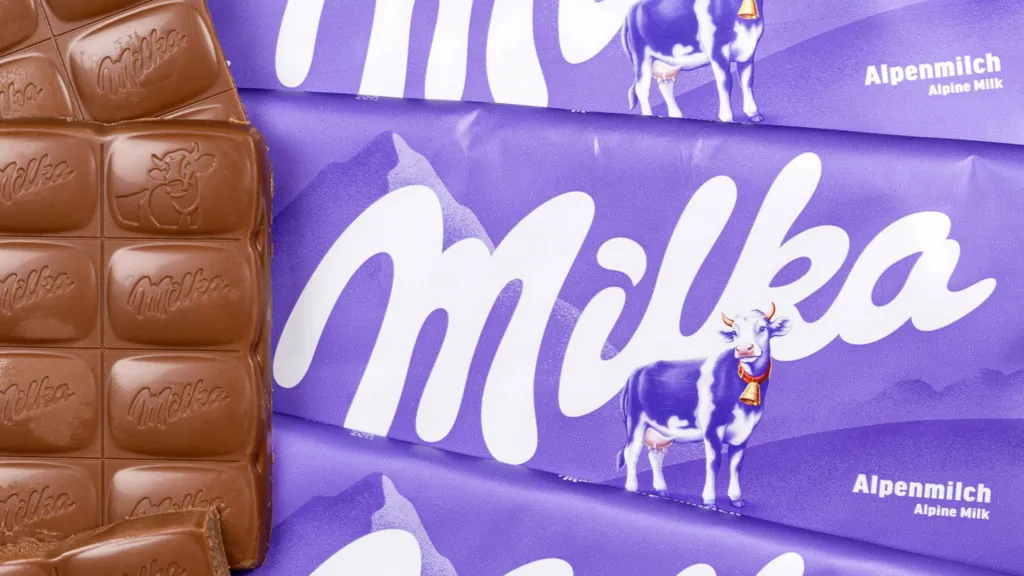
A regional court in Bremen has ruled against chocolate giant Mondelēz International after finding that the company misled consumers by shrinking its iconic Milka Alpenmilch chocolate bar from 100g to 90g while keeping almost identical packaging.
The verdict may sound like a dispute over 10 grams of chocolate. In reality, it touches something far bigger: trust. At the centre of the case was not merely the reduction in weight, but the psychology of packaging itself.
The court argued that consumers had been conditioned for years to associate Milka’s familiar purple wrapper with a 100g chocolate bar.
By maintaining almost the same appearance while quietly reducing the contents, the packaging conveyed what judges called a “visually created expectation” that no longer matched reality.
In plain language: shoppers believed they were buying the same product they always had. They were not.
When Packaging Stops Being Packaging
The ruling comes at a moment when “shrinkflation” has become one of the most emotionally charged words in consumer culture. Inflation has battered household budgets globally.
Cocoa prices have surged after poor harvests in West Africa. Manufacturers are squeezed. Consumers are exhausted.
Somewhere between those pressures, the humble chocolate bar has become a battlefield.
What makes the Milka case fascinating is that this was not hidden in microscopic fine print. The new 90g weight was stated on the packaging. Mondelēz also argued that it had informed consumers through its website and social media channels.
Yet the court still sided with consumers. Because this was not purely a legal issue. It was a behavioural one.
Marketing has always understood that shoppers buy with memory, instinct and visual recognition long before they read labels. Supermarkets are designed around split-second familiarity.
Consumers are not standing in aisle seven conducting forensic packaging audits. They reach for shapes, colours and cues they have trusted for years. Milka’s purple wrapper was one of those cues.
The ruling effectively acknowledges something the advertising industry has known for decades: packaging is not neutral.
It carries meaning. Memory. Expectation. Emotional shorthand. And that is precisely why this story matters to marketers far beyond Germany.
The Social Media Shelf Audit
For years, brands have treated shrinkflation as a relatively safe manoeuvre.
Reduce volume slightly. Keep the shelf price stable. Hope consumers do not notice immediately. In difficult economic cycles, it often looks preferable to a visible price increase.
But consumers today are more observant, more vocal and more publicly resentful than ever before.
Social media has changed the equation completely. A generation ago, a shopper might grumble privately about a smaller chocolate bar.
Today, they photograph it, post it online, compare old and new packaging side by side and turn it into a viral accusation of corporate greed.
That emotional backlash is becoming harder to manage than inflation itself. Last year, German consumers voted the Milka Alpenmilch bar “Rip-Off Packaging of the Year”.
The title alone is devastating from a brand perception standpoint. No marketer wants decades of brand warmth reduced to a meme about disappearing chocolate.
What is particularly striking is how quickly packaging can become reputationally radioactive once consumers feel manipulated.
Even brands that technically comply with regulations may now face a deeper challenge: perception.
Consumers increasingly distinguish between price increases they understand and perceived deception they resent.
A more expensive chocolate bar? Painful, perhaps understandable.
A smaller chocolate bar disguised as the same product? That feels personal. That distinction matters enormously.
Honesty May Become a Competitive Advantage
The irony is that some brands may actually emerge stronger by being brutally transparent.
German chocolatier Ritter Sport, which also reduced the weight of certain bars, openly repositioned them as a thinner new range rather than pretending nothing had changed.
While the products still appeared on consumer watchdog lists, the communication strategy was noticeably more upfront.
Consumers may not love higher prices or smaller portions. But many still appreciate honesty. There is a larger cultural shift happening here too.
For years, branding was built around aspiration, seduction and emotional storytelling. Increasingly, consumers are demanding something more basic: fairness.
The brands winning long-term trust may not necessarily be the cheapest or biggest. They may simply be the ones that treat consumers like adults.
That changes the role of packaging entirely.
The Wrapper Is No Longer Innocent
No longer just a sales device, packaging is becoming evidence. Consumers now scrutinise it the way previous generations examined contracts.
Tiny reductions in size are spotted instantly online. Empty spaces inside boxes get exposed on TikTok. Weight changes trigger Reddit threads. Shelf deception has become a form of public entertainment.
Marketers ignore this shift at their peril. Because once consumers begin to feel tricked, every future brand message becomes harder to believe.
That may be the real cost of shrinkflation. Not the missing 10 grams of chocolate. But the slow erosion of trust hiding underneath the wrapper.
Share Post:
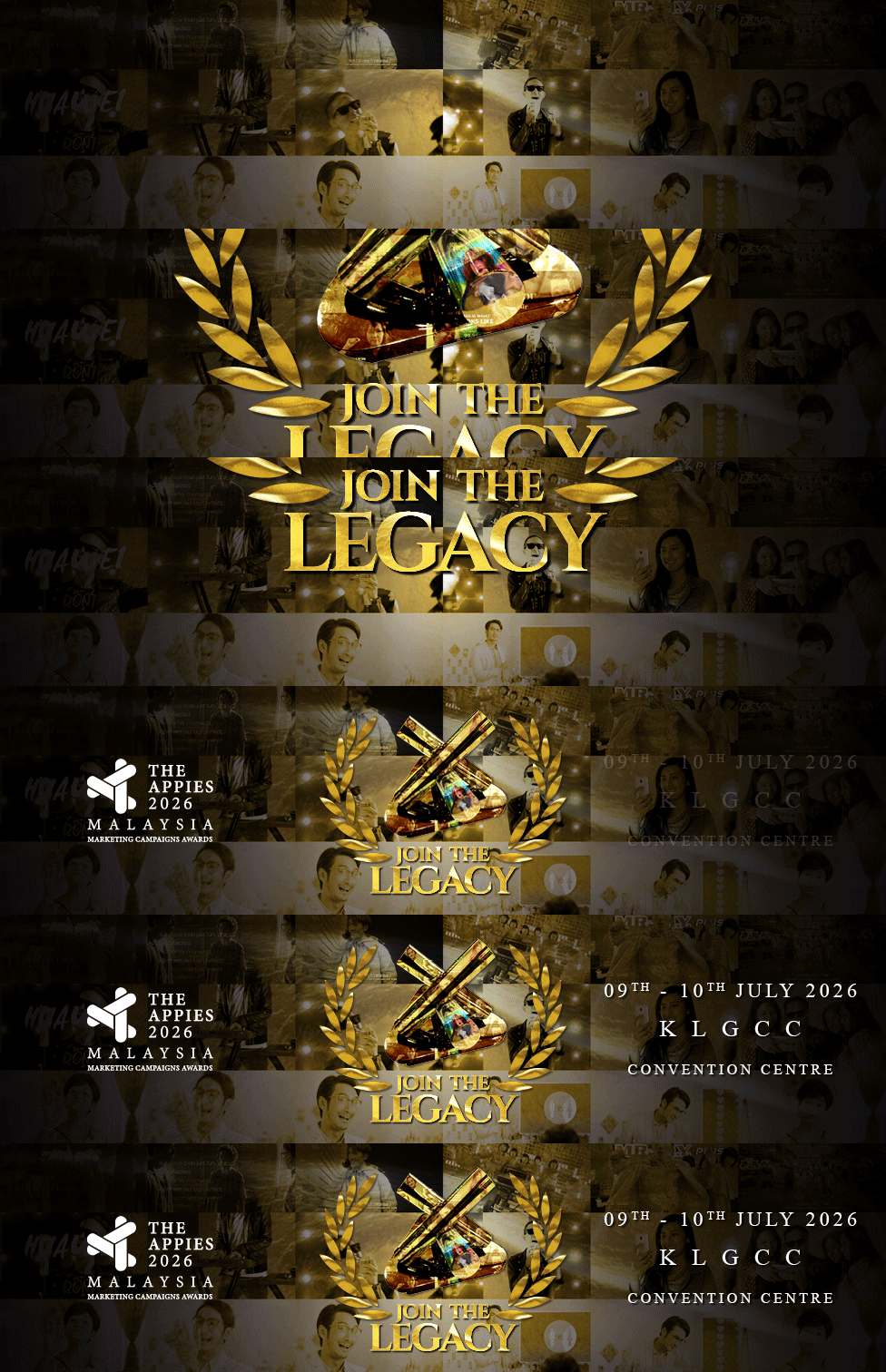

The APPIES is where Malaysia’s boldest campaigns, brightest ideas, and most impactful storytellers take the stage.
More than an awards show, it is the industry’s ultimate platform for creative, media, digital and marketing excellence, where live presentations meet live judging.
This is your chance to showcase work that moved audiences, shaped conversations, and delivered real results.
From breakthrough brand campaigns to innovative digital experiences, the APPIES celebrates the work that defines the future of marketing.
Step into the spotlight alongside the industry’s leading agencies, brands, creatives, strategists and changemakers.
Whether you are aiming for Gold, Silver, Bronze or the prestigious Best of the Best recognition, this is your moment to make history.
Your campaign deserves to be seen.
Your ideas deserve the stage.
Your work deserves the legacy.
KEY DATES
Haven’t subscribed to our Telegram channel yet? Don’t miss out on the hottest updates in marketing & advertising!