When it comes to navigating complex markets and driving meaningful growth, few bring the depth of experience and clarify of perspective that Mohamed Adam Wee Abdullah does.
With a career spanning leadership roles at Maybank and CIMB Group, Adam has been at the forefront of marketing transformation within some of the region’s largest financial institutions, shaping strategies across highly competitive and rapidly evolving categories.
Today, Adam continues to expand into new frontiers, most recently exploring the world of travel technology with ExplorAR. He brings with him a sharp focus on customer experience, digital innovation, and sustainable growth.
Recently serving as a judge for the CMO Awards 2025 Agency Edition, and ahead of his upcoming appearance at the Malaysian Marketing Conference on May 21st, Adam shares his insights on the evolving role of the CMO in this exclusive interview with Marketing Magazine.
In highly saturated categories, what is truly driving differentiation today?
I think what’s changed quite fundamentally is that in most saturated categories, product is no longer where differentiation sits. Having spent a large part of my career in banking, I’ve seen how quickly product features, pricing, and even digital capabilities converge. Very quickly, everyone is offering something broadly similar.
What really creates separation now is identifying where the real gap in the customer experience is and importantly, where the industry isn’t looking.
One example that comes to mind is around onboarding in banking. For a long time, the industry was heavily focused on acquisition – campaigns, pricing, incentives. But when we looked more closely, the real issue wasn’t getting customers in, it was getting them through. There was significant drop-off during onboarding because the process was complex, unclear, and time-consuming.
We shifted focus away from simply driving acquisition to redesigning that experience – simplifying steps, reducing friction, improving clarity. What we saw was not just higher completion rates, but better early engagement and ultimately a lower cost per active customer. That’s a good example of differentiation not coming from doing more of the same, but from fixing something the industry had largely accepted as normal.
The second element is trust. Over the last decade, customers have become far more sensitive to inconsistency. It’s no longer enough to communicate well. Your experience has to consistently reinforce what you stand for. In sectors like banking, where trust is foundational, even small breakdowns in experience can have an outsized impact.
So differentiation today is less about being louder, and more about being clear on where you choose to compete, and executing that consistently across the entire journey.
With data and AI becoming central, what does good decision-making look like today?
There’s no question that data and AI have become central, but I would say we’re in a phase where many organisations are data-rich but not always decision-clear.
From my experience, both in banking and in more recent advisory work around marketing automation and AI deployment, the biggest risk today is over-optimising what is immediately visible in the data – particularly short-term performance metrics.
I’ve seen situations where acquisition channels looked extremely efficient on paper – low cost per acquisition, strong conversion rates. But when we tracked those customers over time, their engagement and lifetime value were significantly lower. So while the short-term data suggested we should scale those channels, the long-term commercial outcome told a different story.
That’s where judgement comes in. Data tells you what is happening, but it doesn’t always tell you what matters.
AI amplifies this further. It’s incredibly powerful in identifying patterns and enabling personalisation at scale, but it doesn’t understand context, and it doesn’t make trade-offs. So the role of the CMO is really to sit above that and ask, “Is this the right decision, not just the most efficient one?”
The other challenge I see quite consistently is fragmentation. Different parts of the organisation – marketing, product, technology – are often working off different datasets or different objectives. So even with strong data, decisions can become misaligned.
Good decision-making today requires a level of integration across the organisation, where everyone is operating from a shared understanding of the customer and the commercial goals.
Ultimately, it’s less about having more data, and more about having the discipline and clarity to interpret it properly and act on it with intent.
What should CMOs be prioritising today to stay relevant tomorrow?
The role of the CMO has evolved quite significantly. It’s no longer just about brand or communications – it’s about shaping how the organisation grows.
The first priority, in my view, is taking ownership of the actual customer experience, not just how it’s communicated. In banking, this became very clear as digital channels matured. Marketing could no longer sit downstream, simply promoting what had already been built.
We started working much more closely with product and digital teams, shaping journeys upstream. Even relatively small changes, how information is presented in an app, how steps are sequenced, how decisions are explained, had a measurable impact on product uptake and customer satisfaction. That’s where marketing creates real value today, not just in storytelling, but in designing the experience itself.
The second priority is building a working understanding of data and AI, but with judgement. There’s a lot of momentum around AI at the moment, but not always clarity. CMOs don’t need to be technical specialists, but they do need to understand where these capabilities genuinely drive value, and where they risk becoming distractions.
The third, and I think one of the most important, is rebalancing brand and performance. Over the last decade, performance marketing has taken centre stage because it’s measurable. But what we’ve seen, particularly in financial services, is that over-reliance on performance leads to diminishing returns.
There were periods where brand investment was reduced, and over time we saw acquisition costs increase quite noticeably. When brand investment was reintroduced, it stabilised those costs and improved overall efficiency. It reinforced the idea that performance marketing is an amplifier – but without brand, you’re effectively paying more and more to acquire the same customer.
So the CMOs who will remain relevant are the ones who can reconnect those two – using performance to drive efficiency, but building brand to sustain growth over time.
If I were to summarise it simply, the expectation of a CMO today is to operate less as a functional head, and more as a business leader who connects customer insight, technology, and commercial outcomes – with a clear point of view on where the real opportunities lie, often beyond what is immediately visible in the market.
Share Post:


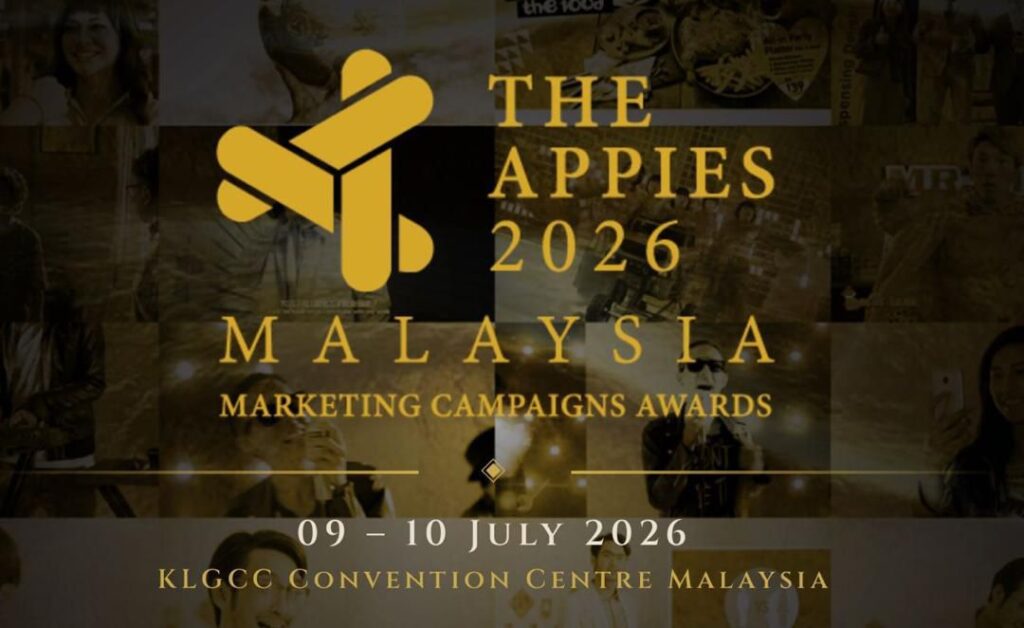
The APPIES is where Malaysia’s boldest campaigns, brightest ideas, and most impactful storytellers take the stage.
More than an awards show, it is the industry’s ultimate platform for creative, media, digital and marketing excellence, where live presentations meet live judging.
This is your chance to showcase work that moved audiences, shaped conversations, and delivered real results.
From breakthrough brand campaigns to innovative digital experiences, the APPIES celebrates the work that defines the future of marketing.
Step into the spotlight alongside the industry’s leading agencies, brands, creatives, strategists and changemakers.
Whether you are aiming for Gold, Silver, Bronze or the prestigious Best of the Best recognition, this is your moment to make history.
Your campaign deserves to be seen.
Your ideas deserve the stage.
Your work deserves the legacy.
KEY DATES
Haven’t subscribed to our Telegram channel yet? Don’t miss out on the hottest updates in marketing & advertising!