Artificial intelligence is often marketed as a technology of acceleration — faster decisions, smarter automation, predictive insights.
But in Japan, creative agency TBWA HAKUHODO has taken AI in an unexpected direction: backwards.
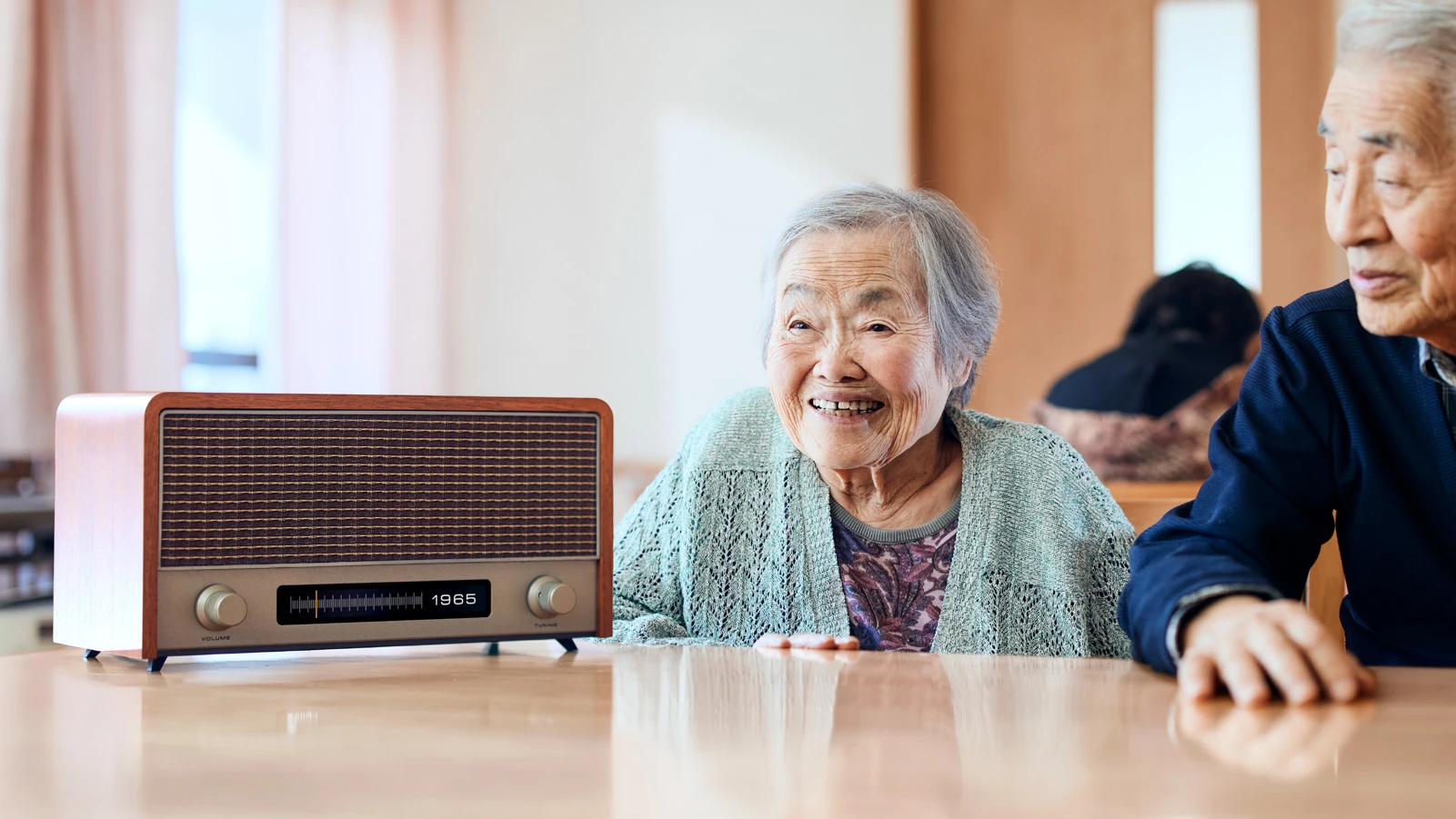
Instead of predicting tomorrow, their experimental device, Radio TimeMachine, allows elderly listeners to turn a dial and return to a specific year in the past — hearing news and music from that moment recreated through generative AI.
The result is not simply a nostalgic gadget.
It’s an emotionally intelligent piece of design that demonstrates how technology can rekindle memory, identity, and human connection — especially in an aging society.
If early results from care facilities are anything to go by, the idea may represent one of the most quietly powerful uses of AI yet.
The Idea: A Radio That Plays Time
At first glance, the device looks charmingly analogue.
Styled like a mid-20th century radio, its dial does not tune frequencies.
Instead, users select a year between 1950 and 2025. Turn the knob to 1965, for instance, and the system generates a radio-style broadcast as though it were that date.
The AI combines:
The experience feels uncannily authentic — as though the listener has stumbled onto a radio signal from their youth.
For residents in eldercare facilities, that small design detail matters.
Because for many people living with cognitive decline, music and familiar sounds are among the strongest triggers for memory retrieval.
A Creative Response to Japan’s Aging Society
Japan is currently the world’s most rapidly aging nation.
More than one in four citizens is over 65, and dementia-related conditions are rising sharply.
Within this context, TBWA HAKUHODO explored an established therapeutic approach called Reminiscence Therapy — a non-pharmacological method that uses familiar stimuli such as photographs, music, or objects to stimulate memory and emotional wellbeing.
The agency’s creative leap was simple — what if AI could generate personalised reminiscence experiences on demand?
Instead of static archives or playlists, Radio Time Machine dynamically recreates an audio world from a chosen year.
In other words, the radio becomes not just entertainment — but a portal to personal history.
What Happened When Residents Listened
The system was piloted in care facilities operated by Nichii Gakkan, one of Japan’s major eldercare providers.
Staff observations were immediate.
Residents who previously struggled with recall began remembering:
Listening to radio broadcasts from decades earlier seemed to unlock stories that had long been dormant.
But the project also gathered measurable behavioural data.
Using facial expression analysis, skeletal motion tracking, and speech-rate measurement, researchers compared behaviour with and without the device.
Three notable patterns emerged.
Smiles increased: Facial expression analysis recorded an average 8.7% rise in smile indicators, with some sessions reaching 23.8%.
Physical engagement improved: Gesture and hand movements increased around 10%, suggesting greater enthusiasm when recounting memories.
Conversation expanded: Speech rates rose by 10.8 additional words per minute, indicating residents were talking more — and sharing more stories.
In a care environment where loneliness and withdrawal are common, those numbers matter.
They suggest the device does something deceptively simple: it gives people something meaningful to talk about again.
When AI Becomes a Bridge Between Generations
One unexpected outcome of the project was improved communication between residents and caregivers.
When a resident hears a news bulletin from the year they were 20, it often sparks stories about first jobs, early romances, or childhood homes.
For younger staff members, these broadcasts become conversation starters.
Instead of routine caregiving interactions, the device creates moments where the elderly can become storytellers of their own lives.
And that shift — from patient to narrator — can be deeply empowering.
The Next Chapter: From Prototype to Platform
Following the pilot programme, Nichii Gakkan is exploring wider deployment across its care facilities.
Developers are also working on a smartphone-based version, which could dramatically lower the barrier to access.
Beyond eldercare, TBWA HAKUHODO believes the technology could expand into other areas:
In other words, Radio Time Machine might evolve from a niche care tool into a broader cultural storytelling platform.
A Different Vision of AI Creativity
For marketers and technologists alike, the project carries an important reminder.
The most meaningful applications of AI may not always involve optimisation or automation.
Sometimes the most powerful innovation is about human emotion.
Radio Time Machine works not because the technology is complex — but because the insight is deeply human:
Memories are often stored in sound.
A song. A news voice. A radio broadcast drifting through a kitchen decades ago.
By recreating those sounds, AI doesn’t just generate content.
It helps people rediscover pieces of themselves.
That might be one of the most hopeful signals the future of technology can send.
Share Post:


The APPIES is where Malaysia’s boldest campaigns, brightest ideas, and most impactful storytellers take the stage.
More than an awards show, it is the industry’s ultimate platform for creative, media, digital and marketing excellence, where live presentations meet live judging.
This is your chance to showcase work that moved audiences, shaped conversations, and delivered real results.
From breakthrough brand campaigns to innovative digital experiences, the APPIES celebrates the work that defines the future of marketing.
Step into the spotlight alongside the industry’s leading agencies, brands, creatives, strategists and changemakers.
Whether you are aiming for Gold, Silver, Bronze or the prestigious Best of the Best recognition, this is your moment to make history.
Your campaign deserves to be seen.
Your ideas deserve the stage.
Your work deserves the legacy.
KEY DATES
Haven’t subscribed to our Telegram channel yet? Don’t miss out on the hottest updates in marketing & advertising!