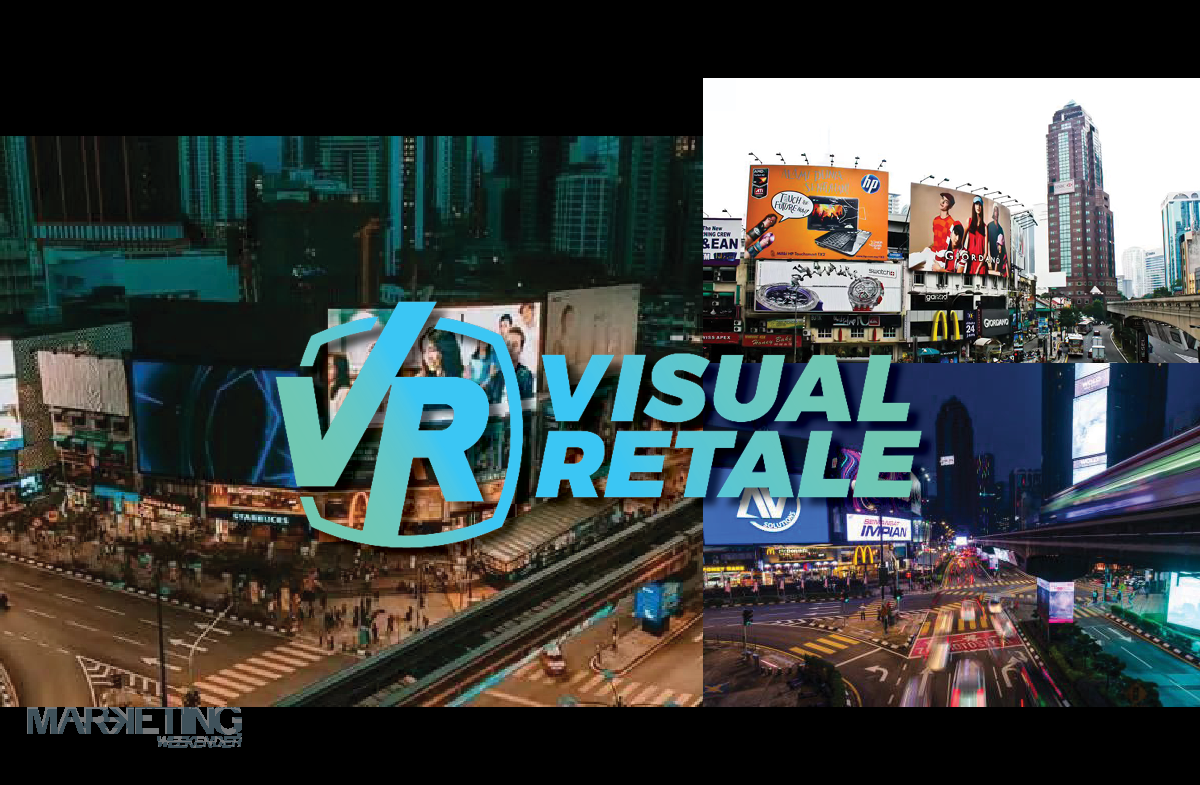
For decades, Out-of-Home (OOH) has been one of Malaysia’s most enduring and powerful media channels. It is visible, unavoidable and embedded into the rhythm of everyday life. From highways and transit corridors to shopping malls, residentials, offices, campuses, and airports, Malaysians encounter OOH almost instinctively as they move through shared physical spaces.
Despite waves of digital transformation across the marketing ecosystem, OOH has never disappeared from the media mix. Instead, it has quietly retained a unique advantage: real-world presence.
While digital channels compete for attention inside personal screens, OOH operates in public environments, shaping collective memory and cultural familiarity in ways few channels can replicate. These repeated physical exposures continue to drive brand familiarity and recall, particularly in an era of fragmented attention, declining cookies, tightening privacy regulations, and growing consumer skepticism towards overly targeted advertising.
At the same time, OOH is benefiting from renewed industry momentum. Malaysia’s OOH market continues to grow steadily, supported by urbanisation, infrastructure expansion, and the accelerating adoption of Digital Out-of-Home (DOOH) formats. Screens are expanding rapidly across retail, transit, lifestyle, and indoor environments, creating new opportunities for brands to engage audiences closer to moments of intent.
Yet despite this growth, OOH’s perceived role has not evolved at the same pace as its physical footprint. OOH has always been powerful because of its visibility; its future will be decided by performance. The next chapter is not about relevance; it is about results.
This evolution is not being examined from the sidelines. It is being shaped from within the planning and delivery of Out-of-Home itself. Visual Retale operates as a leading data-driven Out-of-Home media practice, working at system scale across Malaysia, aggregating more than 47,000 screens across outdoor and indoor environments nationwide.
Working closely with agencies, brands, and media owners, Visual Retale plans, delivers, and measures OOH with greater structure and accountability; offering a system-level view of how the medium performs in real-world conditions.
From national brand launches to always-on retail, entertainment, and automotive programmes spanning categories, this vantage point makes both the enduring strengths of OOH and the structural limitations holding it back impossible to ignore.
The Structural Challenges Holding OOH Back
OOH’s evolution into a data-intelligent medium has been constrained; not by lack of demand, but by structural issues embedded within the ecosystem.
1. A Fragmented Market
Malaysia’s OOH landscape remains highly decentralised, with more than 125 media owners operating independently across formats, locations, and environments. Each brings different packages, rate structures, planning processes, and reporting standards, making holistic planning complex and benchmarking unreliable.
For agencies and advertisers, this often means OOH planning remains a manual exercise rather than a systematic, data-led one. Campaigns are pieced together across multiple owners using spreadsheets, emails, and disconnected proposals; achieving scale through coordination effort rather than operational efficiency.
2. Inconsistent Reach
In many cases, reach inconsistency is not a matter of missing data, but conflicting data. A single highway corridor can feature dozens of screens owned by multiple media owners, yet each reports different reach figures for what is effectively the same traffic flow and audience environment.
These variations stem from differing methodologies, assumptions, and reporting standards, rather than differences in actual exposure. As a result, planners are often presented with multiple, non-comparable reach numbers for the same location, making it difficult to assess true delivery or benchmark performance across networks. When identical environments produce inconsistent audience claims, reach becomes an estimate rather than a reliable metric, undermining confidence in OOH planning at scale.
3. Blind Targeting
OOH planning has historically relied on a simple assumption: Location = Audience. If a screen sits near offices, it is labelled “corporate”. If it sits near malls, it is labelled “shoppers”. If it sits near highways, it is labelled “mass”. While directional, these labels are not evidence.
Without verified audience profiles or behavioural data, brands have limited visibility into who “actually” sees their messages, how often, and under what contextual conditions. This limits OOH’s ability to participate in more sophisticated audience-first planning frameworks that advertisers now expect from other channels.
4. No Measurement at Scale
Reporting in OOH still leans heavily on proof-of-posting images and site lists. While useful for verification, these artefacts do not represent performance. There is currently no widely adopted industry framework that links OOH exposure to business outcomes in a consistent, comparable manner. Without standardised performance metrics, OOH struggles to compete for budget against channels that speak fluently in the language of cost efficiency, uplift, and return.
The good news? These gaps are no longer theoretical, they are actively being addressed through data, technology, and a growing willingness to collaborate.
Reinventing Visibility: Data, Design, and DOOH
With the structural limitations now clear, the conversation shifts from diagnosis to redesign. OOH is being re-engineered, not by replacing physical media, but by fundamentally changing how it is planned, evaluated, and justified. This shift is not cosmetic. It is structural.
I. Data Intelligence Comes to the Streets
OOH is no longer defined solely by where a screen is placed, but by how that screen performs within its environment. The rapid expansion of Digital Out-of-Home (DOOH), combined with evolving media technology, has transformed physical locations into intelligent, responsive media assets. As planning frameworks shift towards reach, relevance, and measurability at scale, the way DOOH inventory is accessed and deployed is changing. This shift is exemplified by PlayDOOH, which allows planners to view and activate nationwide DOOH inventory through a single planning layer, changing how scale is planned and deployed. What was once fragmented across individual owners and formats can now be assessed collectively, enabling coordinated planning rather than isolated site selection.
As a result, OOH planning is no longer driven by instinct alone. Campaign decisions can now be informed by more than 62 data points including location type, time-of-day and day-of-week patterns, dwell duration, category relevance, and audience movement. This level of intelligence changes the core planning question. It is no longer simply where a message should appear, but when and under what conditions it is most likely to have impact. In practice, this marks a shift from location-led assumptions to audience-aware planning, bringing OOH closer to the standards expected of other performance-oriented media channels.
II. From Fragmentation to Framework
Malaysia’s OOH market did not lack scale; it lacked structure. Historically, Malaysia’s OOH ecosystem has operated in silos, with planning conducted media owner by media owner. This fragmentation has made holistic campaign planning complex and time-consuming.
This gap is increasingly being addressed through inventory aggregation, where large volumes of outdoor and indoor screens are unified under a single planning ecosystem. In Malaysia, this model is already operational through media practices such as Visual Retale, bringing together more than 125 media owners and over 47,000 screens under one framework, with coverage spanning over 90% nationwide.
This shift from owner-level silos to an ecosystem-level framework enables greater consistency across the planning and execution process. Standardised screen formats, rationalised pricing structures, and consistent delivery verification allow campaigns to be evaluated and compared more meaningfully across networks. For agencies and brands, this transformation significantly improves operational efficiency.
What once required weeks of manual coordination across spreadsheets, emails, and disconnected proposals can now be executed within hours through centralised, data-driven workflows. This evolution also reshapes the role of media owners, shifting them from sellers of space to partners in performance within an outcomes-driven ecosystem.
III. Visibility to Verifiability
Nowhere is the shift from visibility to performance more evident than in measurement. As advertisers demand greater accountability, modern OOH is increasingly evaluated on evidence rather than assumption. Data-led platforms now consolidate key screen attributes including viewing quality, competitive landscape, footfall patterns, and audience dwell behaviour into comparable performance measures, allowing planners to assess not just where a screen is located, but what it delivers.
One such framework is the Singular Impact Score, a proprietary model developed by Visual Retale. By integrating critical visibility drivers into a single, data-driven measure of site performance, the Impact Score enables advertisers to evaluate OOH assets objectively and prioritise placements that deliver measurable, high-value exposure.
This shift allows brands to compare networks, optimise campaigns mid-flight, and more confidently link OOH activity to broader marketing outcomes such as awareness, recall, footfall uplift, and sales lift. Supported by structured pre- and post-campaign analysis, OOH measurement moves beyond proof-of-posting into a framework built for accountability and optimisation.
Proof in Practice
The argument for a performance-led Out-of-Home medium is no longer theoretical. It is already visible in market outcomes. When OOH is planned with intent, structure, and discipline, it delivers outcomes that extend well beyond presence.
The following campaigns were strategically planned, orchestrated, and delivered through Visual Retale’s aggregated OOH ecosystem, applying the same data-led frameworks outlined in the preceding sections.Recent campaigns across entertainment, retail, and automotive categories reveal the same pattern: when OOH is treated as a system rather than a collection of sites, performance follows.
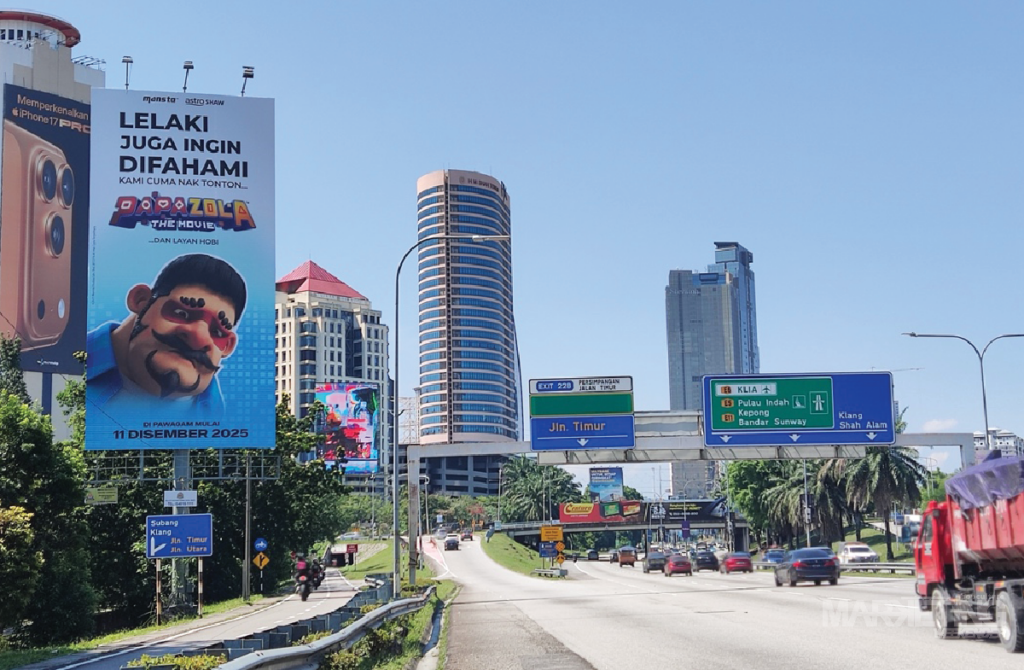
For the launch of Papa Zola, urgency was created through design, not scale alone. High-impact screens were deliberately clustered along key highway corridors, led by the Federal Highway, and sequenced to maximise repeat exposure during peak commuting hours. The result was sustained frequency within a compressed launch window, translating mass visibility into cultural recall. This was not accidental dominance; it was planned through Visual Retale’s systemised OOH framework
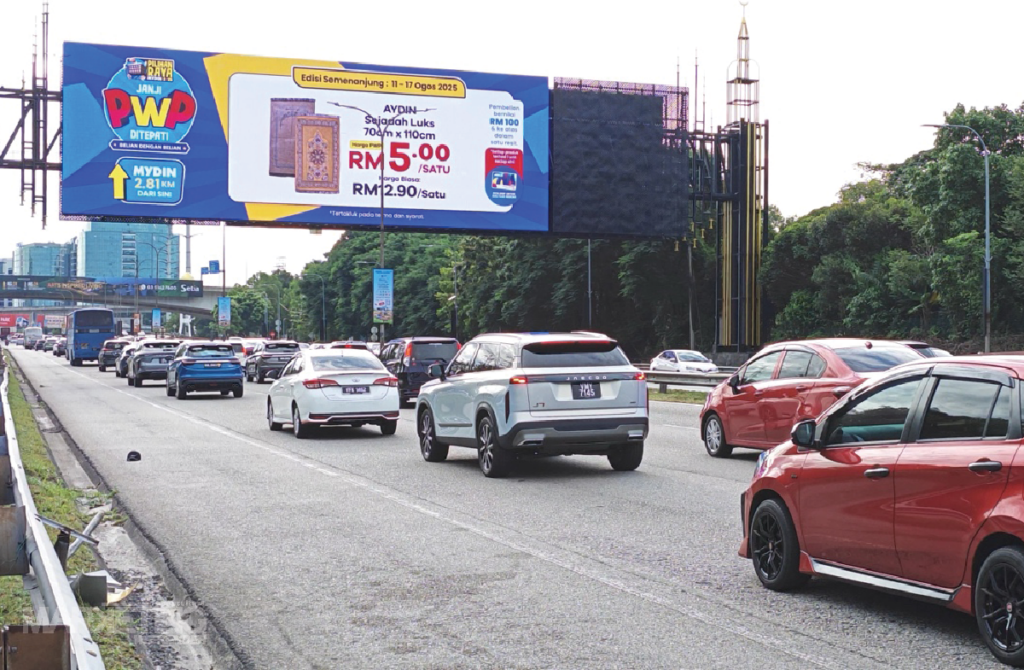
In retail, the shift is even more instructive. MYDIN approached OOH as a behavioural channel rather than a broadcast one. Screen placement was guided by store catchments, dwell behaviour, and retail adjacency, ensuring messages appeared where audiences were already primed to act. Measured uplift in store visitation confirmed that when context leads planning, OOH can influence behaviour; not merely awareness.
The clearest signal of OOH’s evolution emerges over time. For Toyota, the medium was deployed as an always-on layer within the media mix, optimised for continuity rather than campaign bursts. Screen selection prioritised movement patterns, dwell quality, and sustained visibility value, enabling consistent presence and ongoing support for dealership consideration. OOH, in this case, behaved like a modern performance channel.
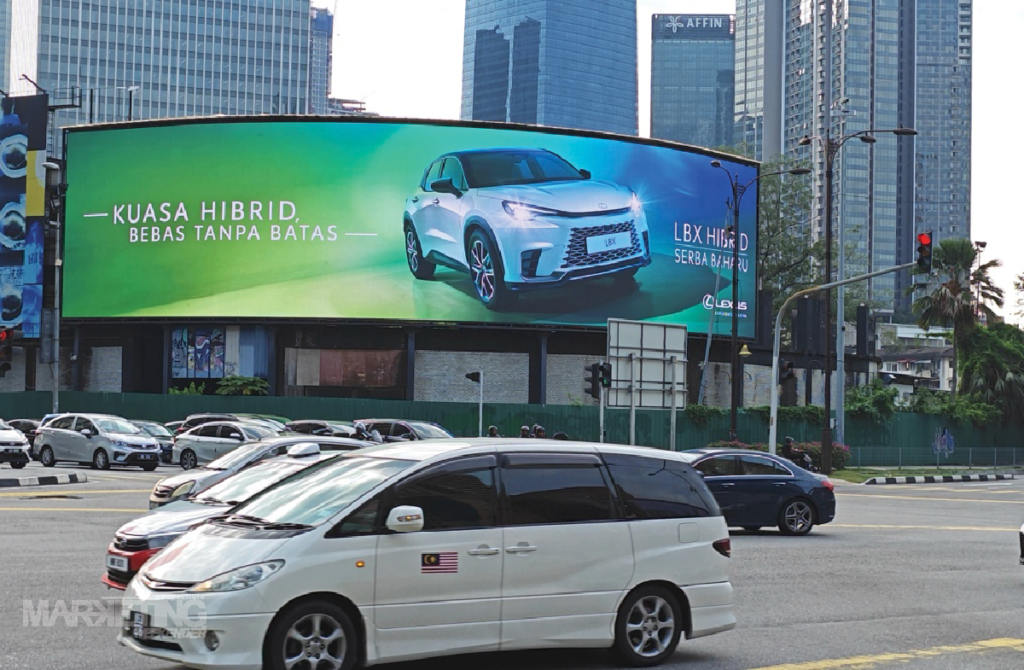
Across these campaigns, a consistent pattern emerges. Impact increases when screen quality is prioritised over sheer volume. Confidence follows when delivery is measured rather than assumed. And OOH performs best when it is planned as a system, not as a scatter of individual placements.
OOH has never lacked power. What it has lacked is a framework to articulate that power in operational terms. The question is no longer whether OOH can perform; but why it is still being planned as if performance were optional.