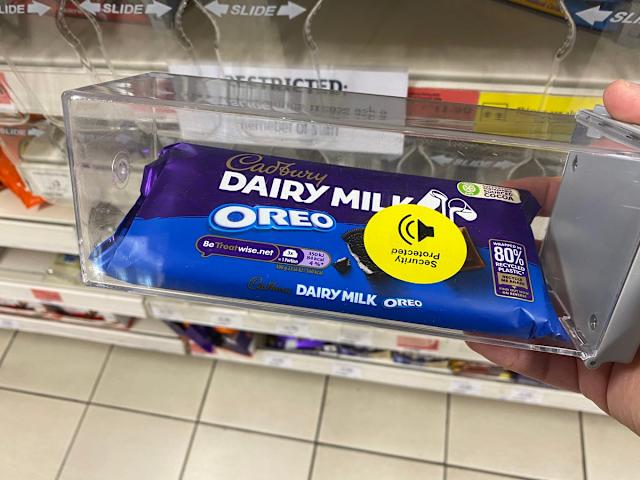
At £2.60 (RM13.70) a bar, a family-sized Cadbury Dairy Milk Oreo now comes with its own security detail.
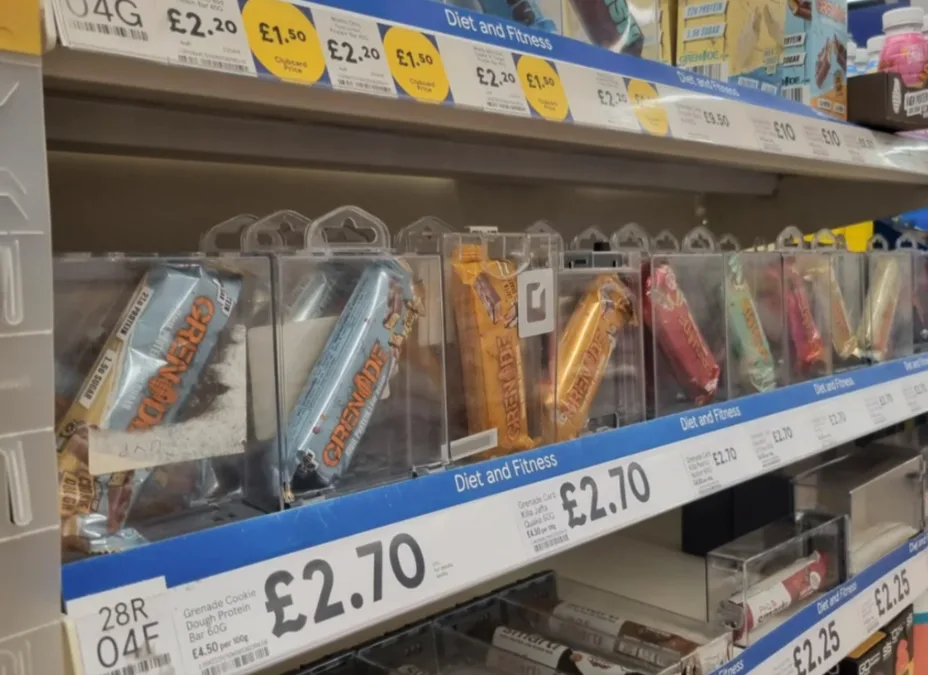
According to a recent BBC report, some UK supermarkets have begun locking chocolate bars in transparent anti-theft boxes.
Not jewellery. Not baby formula. Not premium spirits. Chocolate.
One London branch of Sainsbury’s has placed lockboxes around its Dairy Milk bars after repeated thefts.
Tesco and Co-op have reportedly followed suit. The Association of Convenience Stores (ACS) says confectionery is increasingly being stolen “to order” — lifted in bulk and resold through illicit networks.
In short: chocolate is no longer an impulse buy. It’s inventory.
Swiping the Whole Shelf
The BBC report details CCTV footage shared by police forces showing thieves clearing entire trays of chocolate in seconds.
In some cases, shelving units have reportedly been dragged out of stores wholesale.
The Heart of England Co-Op group said chocolate theft cost it £250,000 last year.
In one store, a single individual could wipe out thousands of pounds’ worth of stock in a week.
A shelf of chocolate, it turns out, can be worth £500 — a tidy sum for something that melts at 30°C.
For independent retailers, the losses are just as sharp.
Shop owners quoted by the BBC say they’re losing £200–£300 per week to chocolate theft alone.
Some have halved shelf displays. Others have pulled chocolate away from high-traffic end-of-aisle placements.
One retailer has installed more than 30 CCTV cameras and deployed AI tools to identify repeat offenders.
We’ve reached the stage where chocolate is being merchandised like smartphones.
From Razors to Rocky Road
Retailers describe this as organised acquisitive crime.
According to store owners, stolen stock is resold — sometimes allegedly finding its way back into smaller shops, cafés or informal markets.
The British Retail Consortium’s annual crime report cited 5.5 million detected incidents of shop theft last year, alongside 1,600 daily incidents of violence and abuse against retail workers.
While slightly down from the previous year, it remains among the highest figures on record.
Chocolate joins a list of previously targeted goods: razors, cheese, coffee, alcohol.
The pattern is familiar. High-volume, recognisable brands. Easy to carry. Liquid resale potential.
For marketers, there’s an uncomfortable insight here: brand equity fuels black-market liquidity.
The Price of Sweetness
Overlay this with the cost-of-living squeeze and cocoa price volatility.
Chocolate has been shrinking, reformulating, and quietly inflating in price for months.
When something once affordable becomes semi-premium, it acquires a different resale logic.
It also creates tension at shelf.
Because every anti-theft box introduces friction.
A customer must now ask staff to unlock a £2.60 treat. The impulse is interrupted. The theatre of indulgence becomes procedural.
Confectionery — once the most emotionally accessible category in-store — now sits behind plastic armour.
From a shopper-experience standpoint, that’s a significant shift.
When Security Becomes the Message
There’s also a signalling effect.
Locking up chocolate tells honest customers something: this item is valuable. Or scarce. Or under threat.
Scarcity marketing, albeit unintentionally deployed.
But there’s risk. Over-securitisation can make stores feel hostile. Retailers must balance shrinkage control with brand warmth.
Nobody wants to feel like a suspect when buying a Creme Egg.
The National Police Chiefs’ Council says its Retail Crime Strategy is coordinating intelligence via Opal, policing’s central unit for serious organised acquisitive crime.
Retailers are calling for stronger sentences and better enforcement against repeat offenders.
Yet the broader marketing question remains: what happens when everyday FMCG becomes target stock for organised resale?
A Small Bar, A Big Signal
This isn’t really about chocolate.
It’s about how inflation, supply chain stress and economic pressure reshape retail behaviour.
It’s about how recognisable brands become currency.
It’s about how physical stores — already competing with frictionless e-commerce — now must engineer against theft without dismantling delight.
When Dairy Milk needs a bodyguard, the retail environment has changed.
And if confectionery is primetime for organised theft, marketers should pay attention.
Because when your product becomes black-market liquid, it’s both a compliment — and a warning.
Source: Reporting based on a recent BBC Business report on rising chocolate theft in UK retail stores.