Brand mascots are usually engineered in boardrooms.
This one slipped through the cracks of translation, fandom and internet humour — and still won.
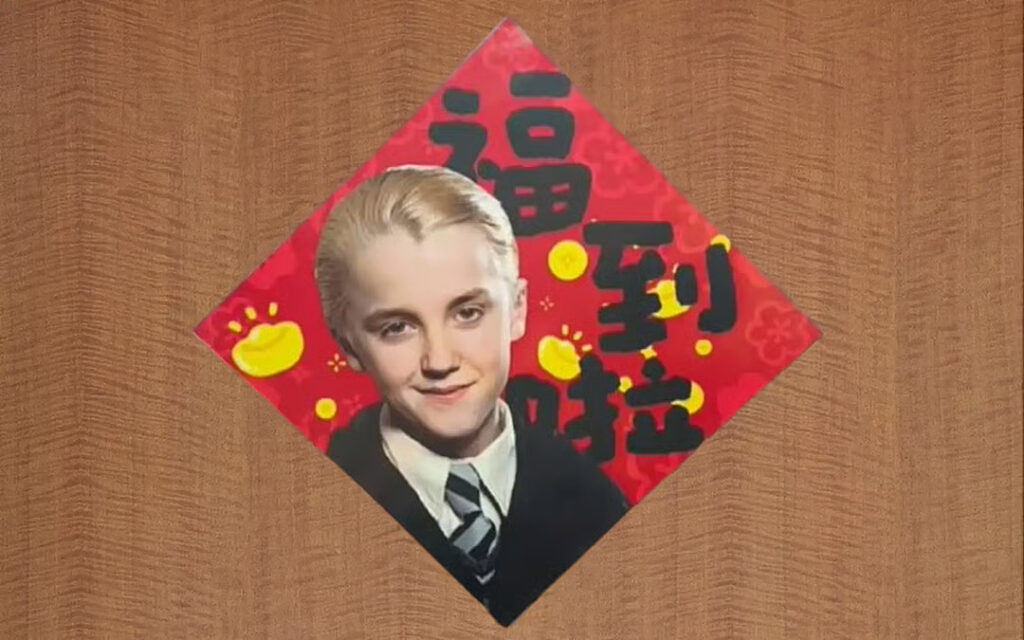
As China ushers in the Lunar Year of the Horse, an unlikely face has begun appearing on red posters, phone covers and even shopping mall façades: Draco Malfoy, the sneering Slytherin rival from the Harry Potter universe.
On the surface, it makes no sense.
Malfoy is a villain. He is pale, petulant and hardly a symbol of warmth or prosperity.
Yet in China, his surname’s Mandarin transliteration — Ma-er-fu — conveniently combines ma (horse) and fu (fortune).
In a culture where phonetics, symbolism and timing matter deeply, that coincidence was all the internet needed.
The result? A fandom-fuelled festive phenomenon that no brand planner could have predicted.
When Language Does the Marketing for You
Chinese Lunar New Year has always been fertile ground for wordplay. Homophones shape everything from gift-giving taboos to brand naming strategies.
What makes the Draco Malfoy moment fascinating is that it wasn’t initiated by a studio, a platform, or even a fandom campaign.
It emerged organically — from translation.
Social platforms like Rednote quickly filled with tongue-in-cheek blessings: “Year of the Horse’s fortune? Stick a Malfoy.”
E-commerce listings on Taobao followed, selling red Malfoy posters in budget-friendly bundles.
Somewhere between meme culture and superstition, Malfoy crossed the line from antagonist to talisman.
For marketers, this is a reminder that meaning doesn’t always originate from intent.
Sometimes, it comes from linguistic accidents — amplified by social behaviour.
Fandom Is the New Folk Culture
What we’re seeing isn’t just fandom enthusiasm.
It’s fandom functioning like folk culture.
Traditionally, Lunar New Year symbols were gods, animals, calligraphy and myths passed down over centuries.
Today, pop culture characters are being folded into the same ritual space — not as replacements, but as playful extensions.
That this honour has gone to Malfoy, rather than Harry himself, is telling. Chinese internet culture thrives on irony and subversion.
The “bad boy” turned lucky charm fits perfectly into a digital ecosystem that values humour, remixing and inside jokes over sanctity.
In other words: reverence has been replaced by resonance.
IP Longevity Meets Local Relevance
The Harry Potter franchise’s enduring presence in China provides the backdrop for this moment.
Despite strict film quotas and a strong push for domestic content, the wizarding world has remained culturally embedded.
The eight films were re-released in cinemas in 2024. Warner Bros is developing a Harry Potter Studio Tour in Shanghai with Jinjiang International.
Meanwhile, Universal Studios Beijing continues to draw crowds to its Wizarding World zone.
This depth of exposure matters. You can’t turn a character into a festive symbol unless people already feel a sense of ownership over them.
Draco Malfoy isn’t just recognisable — he’s memed, debated and emotionally archived by an entire generation.

What Brands Should Learn From This
The lesson here isn’t “jump on Draco Malfoy.”
It’s subtler — and more useful.
First, culture moves faster than campaigns. By the time a brand asks, “Should we do something with this?”, the moment may already have peaked.
Second, local meaning beats global consistency. No central Harry Potter brand book would ever position Malfoy as auspicious.
Yet locally, it works — because culture isn’t governed by brand hierarchies.
Finally, symbolism doesn’t need to be serious to be powerful.
The Malfoy phenomenon shows how humour, timing and shared cultural literacy can transform even a villain into a bearer of good fortune.
In the Year of the Horse, perhaps the luckiest brands won’t be those that planned hardest — but those that learned to spot meaning as it gallops past, uninvited, wearing a Slytherin scarf.