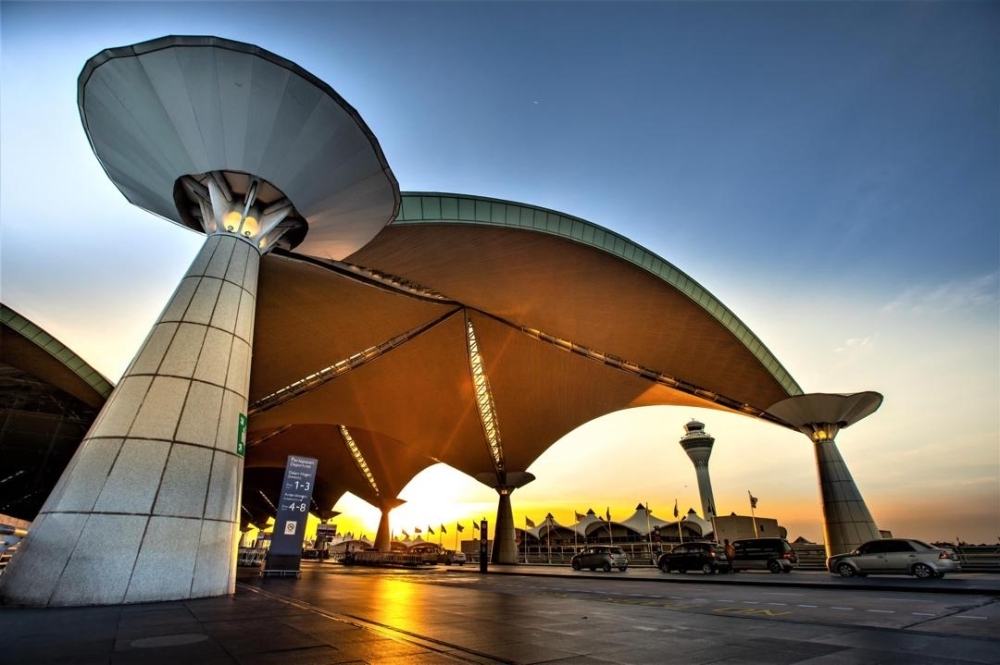
Malaysia’s airports delivered a clear signal that the country’s travel, tourism and consumer economy is shifting into a higher gear — just as Visit Malaysia 2026 (VM2026) comes into view.
Passenger movements across Malaysia Airports’ global network hit 153.3 million in 2025, with December alone emerging as a stress test few infrastructure systems get to rehearse at scale.
Ten million passengers in a single month, including more than one million processed over a tightly packed three-day festive window, is not merely a traffic update.
It is a live demonstration of operational readiness under peak pressure.
For marketers, this matters more than it might first appear.
Festive Peaks as a Live Stress Test
December’s surge — driven by Christmas, New Year, school holidays and regional travel rebounds — was not a slow build.
Airports had to absorb sudden spikes without compromising experience, safety or flow.
This kind of performance is increasingly relevant in a world where consumer behaviour is defined by bursts rather than steady rhythms: flash sales, festival travel, last-minute bookings, viral moments.
Airports that can manage these surges smoothly become enablers of confidence — for airlines, for tourism boards, and for brands relying on frictionless journeys.
Operational resilience, in this sense, is brand equity by another name.

KLIA and the New Gravity of Hubs
Kuala Lumpur International Airport handled 6.1 million passengers in December, closing the year at 63.3 million — a double-digit year-on-year increase.
But the more interesting story lies beyond volume.
KLIA’s expanding connectivity — from Hangzhou and Qionghai to Osaka, Jakarta and Cebu — reflects a deliberate recalibration toward multi-origin Asia-Pacific travel.
This is not just about inbound tourism.
It is about positioning Malaysia as a connective hub for business travel, leisure hopping, and regional circulation.
For destination brands, airlines and even retail players, hubs like KLIA increasingly function as media channels in themselves: places where intent, time and purchasing power intersect.
Secondary Airports Step Into the Spotlight
Subang, Kota Kinabalu, Langkawi, Penang and Kuching all posted healthy December gains, with Subang recording the strongest month-on-month growth.
This matters because VM2026 will not succeed on KLIA alone.
Distributed growth across secondary airports signals a more decentralised tourism model — one that spreads visitors beyond a single gateway.
For brands, this opens opportunities to think region-first rather than capital-first: hyperlocal partnerships, state-led storytelling, and experiences tailored to domestic and short-haul travellers.
The airport is no longer just an arrival point. It is a prelude to place.
Istanbul, Proof of Global Scale
Malaysia Airports’ Istanbul Sabiha Gökçen asset added another dimension to the story, handling 49 million passengers in 2025.
Its growth underscores something often overlooked: Malaysian airport expertise now operates at global scale.
That credibility matters as VM2026 is underway.
It reassures airlines, tour operators and international partners that Malaysia is not learning on the job — it is exporting competence.
As travel demand accelerates, airports will become frontline brand environments: high-attention, emotionally charged, and time-rich.
The brands that win in 2026 will be those that treat airports not as transit spaces, but as narrative spaces — where anticipation, relief and discovery converge.