What does a runaway monkey in the United States have to do with Malaysian marketers?
More than anyone would like to admit.
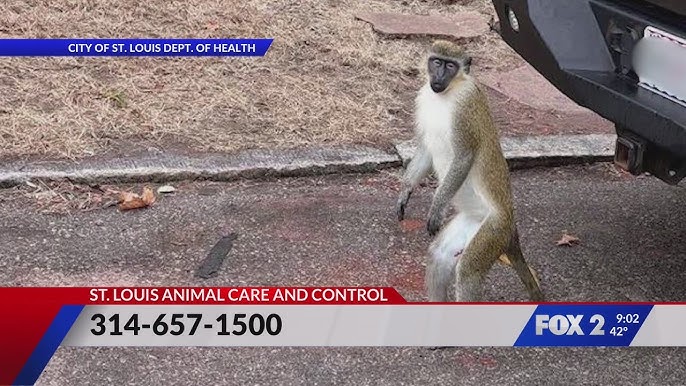
Earlier this month, authorities in St. Louis went looking for a group of vervet monkeys spotted near a public park.
It should have been a routine animal recovery job.
Instead, it turned into a farce — not because the monkeys were clever, but because the internet was.
Within hours, social media filled up with images of the monkeys roaming neighbourhoods, being caught, escaping again, and doing things monkeys generally do not do.
Many of these “sightings” looked convincing. None were real.
They were AI-generated.
Animal control officers and public health teams found themselves chasing images instead of animals.
According to officials, only one sighting — by a police officer — could be confirmed.
Everything else lived somewhere between satire and synthetic fiction.
The real problem wasn’t misinformation. It was distraction.
When Visuals Become Noise
For marketers, this isn’t an animal story. It’s a preview.
Marketing has always leaned heavily on images as shortcuts to reality — product photos, influencer posts, behind-the-scenes clips, “we’re-on-the-ground” visuals.
But when believable images can be generated faster than facts can be checked, visibility stops being an advantage.
It becomes a liability.
In Malaysia, where WhatsApp, TikTok and X double as emergency bulletins during floods, fires and public incidents, the parallels are obvious:
This is not about ethics panels or white papers.
It is about time wasted, decisions misled, and attention pointed in the wrong direction.
Jokes Travel Faster Than Context
In St. Louis, many fake monkey images were created “just for laughs” — monkeys drinking alcohol, joining gangs, staging dramatic escapes.
Harmless? Not quite.
Because once an image feels plausible enough, people act on it.
Satire collapses into signal. Context never catches up.
This should sound familiar to anyone who has watched a Malaysian WhatsApp group light up during a crisis.

Platforms Are Now Part of the Job
The monkey hunt also exposed an awkward truth: platforms are no longer neutral pipes.
They now shape real-world operations, whether they mean to or not.
Officials had to repeatedly correct the public online — effectively acknowledging that social platforms now sit inside emergency workflows.
For marketers, this matters.
The next “monkey” will not be amusing.
It will involve food safety, a product recall, or a health scare.
And when that happens, the question won’t be who went viral first.
It will be who didn’t make things worse.
The monkeys will eventually be found.
The lesson won’t go away.