For four decades, Malaysia’s automotive story was a respectable one — steady, cautious, occasionally ambitious, but largely reactive.
We assembled. We imported. We consumed. The Proton Saga gave us pride, but not quite propulsion.
Then 2025 happened.
This was the year the Malaysian car industry quietly stopped asking, “What’s coming next?” and instead began saying, “Let’s build it.”
From Assembly Lines to Intent
The symbolism was everywhere.
Proton leaving Shah Alam after forty years to anchor itself in Tanjong Malim’s Automotive High Tech Valley wasn’t merely a factory relocation.
It was a philosophical one. Steel stamping lines replaced nostalgia. EV tooling replaced incremental upgrades.
The message was unmissable: localisation was no longer policy language — it was industrial intent.
More importantly, Malaysia crossed an invisible psychological line.
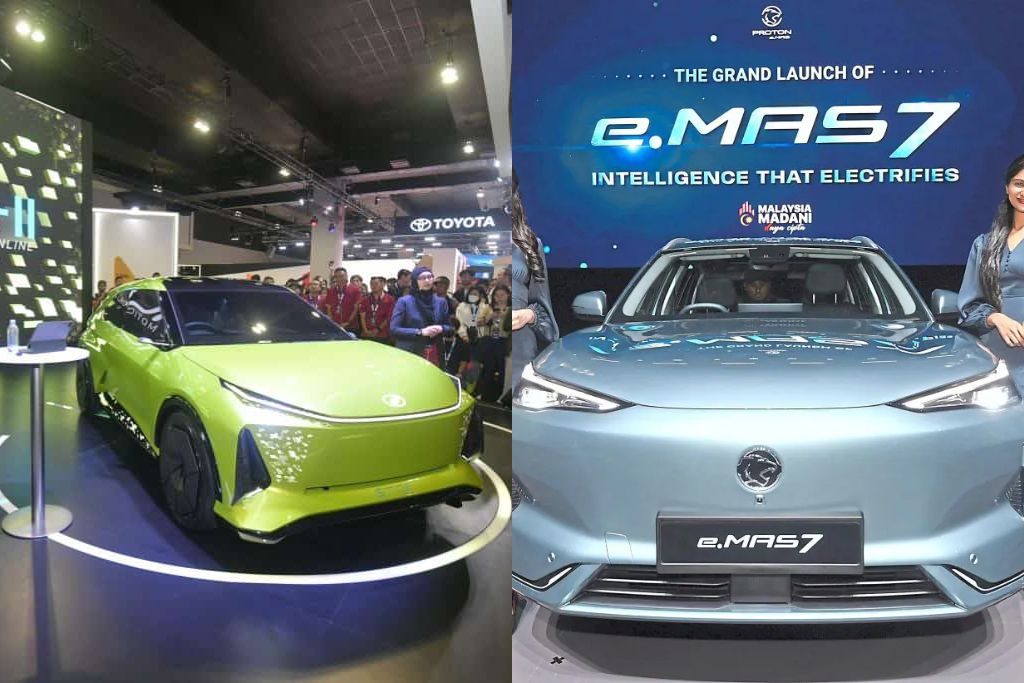
With the arrival of Perodua’s QV-E and Proton’s e.MAS range, the country moved from EV adoption to EV authorship.
That distinction matters. Adoption is consumption dressed as progress. Creation is capability.
Why Building Matters More Than Buying
For marketers, this shift should not be underestimated.
A nation that designs, engineers, and prices its own electric vehicle for mass affordability changes the storytelling equation entirely.
This is no longer about aspiration borrowed from elsewhere. It’s about confidence built at home.
The difference shows up not just in factories, but in messaging.
“Locally assembled” once implied compromise. In 2025, it increasingly signals control, resilience, and relevance.
The Numbers Tell One Story. Direction Tells Another.
Yes, the numbers tell a mixed story.
Total Industry Volume softened after a record 2024, and commercial vehicles took a hit following diesel subsidy rationalisation.
But transitions are rarely smooth — and never linear.
What matters more is direction. EV registrations have already outpaced last year’s total. October alone saw electric vehicle growth surge by more than 170 per cent year-on-year.
Consumers are no longer “testing” EVs. They’re timing purchases, gaming tax deadlines, and making informed decisions.

Policy, Behaviour, and the New Purchase Logic
This is where policy, behaviour, and brand strategy intersect.
The end of tax exemptions for fully imported EVs may slow headline growth, but it accelerates something more valuable: commitment to local assembly.
Brands that once flirted with Malaysia as a market are now courting it as a manufacturing base.
CKD is no longer a footnote — it’s the future-proofing strategy.
Marketing in an Era of Capability
For marketers and brand builders, this marks a turning point.
The automotive category in Malaysia is no longer about feature lists and monthly instalments alone.
It’s about infrastructure confidence, charging reassurance, resale narratives, and — increasingly — national capability.
There’s also a deeper cultural undercurrent at play.
Subsidised petrol may reduce urgency for some consumers, but it doesn’t reverse awareness.
Malaysians now understand electrification as inevitable, even if timing varies by income group.
The conversation has shifted from “Should I?” to “When does it make sense for me?”
That nuance is where smart brands will win.
The Switch That Changed Everything
The real story of 2025 isn’t that Malaysia sold more EVs.
It’s that the industry stopped behaving like a tenant and started acting like an owner. Of factories. Of technology. Of its future.
Forty years after the Saga rolled off the line, Malaysia didn’t just upgrade its cars.
It upgraded its mindset.
And once that switch is flipped, there’s no going back to standby mode.