By Mark Ritson
Mark Ritson argues that Hollywood’s rush to shrink theatrical windows has created a blockbuster crisis that even brilliant films cannot escape – a marketing disaster we will study in years to come.
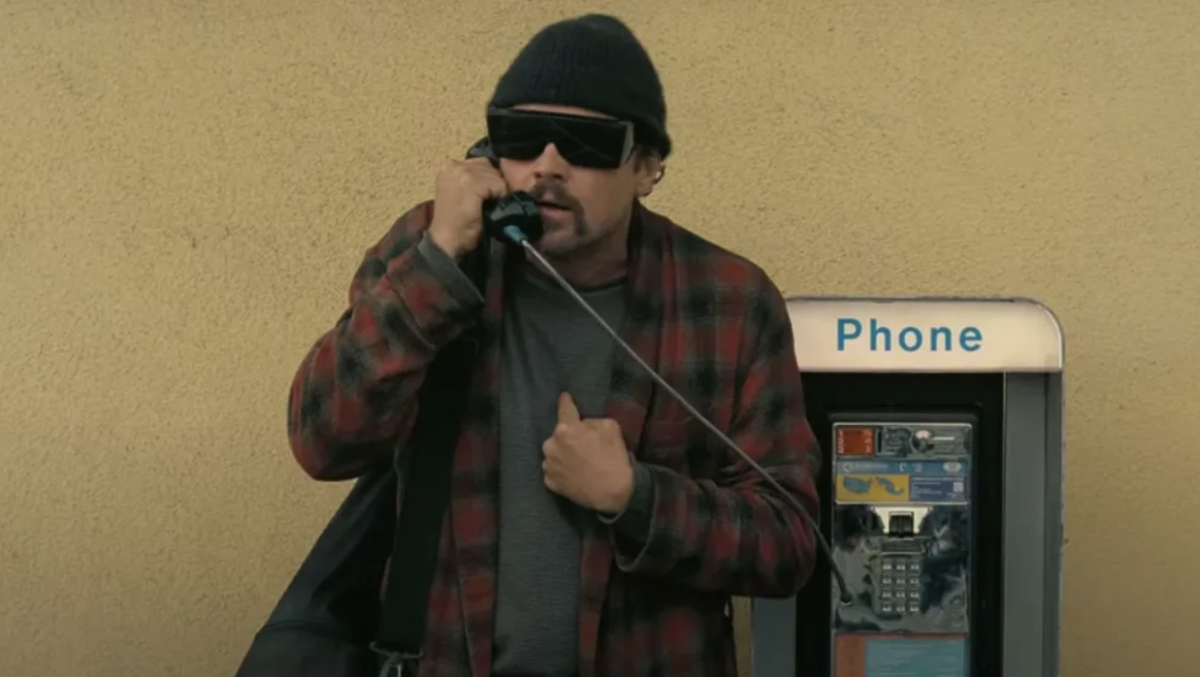
There is no doubt that ‘One Battle After Another’ is one hell of a film. Helmed by the film-maker’s film-maker Paul Thomas Anderson, it earned a 95% critics’ score on Rotten Tomatoes and widespread acclaim from almost every movie critic on the planet.
It even tickled the hard-to-please underbelly of Mark Kermode, who found it to be masterfully executed and full of moments that were “genuinely outrageous” and “brilliantly done”. It has stupendous star power thanks to Oscar-worthy turns from Sean Penn and an outstanding Leonardo DiCaprio. No wonder it is being called one of the decade’s finest films.
It is also projected to lose Warner Bros. around $100m.
Think about that for a moment.
Not some cynical franchise sequel. Not a misguided auteur on an indulgent nonsense journey. The most critically lauded film of 2025, starring one of the world’s biggest movie stars and helmed by one of America’s greatest living directors, is hemorrhaging money like a room full of besuited Japanese assassins after a big night with Uma Thurman.
And it is not an exception.
It is becoming the new rule.
Steven Soderbergh’s slick spy thriller ‘Black Bag’, boasting a virtually unheard-of 98% critics’ rating and starring Cate Blanchett and Michael Fassbender, managed just $43m globally against a $50m budget. Bong Joon Ho’s quirky ‘Mickey 17’, featuring Robert Pattinson fresh off ‘The Batman’, cost $118m to make and barely scraped past that figure worldwide. Even Marvel’s well-reviewed ‘Thunderbolts’ became one of the lowest-grossing MCU films ever, failing to crack $400m globally.
The Last Picture Show
The rot runs deep. Box office revenues across 2025 paint a bleak picture. Despite a few breakouts like ‘Lilo & Stitch’ and ‘Sinners’, ticket sales in the US are down a whopping 26% from the pre-COVID era of 2019. The UK box office tells a similarly grim tale.
Cinema admissions in Q1 2025 fell 24% compared to 2019, dropping from 176m annual visits to barely 120m. Box office revenue collapsed from £1.25bn in 2019 to £979m in 2024, and cinema operators are warning that one in ten UK cinemas now face closure.
It is easy to assume that cinema has not recovered from its Covid-19 hangover. But the epidemic was only part of the plot in a much bigger horror story now playing across cinema screens worldwide. Despite initial appearances, the decline in movie attendance is not a natural disaster, but rather a murder mystery. And the smoking gun is being held by the very people who historically benefited most from a healthy cinema industry: the movie studios.
Before the Covid-19 pandemic, films enjoyed a sacred 90-day theatrical window before appearing on home viewing platforms. Even that was a compromise from the golden era of the Eighties and Nineties, when movies could take months, even years, to reach the small screen. ‘Jurassic Park’ in 1993 took a whopping 16 months before a rental version of the movie was finally made available.
Lest we forget, there is something very special about seeing a movie where it was meant to be seen: in the cinema. One of my earliest memories is Martin Birkett’s 9th birthday party and the opening jungle scenes of ‘Raiders of the Lost Ark’. I can remember leaving a friend’s funeral in Traverse City, Michigan in tatters and wandering into a cineplex in 1994 to do something I have never done before or since: watch the first random movie playing.
It turned out to be ‘The Shawshank Redemption’, and I will never forget it. Or sitting in the Prince Charles Cinema in London with Jenny Lindstrom watching ‘Cinema Paradiso’ and listening to Morricone’s score and, well, you know. None of these experiences would have been these experiences if they had happened at home in front of a TV.
And that is just the experiential advantage of a proper big screen window. That initial exclusivity created anticipation, generated awards buzz and, crucially, converted theatrical momentum into robust home viewing demand. It was a beautiful, profit-compounding cycle. It was also a brilliant bit of segmentation.
If you had time, money and an evening free, you would go to see a movie. If you did not, you read the reviews, bided your time and saw it when it finally arrived on your TV. And that home premiere still shimmered with big-screen glamour and awards buzz.
The Big Short
During the Covid-19 pandemic, studios glimpsed a massive opportunity. Audiences temporarily weaned from their local multiplex were potentially ready for a distribution disruption. The move was apparent as the world exited the pandemic.
Paramount pondered what the “next incarnation of distribution” would look like, Disney cited “consumer impatience”, and Universal suggested there was “no going back” to pre-COVID release windows. This was a once-in-a-century chance to wrest control of movies from cinema chains and pursue vertical integration.
The logic was simple. Studios wanted direct control over distribution, access to all that viewer data, total control over timing and a drastic reduction in the box office revenue shared with cinema chains. Since the pandemic ended, studios have slashed the sacred 90-day window to an average of 30 days. Some films now get as little as 17 days before being dropped on to streaming platforms or premium video-on-demand.
In the short term, this strategy delivered exactly what studio executives wanted: control. They could bypass exhibitors, feed their streaming services with fresh content and mine user data to their hearts’ content. In the long term, they killed the golden goose and roasted it on a spit made from their own quarterly earnings.
Apocalypse Now
Here is what the studios failed to grasp: the theatrical window was not just about exclusivity. It was about launch. It was about event. It was about creating a cultural trajectory that generated word-of-mouth, critical discourse and that sense that you needed to see this film now because everyone would be talking about it tomorrow.
When you compress that window to three weeks, you obliterate anticipation. Why rush to the cinema when you know you can watch it at home in a fortnight? Why pay £15 for a ticket, £10 for popcorn and £8 for parking when you can wait 18 days and watch it on your sofa at your leisure?
And with the declining buzz of movie releases already apparent, it is often possible to encounter a major new movie on your small screen before you even realized it had been released. The convenience is incomparable, but emotion and experience are drastically reduced.
Data from Cinelytic’s analysis of 2025 releases confirms what common sense already suggests: films with less than 30 days of exclusivity in theaters see diminished box office returns and weaker long-tail digital performance. The sweet spot existed. The studios chose to shrink it. And now there will be a reckoning.
Yes, they will get an earlier, bigger share of movie revenues. But that purse is certain to shrink in the years ahead as myopic movie studios pay the price for strategic naivety and corporate greed.
The Departed
It is a lesson that marketers do well to heed: launch matters. Whether you are selling phones, trainers, hospital nutrition or streaming subscriptions, pre-launch and launch periods create demand that echoes throughout a product’s lifecycle. Compress that window and you compress returns. Tesla understood this with its months-long waiting lists. Supreme built an empire on it. ‘Privatzione’, as Gucci likes to call it, is the idea that you make the customers wait.
I have spent my consulting career advising clients to ignore the sales teams who want all the product available for all consumers as soon as possible. Instead, I tell them to pull back the bow and pre-launch the product. Then, having created genuine interest and desire, launch the thing like a new car rather than a brick out of the nearest window.
You only get one chance to launch. So have a premiere. Have five. Do something big. I can show you global clients of mine and the countries that listened to me, and the ones that thought I was full of marketing nonsense. The difference two or three years later is always stark, and always in my favor. Build trajectory, slow availability and beef up demand. Basically, be the original ‘Ghostbusters’ with its 502-day window rather than last year’s anaemic ‘Ghostbusters: Frozen Empire’ with 45 days.
The downturn in cinema audiences also means there is a twist awaiting UK marketers who rely on advertising. It was already the most expensive CPM in town, with pre-COVID levels of around £30 to £40 CPM. But it was widely recognized as being worth it. Cinema advertising offers superior emotional impact, attention, ad recall and a host of other factors at levels the micro screens of digital video can only dream about. And all of this among a surprisingly young demographic that is often hard to reach and even harder to get to focus on the screen.
But with movies shunting faster to home screens and generally losing much of their pull, there is now the genuine outlook of Cinema advertising passing the 100 quid CPM level and potentially pricing itself out of the market. With admissions down 32% from 2019 levels and one in ten cinemas facing closure, simple supply and demand mean already prohibitive CPMs will surely climb even as reach diminishes.
No Country for Old Men
And here is the killer: the young audiences that made cinema advertising so valuable, the ones notoriously difficult to reach through other channels, are likely to be the first to abandon the medium.
They have grown up with streaming. They do not remember a time when going to the cinema was the only way to see a new release. And along with all the other downsides of speeding movies into the home, perhaps the biggest self-inflicted wound will be a generation of moviegoers who do not moviego like their predecessors.
You cannot have your popcorn and eat it too. The studios wanted theatrical revenues, streaming subscribers, user data and control over release timing. What they got was diminished returns everywhere.
Cinema is not dead yet. But the studios have done their level best to try and murder it. They compressed windows, eliminated exclusivity, slowed the traditional trajectory of Tinseltown and trained audiences that patience pays.
We may look back on this period as one of the dumbest moves in modern business, in which the studios wrote, directed and starred in their own box office bomb. There may not be a chance for a sequel.
Roll credits.
Share Post:

The APPIES is where Malaysia’s boldest campaigns, brightest ideas, and most impactful storytellers take the stage.
More than an awards show, it is the industry’s ultimate platform for creative, media, digital and marketing excellence, where live presentations meet live judging.
This is your chance to showcase work that moved audiences, shaped conversations, and delivered real results.
From breakthrough brand campaigns to innovative digital experiences, the APPIES celebrates the work that defines the future of marketing.
Step into the spotlight alongside the industry’s leading agencies, brands, creatives, strategists and changemakers.
Whether you are aiming for Gold, Silver, Bronze or the prestigious Best of the Best recognition, this is your moment to make history.
Your campaign deserves to be seen.
Your ideas deserve the stage.
Your work deserves the legacy.
KEY DATES
Haven’t subscribed to our Telegram channel yet? Don’t miss out on the hottest updates in marketing & advertising!