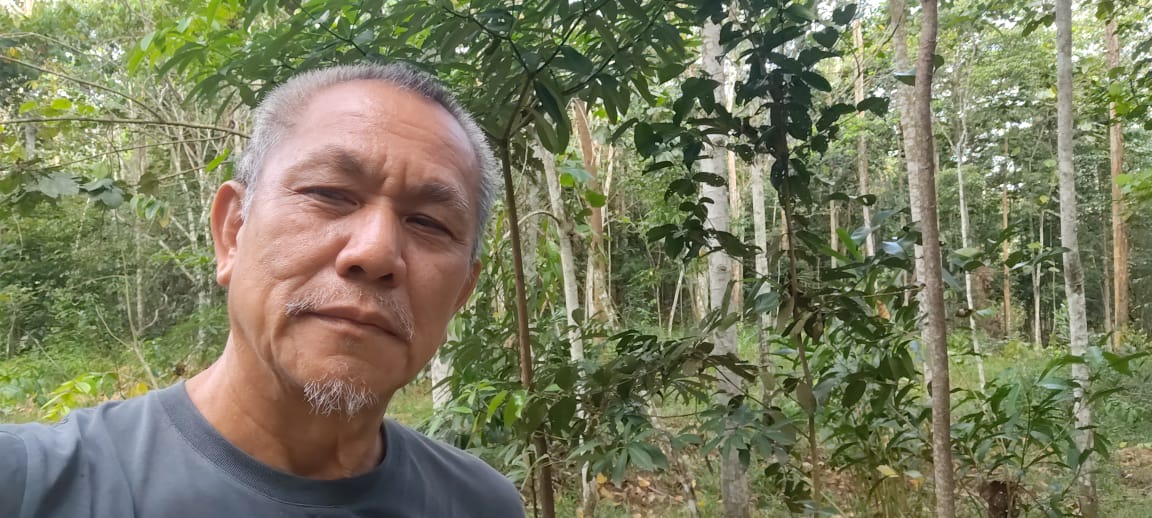
There are two ways to look at a still photographer. One is the obvious one. The person behind the camera. The one who freezes time for brands, frames perfection for print, and makes products look like they belong in a dream.
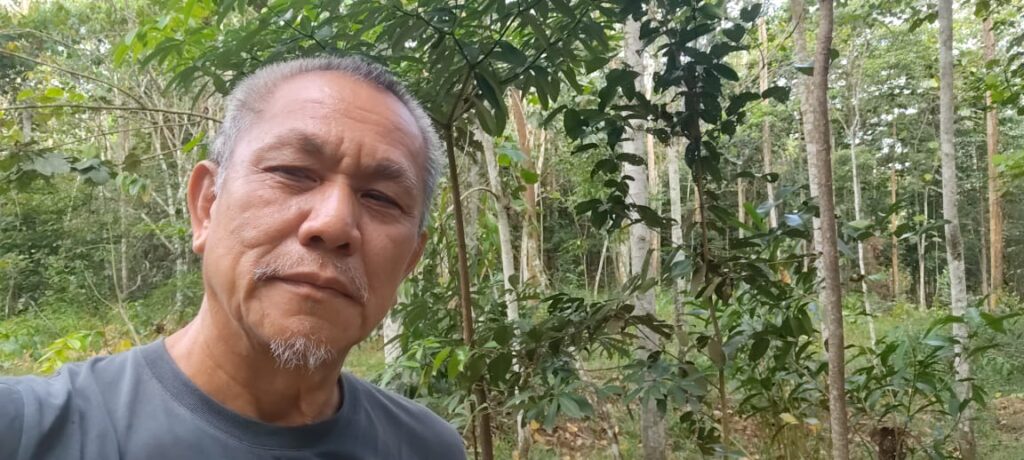
The other is rarer. The one who puts the camera down and starts rebuilding the world that gave him those images in the first place. David Lok of Studio DL belongs to the second category.
The Man Who Stepped Out of The Frame
In the advertising industry, still photographers are often invisible authors of memory.
They don’t write the scripts. They don’t direct the films. But they shape what stays with us. A look. A pause. A moment that feels unspoken but understood. For years, David Lok did exactly that.
Not with products, but with people. With restraint. With empathy. With a sensitivity sharpened through years of working alongside storytellers like the late creative legend Yasmin Ahmad.
A career built not on control, but on connection. But somewhere along the way, something shifted. Because outside the frame, the world wasn’t holding still.
“The rapid destruction of Malaysia’s jungle was one of the main reasons,” David says. He doesn’t dress it up.
“The forest is the skin of Mother Earth and when we cut down the forest, we are skinning her. We must plant back the forest to heal her wound.”
“We cannot depend solely on the government to do it. The environment is everyone’s responsibility. We need to start, for humanity’s sake.”
A Forest That Wasn’t There Anymore
About 50 acres just past Rawang, in Sungai Buaya. Land that had been stripped, used, left behind.
Not the kind of place you’d photograph. Not the kind of place you’d bring a client. But it became the place that changed him.
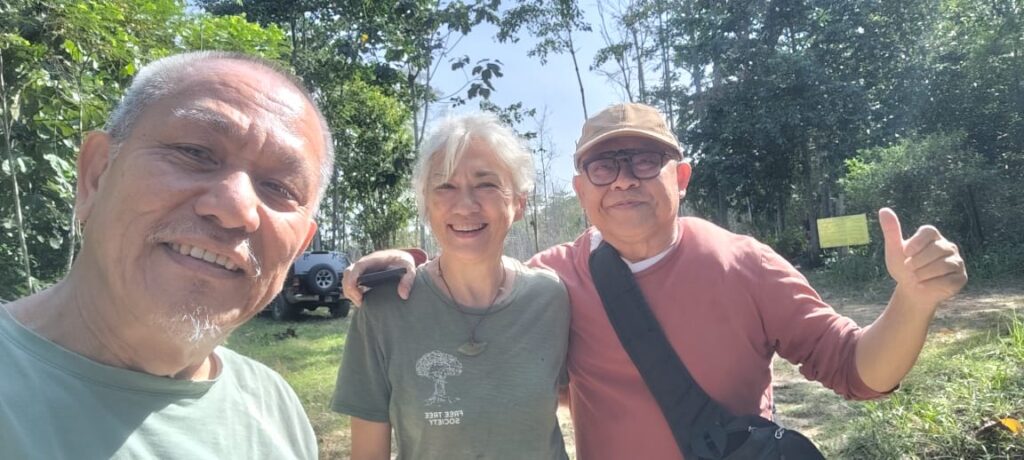
Together with collaborator Moo Fook Yow, David took on the land, a 30-year leasehold once passed on by a friend. What followed was not a campaign, but a commitment. They started in September 2023.
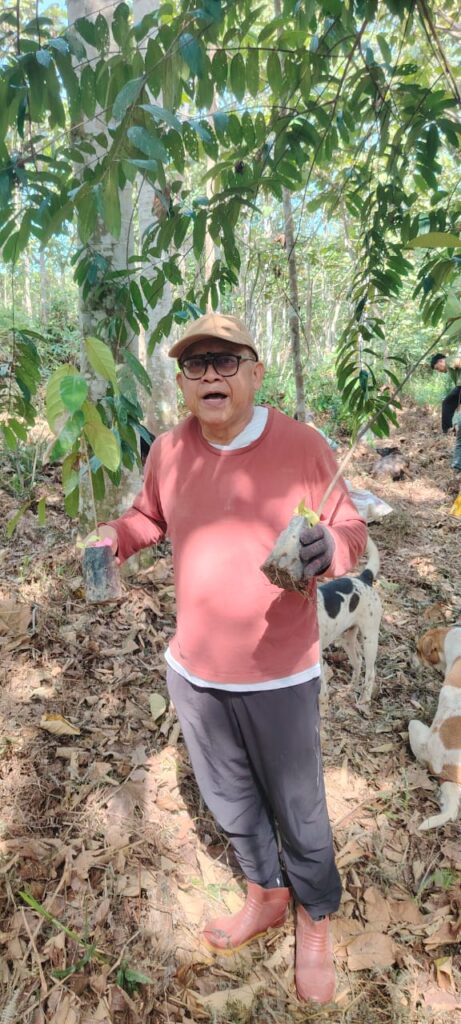
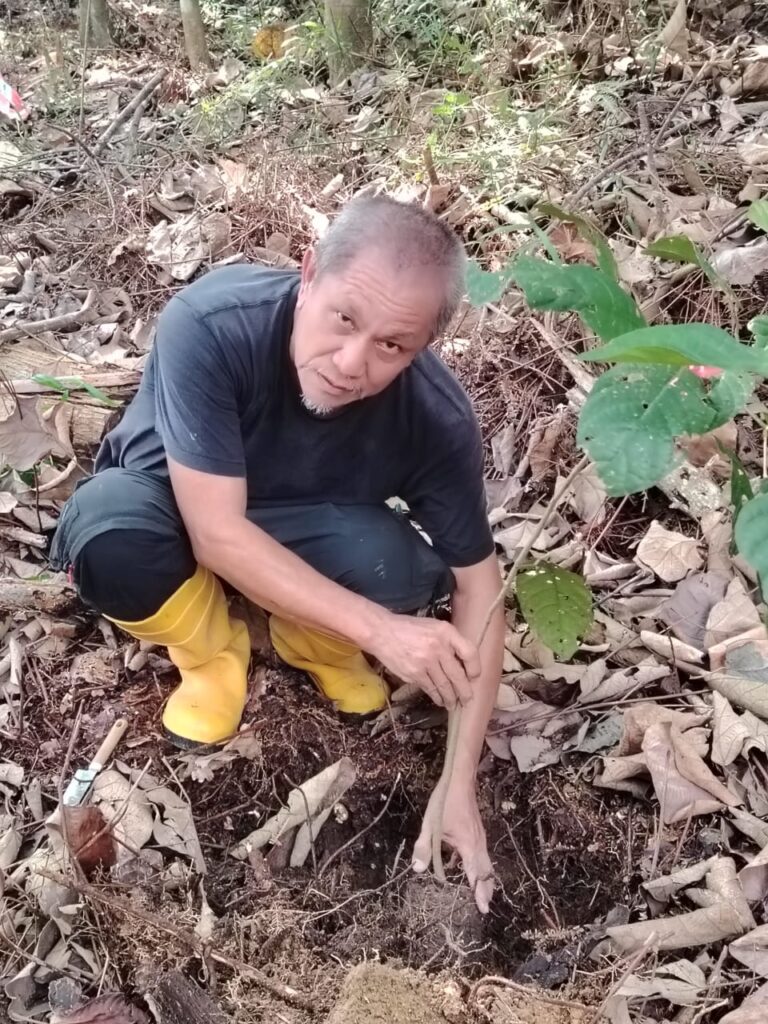
Since then, close to 8,000 Malaysian jungle species trees have gone into the ground. Not ornamental choices, but native life. The kind that belongs.
Along the way came a discovery that sharpened the mission. There are at least 36 species of trees in Malaysia now considered endangered. So they began planting those too.
Alongside their own efforts, the work has quietly drawn support from groups who understand what it takes to bring a forest back.
Free Tree Society, the Selangor Forestry Department, the Malaysia Wood Frame & Joinery Association, the Plum Village Buddhist Society, and others who prefer to contribute without fuss. “Our hope is that this piece of land becomes a living seed bank,” David explains.
“So future generations will still have a source. We want to heal the environment, slow down climate change, and give back to Mother Earth. We owe everything to her.”
The project now known as Hutan Simpan Rantau Panjang isn’t a manicured park. It’s not designed for Instagram. It’s designed to disappear into itself. To become a forest again.
From Composition to Regeneration
There’s a discipline in still photography that few outside the industry appreciate. You wait for the right light. You remove what doesn’t belong. You construct an image that feels inevitable.
Reforestation is the opposite. You plant without certainty. You don’t control the outcome. You work with time scales that ignore human impatience.
And yet, the same instinct seems to guide him. “Working with people like the late Yasmin Ahmad taught me something,” David reflects. “You must be sensitive. You must connect. For the forest, you don’t just look. You listen. With your heart.”
Walk through the recovering land and you notice something familiar. Not symmetry, but intention. Not perfection, but care.
The way certain species are placed. The way the land is allowed to heal rather than be forced into shape. It feels less like a project, more like a long exposure.
No Brand, No Brief, No Applause
What makes this story sit uncomfortably especially for those in marketing is how little it asks for attention. There’s no logo stamped onto the trees. No campaign lines. No launch films. Just occasional jungle walks. Small groups. People learning how ecosystems rebuild themselves, one root at a time.
That’s precisely where the discomfort begins. Because here sits something the industry doesn’t quite know how to deal with. No KPIs. No media value. No case study waiting to be written.
Just land. Soil. Time. For an industry obsessed with ownership of ideas, of campaigns, of cultural moments, this is ownership in its most confronting form. Not naming rights. Not brand placement. But responsibility.
The chance to stand on a patch of earth and say: we helped this come back to life. No hashtags. No amplification. No applause. Just a quiet, inconvenient question hanging in the air:
If we can spend millions manufacturing meaning for brands, why do we hesitate when asked to create something that will outlive us?
This is not scalable. It will not trend. It won’t win you an award. But it will still be there in one hundred years. Perhaps that is the most uncomfortable idea of all.
The Advertising Question Nobody Asks
We often talk about purpose in advertising. It shows up in decks. In award entries. In carefully worded sustainability reports. But purpose, when stripped of language, looks a lot like this.
Unbranded work. Unscalable effort. No guarantee of recognition. Just a decision to give something back to the same environment that once served as a backdrop for beautiful images.
David Lok’s journey doesn’t reject advertising. If anything, it reframes it. “I do hope people in advertising, with all their talent, can help,” he says.
“Spread awareness. Support conservation. Even raise funds. We all have a role.” In his case, that role now extends beyond the forest floor.
On June 26, he will stage an exhibition titled Forest Speaks at his own DL Studio, 7 Jalan PJU3/50, Sunway Damansara Technology Park, Petaling Jaya. It will run through to July 5. Not a showcase of authorship, but an act of translation.
“The artists are the trees, the undergrowth, the decaying leaves, the land, the water, the wind, the sun, the animals,” he says. “I am just a conduit.”
It is an unusual proposition for an industry built on control. To step back. To let something else take the lead. To accept that the most important story in the room may not belong to us at all.
The Quiet After the Shutter
There’s a moment every photographer knows. After the shot is taken. After the client is satisfied. After the lights are turned off. Silence.
For David Lok, that silence now lives somewhere else. Not in a studio, but in a growing forest in Sungai Buaya, just beyond Rawang. A place that, if left alone long enough, will no longer need him.
Perhaps that is where this story lands. Not in the images he once created. But in what he chose to return. The best work doesn’t always ask to be seen. Sometimes, it just grows.