There are two kinds of Lunar New Year films in Asia.
The first is about returning home.
The second is about returning home with better lighting.
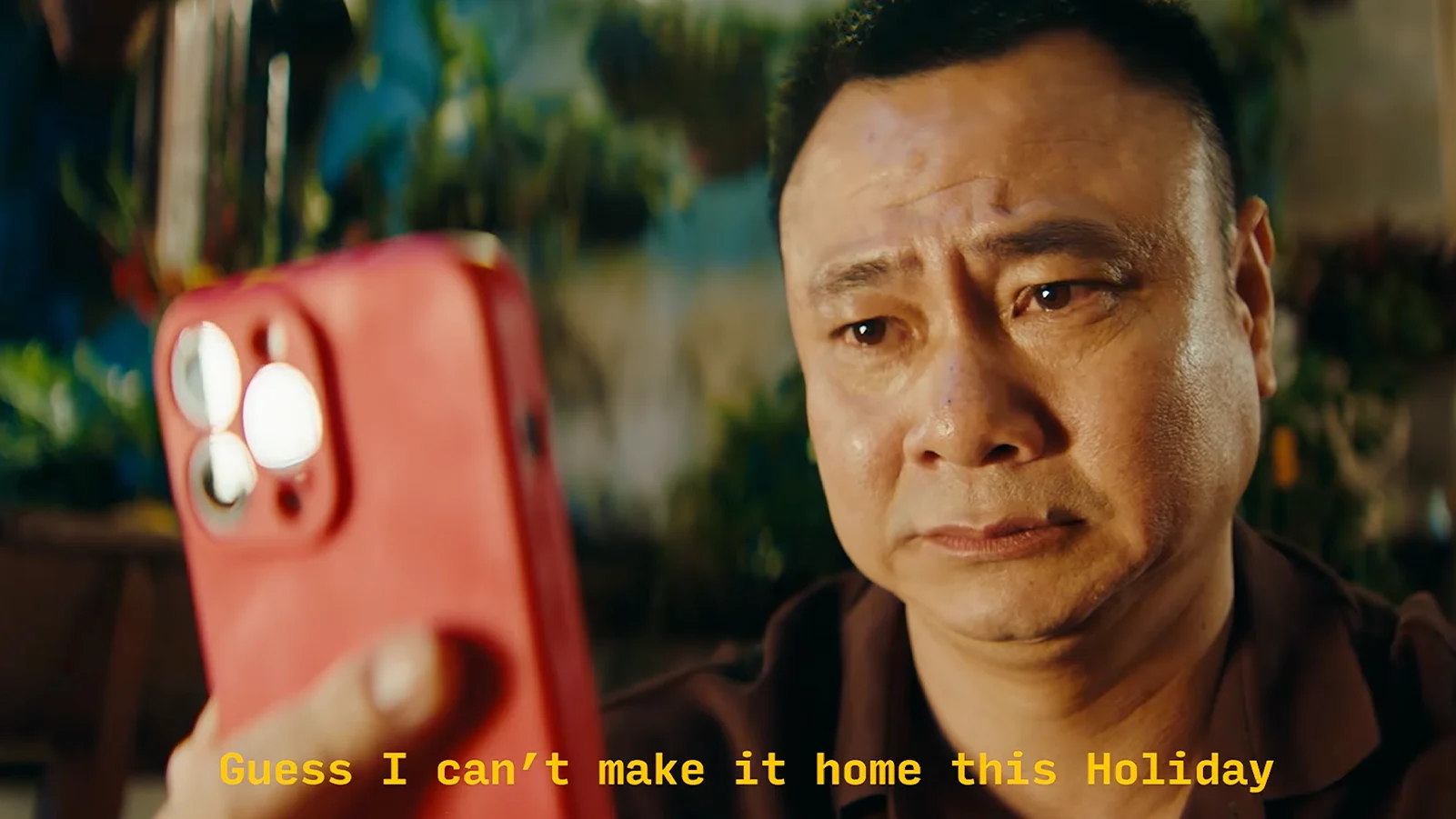
Then along comes “Uncle Badass”, a Tết campaign from Viettel, and quietly asks a more interesting question: what if home can’t come to you—and you go to it instead?
Created by Ho Chi Minh City–based The Friday, the film follows an uncle from northern Vietnam who hits the road to visit family members scattered across the country.
No tear-soaked reunion at the bus station.
No slow-motion hugs.
Just a stubborn, warm-hearted man travelling south, east, and occasionally sideways, because that is what love looks like when life gets complicated.
Not a Journey Home. A Journey Out.
The genius of “Uncle Badass” lies in what it refuses to dramatise.
This is not a heroic quest.
It is a series of small misadventures: chatting with schoolkids, accidentally ending up on Vietnam’s highest mountain, losing his things at the beach, borrowing clothes from drag performers when his own run out.
None of it shouts.
All of it feels true.
And that is precisely why it works.
Tết advertising has long been built on a single emotional axis: distance collapses, families reunite, everything is resolved by the final frame.
But modern families don’t always resolve so neatly.
People are busy. They are mobile.
They are fragmented by work, economics, and geography.
The old promise of “I’ll be home for New Year” increasingly comes with an asterisk.
“Uncle Badass” doesn’t mourn this shift.
It accepts it—and then gently flips the emotional direction.
Tết, the film suggests, is no longer only about returning.
It is also about reaching.
The Quiet Power of Everyday People
Along the road, the uncle encounters communities rarely granted screen time in holiday advertising: drag performers from the Lô Tô scene, tattoo artists, gamers, floating market traders.
They are not presented as statements.
There is no performative diversity, no cultural footnotes.
They simply exist.
And in doing so, the film makes a subtle but radical point: the nation is not a single story told once a year.
It is a collage of lives, habits, subcultures, and side streets—connected not by sameness, but by proximity and curiosity.
This is where the humour earns its keep.
It is not gag-driven or clever-clever.
It is observational. Human.
The kind of humour that comes from noticing how people behave when plans go wrong and strangers step in.

Technology That Knows Its Place
Yes, this is a 5G campaign.
And yes, connectivity underpins the journey.
But the technology never elbows its way into the narrative.
It behaves the way good infrastructure should: present, dependable, and invisible until you need it.
That restraint is rare. And refreshing.
Too many festive films confuse emotional amplification with emotional truth.
“Uncle Badass” understands that warmth does not need spectacle.
It needs recognition.
Tradition, Observed Not Reinvented
The film’s most important achievement is also its quietest.
It does not attempt to redefine Tết.
It simply observes how it is already changing.
In doing so, Viettel and The Friday remind us of something the industry often forgets: relevance does not come from reinventing tradition.
It comes from paying attention while tradition evolves.
Sometimes, the bravest thing a brand can do at New Year is not to bring everyone home—but to admit that love will find another route.