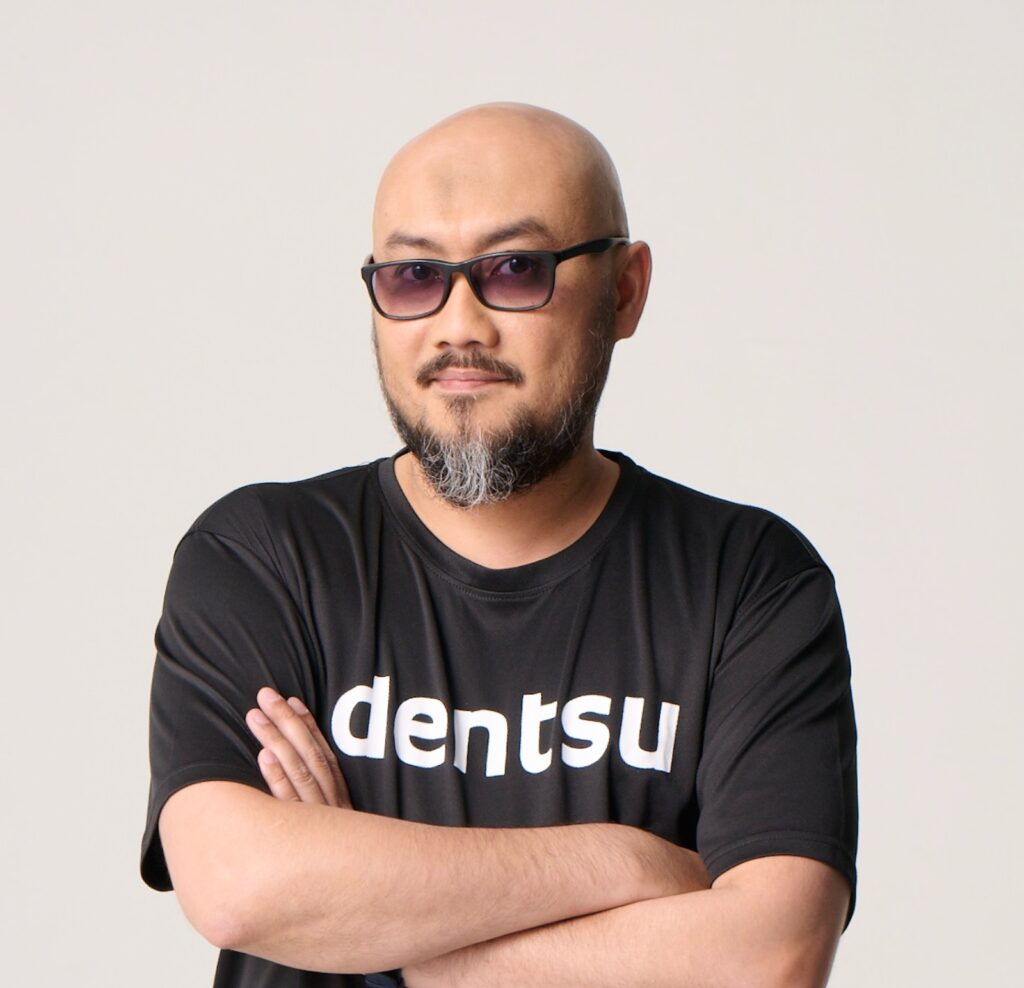
By Ahmad Nazril, Executive Creative Director, Dentsu Creative Malaysia
For many creatives, AI still triggers a familiar fear: the idea that a machine will eventually replace their job. That anxiety is not entirely unfounded, but it is also incomplete. The real shift is not about replacement, but coexistence. Not all AI is useful, and not all AI is welcome.
As AI becomes more visible in everyday life, public pushback is growing, particularly when the technology feels intrusive, opaque, or emotionally tone-deaf. In Malaysia, this has surfaced in the form of heightened scrutiny and restrictions around certain AI tools, including Grok, following concerns over content boundaries and cultural sensitivity. These moments serve as a reminder that efficiency alone does not equal acceptance. People may be curious about AI, but they are increasingly clear about where they draw the line.
According to Dentsu Creative Trends 2026: Generative Realities, we are entering a phase where culture is generated faster than ever, but trust, meaning, and emotional resonance are becoming harder to earn. The report highlights a growing resistance to automation that feels excessive, synthetic, or detached from human values. In this environment, AI is no longer judged by what it can do, but by how thoughtfully it is applied.
Here are six AI trends creatives will genuinely adopt, not because they are fashionable, but because they are useful.
1. AI as a Creative Partner, Not a Shortcut
As competition intensifies and everyone has access to the same AI tools, differentiation no longer comes from having AI, but from how it’s used. At the same time, budgets are shrinking and deadlines are getting deadlier, leaving little room for big teams or long creative runways.
In this environment, AI pushes Malaysian creatives to become hybrids. Art directors think like writers. Copywriters think visually. Creatives move beyond art or words and become art-writer-creators who can take ideas end-to-end, faster and leaner.
AI doesn’t make creatives lazy. It makes them multidimensional. The ones who last won’t be the best at prompting, but the best at shaping, editing, and grounding ideas in local culture, language, humour, and sensitivities.
2. AI for World-Building, Not Just Output
As brands invest in long-term platforms and fandom-driven storytelling, AI becomes a tool for building worlds rather than producing single assets. It can help imagine characters, environments, and narratives that evolve over time. This is where AI supports creativity at a system level, not just at the executional level.
3. AI With Clear Creative Boundaries
The report highlights growing distrust toward hyper-real, AI-generated content. Creatives are responding by setting clearer boundaries. AI will be used to personalize and adapt ideas, but not to the point where it feels invasive or emotionally hollow. Restraint becomes part of the creative process.

4. AI as a Prototype Tool, Not the Final Product
In an era of Analog Futures, perfection is no longer the goal. Creatives will increasingly use AI as a sketchbook to test layouts, scripts, and visual directions, while the final output intentionally reintroduces human texture and imperfection. What feels real now matters more than what looks flawless.
5. AI to Read Culture Faster, Not Replace Cultural Thinking
Culture now moves at the speed of a prompt, but understanding it still takes human insight. Creatives will use AI to scan signals, spot patterns, and synthesize information quickly. The interpretation, relevance, and nuance will remain human responsibilities.
6. AI as a Thinking Tool
Perhaps the most valuable use of AI is not in production at all, but in thinking. Creatives will use it to challenge assumptions, pressure-test ideas, and explore different strategic framings. AI that sharpens thinking is far more powerful than AI that simply generates content.
Ultimately, AI will not redefine creativity on its own. People will. As audiences grow more sensitive to automation and more drawn to authenticity, the role of the creative becomes clearer, not smaller. The future is not about using more AI, but about using the right kinds of AI, in the right ways, for the right reasons.
The tools that will endure are those that support thinking, imagination, and craft, and those that know when to lean into technology and when to step back from it.