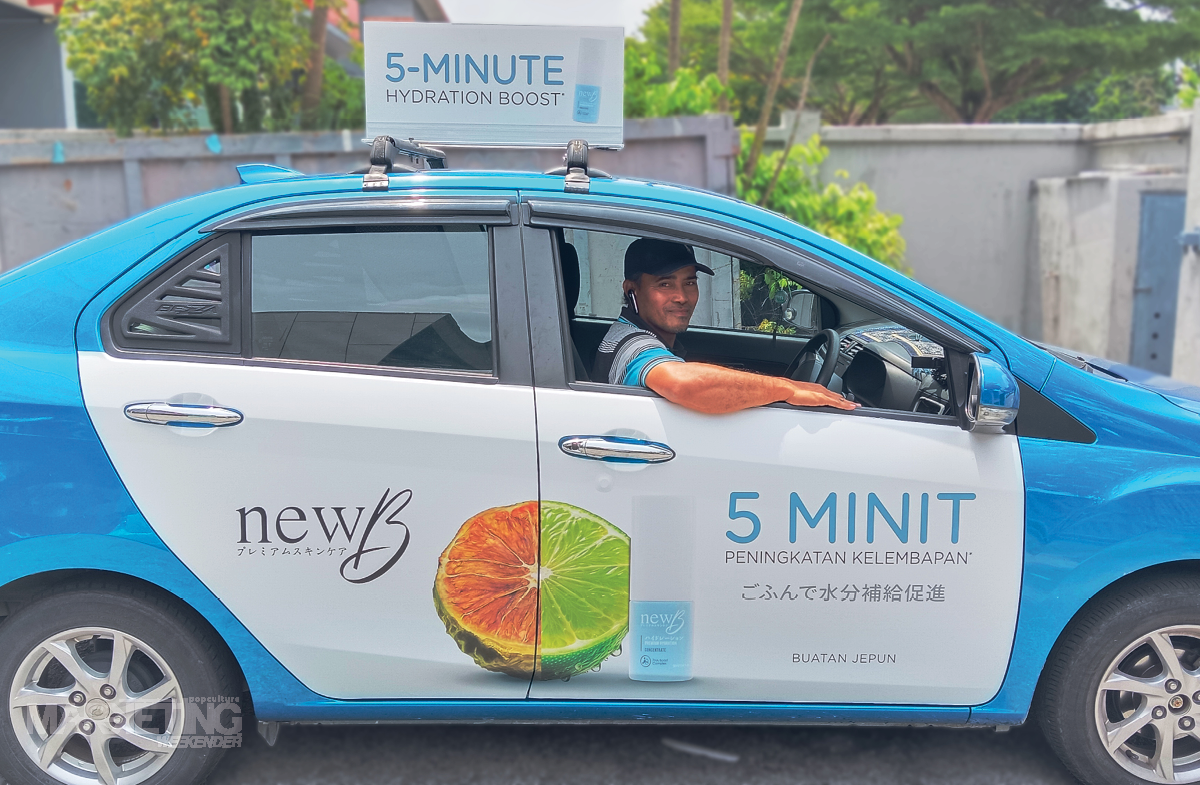
As cities densify and attention fragments, visibility is being redefined. The most effective brands are no longer fixed to skylines but embedded in daily movement. Vehicle-OOH is built for that reality, and VOOH Media is scaling it with infrastructure, data and discipline.
Vehicle advertising on the road has existed since the 1990s, when the medium was limited to taxis. But the explosion of Malaysia’s e-hailing industry has transformed the landscape entirely.
For Rajiv Rai Singh, the power of vehicle branding was clear long before the category had a label. When he joined Lalamove as Head of Marketing for Malaysia and Singapore, vehicle branding was already embedded into the company’s growth playbook. It wasn’t treated as a creative experiment or a supplementary channel. It was infrastructure.
“In every market Lalamove entered, vehicle branding was the first strategy deployed,” he recalls. “What struck me wasn’t just the awareness lift. It was how quickly the brand became top of mind for consumers.”
Even before the pandemic, Google Trends data consistently placed Lalamove ahead of competitors such as Mr Speedy, Bungkusit and Grab Express in brand search interest. Consumers were not just recognising the brand, they were actively seeking it out.
When COVID-19 accelerated demand for on-demand delivery, that mental availability translated into advantage. The brand had already embedded itself in daily routines. When demand surged, Lalamove was top of mind.

From Highways to Households
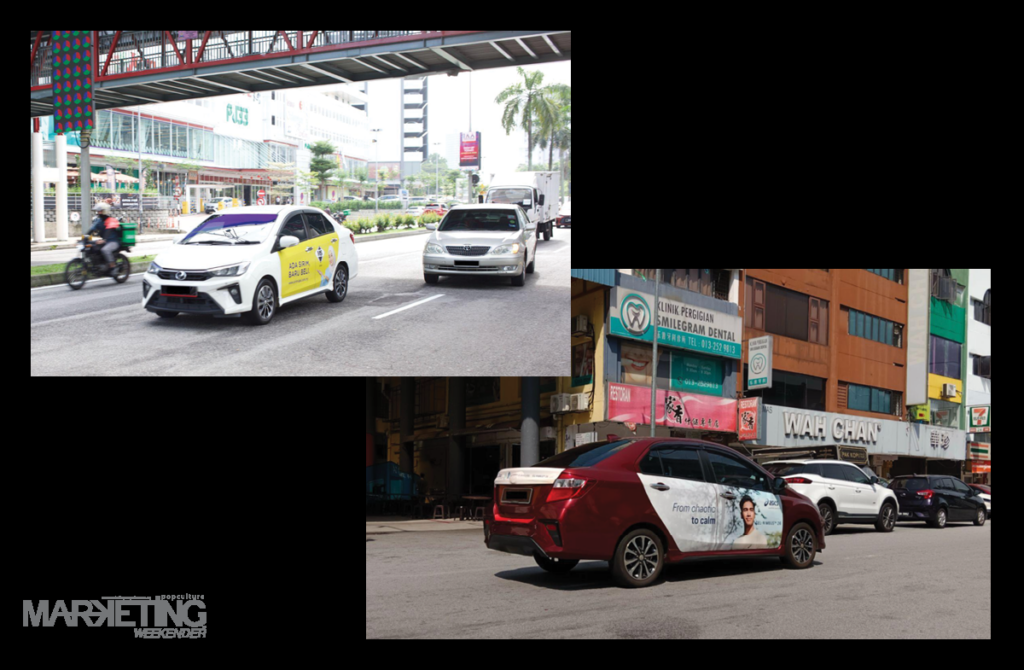
Today, vehicle-OOH is no longer confined to arterial roads or CBD traffic. Wrapped e-hailing cars move through gated residential areas, mall drop-off zones, office car parks and neighbourhood streets. These are environments traditional OOH cannot access.
VOOH Media was built around this shift. The company was structured not as a broker of space, but as an operator of movement with a network of thousands of drivers delivering brand exposure across routes, postcodes and daily patterns that static placements struggle to match.
Looking for Patterns, Not Anecdotes
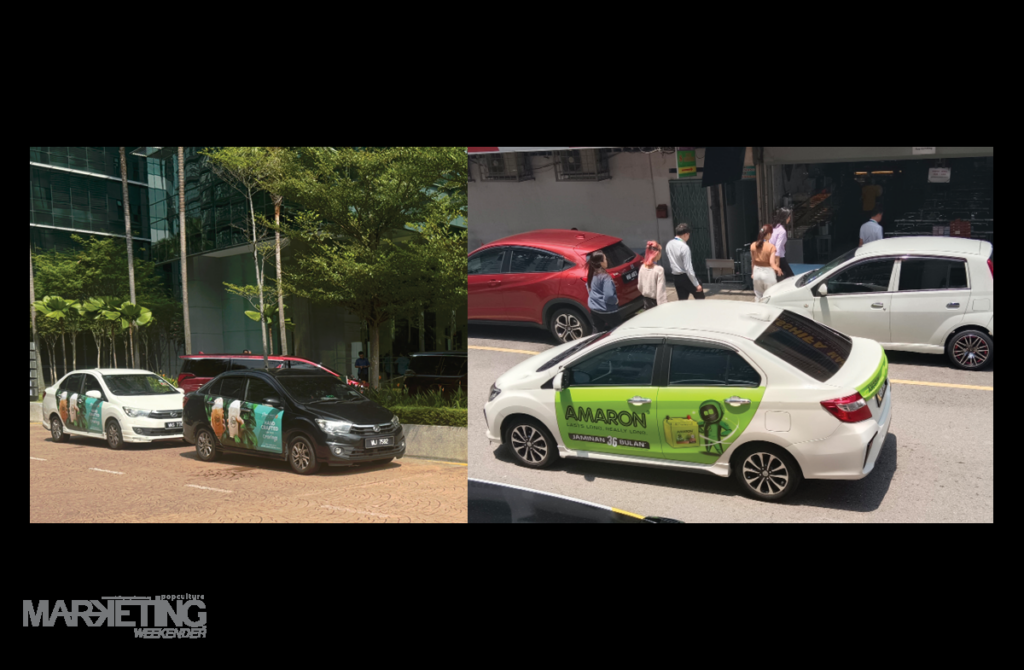
To test whether vehicle-OOH performance was repeatable, VOOH Media ran a Brand Impact Study across six brands spanning different categories and campaign periods: Asics, Amaron, Raia Hotel, GX Bank, Sirim and Lalamove.
The objective was to identify whether consistent behavioural signals emerged across categories.
Five of the six brands recorded more than a 40 percent increase in brand search interest while campaigns were active. More revealing was what happened next. Of the four campaigns that ended, all four showed a subsequent decline in search trends once vehicle wraps were removed. The two brands that maintained their presence continued to trend upward.
What the study captured was not a spike, but a pattern. Presence drove recall; removal reduced it.
Why Movement Captures Attention
The effectiveness of vehicle-OOH is rooted in behaviour rather than novelty. Humans are conditioned to monitor moving vehicles as a basic safety mechanism. Drivers and pedestrians scan their surroundings constantly, often without conscious intent.
A wrapped vehicle enters that field of attention naturally rather than interrupting it, and becomes part of an existing behaviour loop.
Nielsen’s 2019 OOH Advertising Study found that 64 percent of consumers recalled seeing a wrapped vehicle ad in the previous month, making it the most noticed format within transit media.
In dense urban environments like the Klang Valley, where an estimated 2.5 million road users are active daily, that attention compounds through repetition.
Unlike a billboard tied to a single junction, a vehicle carries the message across neighbourhoods, routines and contexts, building familiarity over time.
Where 50% Over-Delivery Is the Baseline
Visibility, however, only matters if it is delivered consistently. In vehicle-OOH, that consistency is measured in kilometres driven.
VOOH Media guarantees a minimum distance per campaign, and every campaign to date has exceeded that benchmark by at least 50 percent. By curating high-mileage e-hailing drivers who travel significantly more than the category average, the company delivers predictable coverage and accountable reporting.
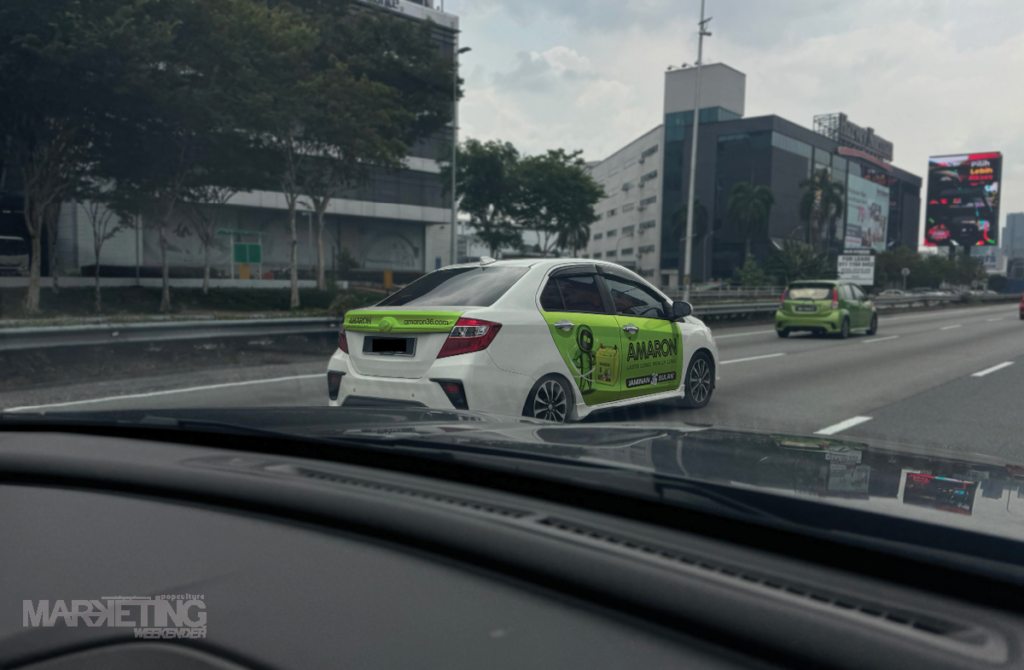
Recent campaigns reflect that discipline. Asics recorded 65 percent more exposure than guaranteed. Amaron exceeded its benchmark by 140 percent. Sirim delivered 65 percent above target.
The result is a medium that competes not just on reach, but on efficiency; delivering exposure within the same high-traffic corridors as premium static OOH, yet often at a more accessible cost.
Turning Attention into Action
As the medium matures, VOOH is extending its focus beyond visibility. With e-hailing passengers spending 15 to 20 minutes inside branded vehicles, the in-car environment offers something no billboard or bus shelter can replicate: sustained engagement with a captive audience.
That dwell time creates measurable opportunity. In-car QR codes bridge physical exposure with digital action, directing passengers to brand sites, apps or interactive experiences. For brands focused on direct response, call tracking capabilities link inbound enquiries back to specific campaigns — transforming vehicle-OOH from a visibility layer into a performance channel. It marks a structural shift. Where traditional OOH often ends at the impression, vehicle-OOH can initiate interaction.
“We built VOOH around a simple principle: if you can’t prove it worked, it didn’t. Every campaign must earn its place in the media plan with data, not just presence,” Rajiv adds.
Advertising That Gives Back
There is another dimension to vehicle-OOH that rarely features in media plans. Every campaign directly supports the income of e-hailing drivers, many of whom come from lower-income brackets.
Advertising spend, in this model, does not end with a site owner or media conglomerate, It flows back into individual livelihoods, circulating within the local economy.
For brands increasingly conscious of where their budgets land, that distribution carries weight.
The Road Ahead
Across Southeast Asia, vehicle-OOH has already moved into the mainstream. In cities like Jakarta and Bangkok, campaigns involving hundreds of vehicles are commonplace. Malaysia is only beginning that transition.
As marketers reassess their media mixes, the question may be whether brands are sufficiently present in the physical world. In that context, the most effective OOH may not be the most dominant, but the most familiar. The one that shows up repeatedly and reliably, wherever life unfolds.
For brands ready to be remembered rather than merely clicked, VOOH Media is building the infrastructure to make that presence scalable, measurable and commercially accountable.
Sometimes, the smartest visibility is the kind that travels.
Elevate your out-of-home strategy with VOOH and activate mobile, data-driven OOH that delivers real-world impact at scale. Visit www.vooh.my.