In today’s saturated digital landscape, brands across the Asia-Pacific region, particularly in Malaysia, are persistently seeking innovative ways to cultivate customer engagement that transcends mere interaction to foster lasting loyalty.
Gamification, the application of game mechanics and incentives in non-game contexts, has emerged as a powerful strategy that transforms marketing engagement into genuine brand allegiance. Here, we take a look at the intricacies, benefits, and practical applications of gamification in marketing, spotlighting Malaysian brands that have successfully gamified their customer experiences.
Understanding Gamification in Marketing
Gamification integrates game design elements such as points, leaderboards, challenges, and rewards into marketing strategies to drive consumer participation and emotional investment. Unlike traditional marketing tactics that passively relay information, gamification encourages active involvement by tapping into human psychology (motivation, competition, achievement, and social connectedness). This dynamic engagement ultimately deepens brand affinity and elevates customer lifetime value.
In the Malaysian context, applying gamification must resonate culturally, seamlessly incorporating local preferences, languages, and behavioural nuances to maximise effectiveness. Given Malaysia’s diverse market comprising Malay, Chinese, and Indian ethnicities, multilayered gamified campaigns customised for local dialects and cultural references can yield superior customer loyalty outcomes.
The Business Impact: From Engagement Metrics to Loyalty
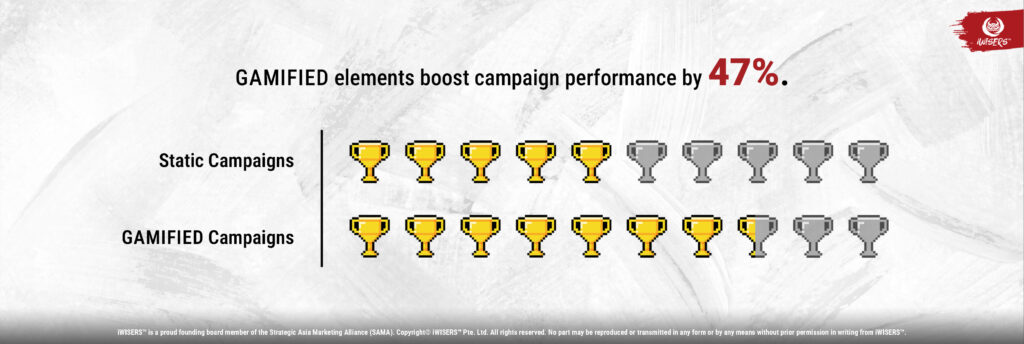
Globally, brands using gamification report significant uplifts in customer interaction rates, repeat purchases, and brand advocacy. In Malaysia, this impact is amplified due to high social media penetration and a youthful demographic eager for interactive experiences. According to recent studies, campaigns featuring gamified elements consistently outperform static campaigns by at least 47% in engagement metrics.
For instance, Malaysian telecommunications giant CelcomDiGi (formerly Celcom) incorporated gamification into its loyalty programme via Club Celcom First by awarding points for daily logins, bill payments, and referrals. These points enable customers to redeem exclusive offers and participate in instant-win games. This strategy rejuvenated customer retention rates and boosted average revenue per user while enhancing digital engagement.
Successful Gamification Case Studies in Malaysia
Key Elements of Effective Gamification Strategies
Successful gamification in marketing hinges on several critical factors:
Challenges and Considerations
Though powerful, gamification is not without challenges:
Future Outlook
Looking ahead, gamification in marketing will increasingly be augmented by emerging technologies such as augmented reality (AR) and artificial intelligence (AI), creating more immersive and personalised customer experiences. Local Malaysian brands equipped with robust social listening and data analytics capabilities are well-positioned to pioneer these innovations, leveraging real-time social insights to tailor gamified experiences that deepen customer loyalty with precision.
In conclusion, gamification in marketing represents a strategic evolution from mere customer engagement to genuine loyalty cultivation. Malaysian brands that thoughtfully integrate gamification, rooted in local cultural understanding and empowered by advanced social analytics, will continue to set benchmarks in dynamic, customer-centric marketing approaches across the APAC region.
This comprehensive approach, contextualised with Malaysia-specific examples and supported by the latest industry insights, positions gamification not just as a marketing tactic but as a pivotal driver of brand equity in the digital age. Gamification empowers brands to turn short-term interactions into long-term loyalty and advocacy by cultivating customer experiences tailored to their needs and encouraging repeated returns.
iWISERS has a multitude of social intelligence solutions and custom objective research services working with brands across APAC. As one of the Founding Board Members of SAMA, we unite agencies across APAC to help brands grow through hyperlocalization. By connecting experts with strong networks and insights, we navigate through diverse markets to achieve global goals and local success.
Drop an email at ask@iwisers.com or chat with us on LinkedIn for social listening or industry studies that enable people-centric data-based decision making.