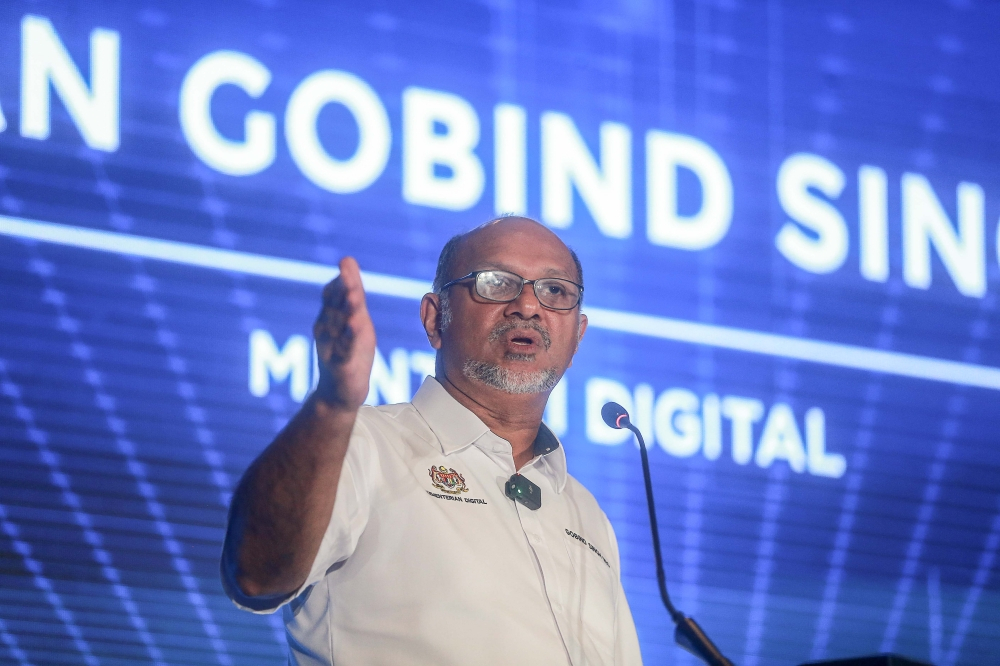
When Digital Minister Gobind Singh Deo puts a number on artificial intelligence of up to RM20 billion a year by 2030, it lands well.
Big, round, reassuring. The kind of figure that fits neatly into keynote slides and investor decks.
But strip away the headline value, and something more consequential is emerging. This is no longer about whether AI will matter to Malaysia. It already does.
The digital economy has crossed the 23 per cent mark of GDP, generating more than RM450 billion in value. AI isn’t a layer on top of that.
It is increasingly the engine beneath it shaping how decisions are made, how services are delivered, and how quickly businesses respond to change.
For marketers, that distinction matters. Because once something becomes infrastructural, you stop “adopting” it. You start depending on it.
The Quiet Shift From Campaigns To Systems
What’s striking in Gobind’s remarks is not the projection itself, but the language around “structural shift”.
It signals a move away from AI as a campaign tool: a chatbot here, a recommendation engine there towards AI as a system-wide capability.
In practical terms, that changes the marketer’s job. It is no longer about using AI to optimise ads. It is about rethinking how brands operate in a market where consumer journeys are increasingly mediated by algorithms.
Discovery, pricing, personalisation, even trust: these are no longer purely human-led interactions.
Take retail. AI is already determining which products surface first, which promotions get seen, and which customers receive tailored offers.
In financial services, it is underwriting decisions, fraud detection, and customer engagement flows. In media, it is rewriting how content is produced, distributed, and monetised.
The implication is uncomfortable but unavoidable. Brands are no longer just competing for attention. They are competing for algorithmic preference.
From Innovation Theatre To Real Problem-Solving
The upcoming Government Innovation Initiative (GII) may prove more important than the GDP projection itself.
On paper, it sounds straightforward: open up real public sector problems and invite innovators, researchers, and youth to solve them using technologies like AI.
In practice, it signals a shift away from innovation theatre — hackathons, showcases, proof-of-concepts that rarely scale towards something more grounded.
“Guided innovation,” as Gobind describes it, is a subtle but necessary correction.
It acknowledges that left unchecked, AI experimentation can drift into novelty. What Malaysia appears to be pushing for instead is relevance.
For marketers, this is a cue worth noting. The most meaningful applications of AI in the next few years will not come from flashy use cases.
They will come from solving friction in service delivery, customer experience, logistics, and communication.
The brands that win will not be the ones shouting loudest about AI. They will be the ones quietly making things work better.
The Youth Factor And The Values Question
There is a line in the minister’s speech that deserves more attention than it will likely receive: the future of AI will be shaped not by technology, but by the values embedded within it.
That is not a philosophical aside. It is a strategic warning.
Malaysia’s push to involve youth through platforms like ICYouth is not just about talent development. It is about influence.
The data that gets used, the biases that get encoded, the outcomes that get prioritised are the design choices.
And increasingly, they are brand choices too. A recommendation engine that nudges consumers towards certain products over others.
A pricing model that adjusts dynamically based on behaviour. A content feed that amplifies some voices while muting others.
These are not neutral systems. They carry intent, whether deliberate or accidental.
For marketers, the question is no longer whether to use AI, but how responsibly it is deployed. Transparency, fairness, and trust are not compliance checkboxes. They are competitive differentiators.
What RM20 Billion Really Means
So yes, RM13 billion to RM20 billion annually is a meaningful contribution. It signals growth, investment, and ambition.
But the more important number may be the 0.8 to 1.2 percentage points AI is expected to add to GDP growth each year. Not because it is smaller, but because it is systemic. It reflects sustained impact, not a one-off boost.
For businesses, that translates into pressure.
Pressure to upskill teams that are still treating AI as a specialist function. Pressure to integrate data across silos that were never designed to talk to each other. Pressure to move faster in markets where speed is increasingly dictated by machines, not meetings.
For marketers, perhaps the biggest pressure of all: to stay human in a system that is becoming anything but. Because while AI may optimise the journey, it is still the human experience that defines the brand. That, more than any projection, is where the real work begins.
Share Post:


The APPIES is where Malaysia’s boldest campaigns, brightest ideas, and most impactful storytellers take the stage.
More than an awards show, it is the industry’s ultimate platform for creative, media, digital and marketing excellence, where live presentations meet live judging.
This is your chance to showcase work that moved audiences, shaped conversations, and delivered real results.
From breakthrough brand campaigns to innovative digital experiences, the APPIES celebrates the work that defines the future of marketing.
Step into the spotlight alongside the industry’s leading agencies, brands, creatives, strategists and changemakers.
Whether you are aiming for Gold, Silver, Bronze or the prestigious Best of the Best recognition, this is your moment to make history.
Your campaign deserves to be seen.
Your ideas deserve the stage.
Your work deserves the legacy.
KEY DATES
Haven’t subscribed to our Telegram channel yet? Don’t miss out on the hottest updates in marketing & advertising!